

Description
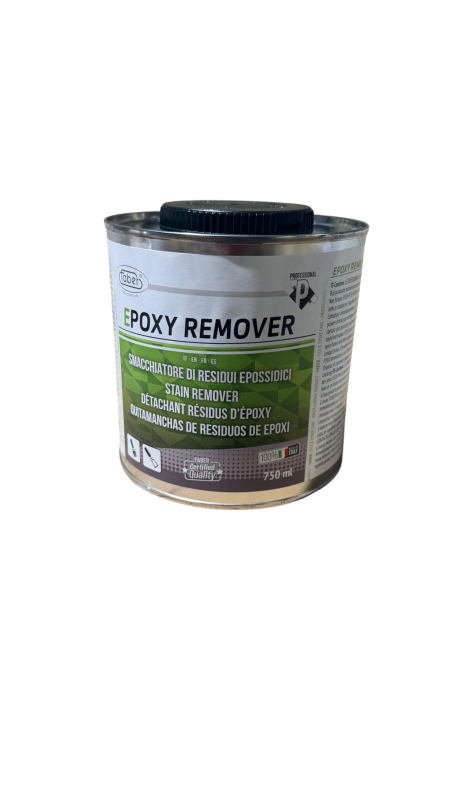
Faber Epoxy Remover | Professional Solvent-Based Stripper for Epoxy Grout, Resins, and Mastics
The Ultimate Solution for Stubborn Synthetic Residues
In the world of floor restoration and post-installation clean-up, few substances are as challenging to manage as epoxy grout. Unlike standard cementitious grouts, epoxy is designed to be permanent, chemical-resistant, and incredibly durable. While these are excellent qualities for a finished floor, they make accidental spills, hazing, or thick leftover residues a nightmare to remove. Faber Epoxy Remover is the professional-grade answer to this problem, offering a high-strength, solvent-based formulation specifically engineered to break the molecular bonds of synthetic resins, polishes, and fillers.
When you are dealing with high-thickness residues that have fully cured, standard cleaners often fail. You need a product that acts as a targeted stripper rather than a simple detergent. Faber has developed this formula to penetrate the densest synthetic top layers, dissolving them into a manageable state that can be mechanically removed, effectively bringing the treated material back to its original state without altering its aesthetic characteristics.
Why Faber Epoxy Remover is Essential for Your Project
Whether you are a professional floor sander, a tiler, or a property owner tackling a restoration, the presence of epoxy haze or resinous mastics can ruin the finish of an expensive installation. Faber Epoxy Remover is not just a cleaner; it is a specialized restoration tool.
1. High-Thickness Dissolving Power
Most removers on the market are designed for thin films or light hazing. Faber’s formula is robust enough to tackle high-thickness residues. This includes polyester grout, thick layers of mastics, and even synthetic enamels. If a previous contractor left behind a mess, or if a DIY project resulted in uneven grout lines, this solvent-based stripper provides the chemical muscle needed to correct the error.
2. Unrivalled Surface Compatibility
One of the greatest risks when using strong solvents is damaging the underlying substrate. Faber has balanced this formula to ensure it is compatible with an extensive list of materials. It is a go-to solution for:
-
Natural Stone: Marble, Granite, Travertine, Slate, and Sandstone.
-
Ceramics & Porcelain: Including glazed, honed, and natural or structured porcelain tiles.
-
Agglomerates: Resin-marble and resin-quartz materials.
-
Industrial Surfaces: Concrete, concrete tiles, and tuff.
-
Metals: Safe for use on Steel and Aluminium when removing industrial coatings or residues.
3. Restores Without Altering Appearance
A common concern in restoration is the fear of etching or changing the colour of the stone. Faber Epoxy Remover is designed to act strictly on the synthetic buildup. By dissolving the surface contaminants, it reveals the true texture and colour of the material underneath, ensuring your stone or tile looks exactly as it was intended to look.
Versatility in Application: More Than Just Grout Removal
While primarily used for epoxy grout, this product is a versatile powerhouse in any restoration kit. Its chemical profile allows it to double as an effective stripper for:
-
Synthetic Polishes: Removing old, yellowed, or degraded layers of floor wax and synthetic polishes.
-
Resins & Fillers: Ideal for cleaning up after stone repair where excess resin or filler has spread beyond the repair site.
-
Paint and Enamel: Acts as a specialized paint stripper for stone surfaces where traditional heat guns or abrasive methods might cause damage.
Application Guidelines for Professional Results
To achieve the best results with Faber Epoxy Remover, it is important to follow a methodical approach. Since this is a solvent-based product, ensure the area is well-ventilated during use.
-
Preparation: Ensure the surface is dry and free of loose dust or debris.
-
Application: Apply the product directly onto the residue you wish to remove. For thick layers, ensure the product covers the area completely.
-
Dwell Time: Allow the product to sit and react with the residue. Depending on the thickness and age of the epoxy, this can take anywhere from 10 to 30 minutes. Do not let the product dry completely on the surface.
-
Mechanical Action: Use a manual scrubbing brush or a floor machine with a suitable pad to agitate the dissolved residue. For very thick deposits, a scraper may be used carefully.
-
Removal: Once the residue is dissolved, remove the slurry using a wet vacuum or clean cloths.
-
Rinse: Clean the area thoroughly with a neutral cleaner or water to ensure all solvent traces are removed.



Reviews
There are no reviews yet.