
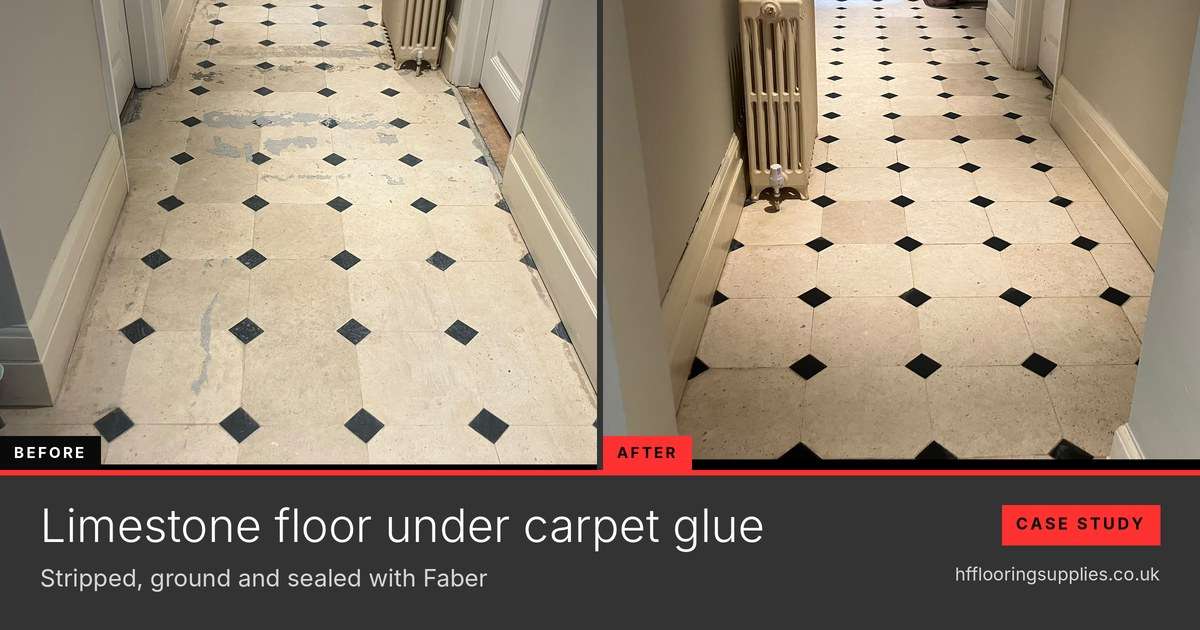
This limestone floor, with its classic pattern of black inset squares, had been hidden under carpet for more than 30 years. When the carpet came up, it left behind a thick layer of carpet glue, with three decades of dirt trapped between the glue and the stone.
Stonelab took it on. They stripped every trace of the glue, ground and resurfaced the floor through five grits to flatten it and bring up the sheen, filled the cracks with colour matched resin, and protected the finished stone with two coats of a water based impregnating sealer.
This case study covers what was done and why, the Faber products used at each stage, and how to look after a restored limestone floor. Every product is available from HF Flooring Supplies, with trade pricing for contractors.
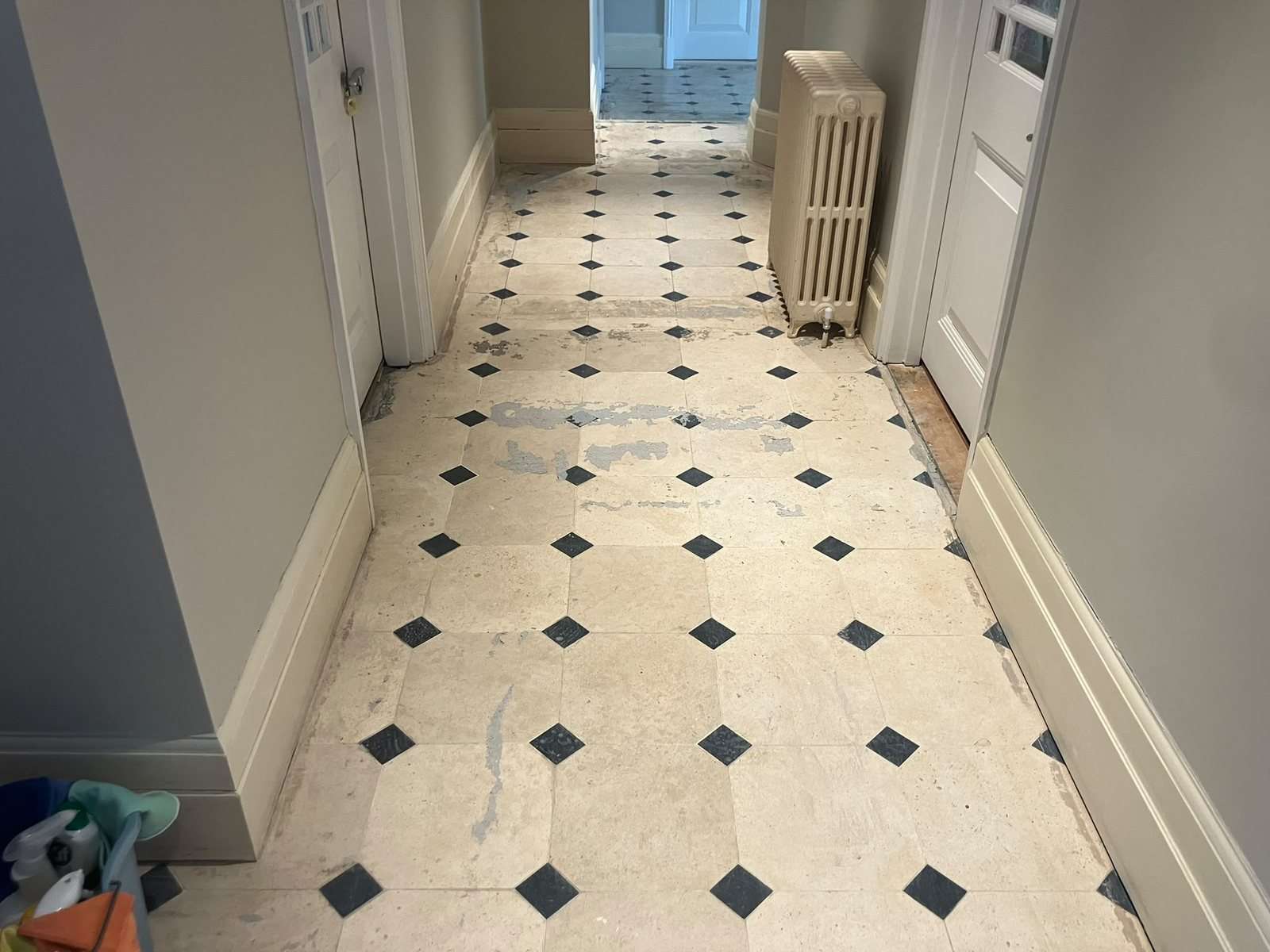
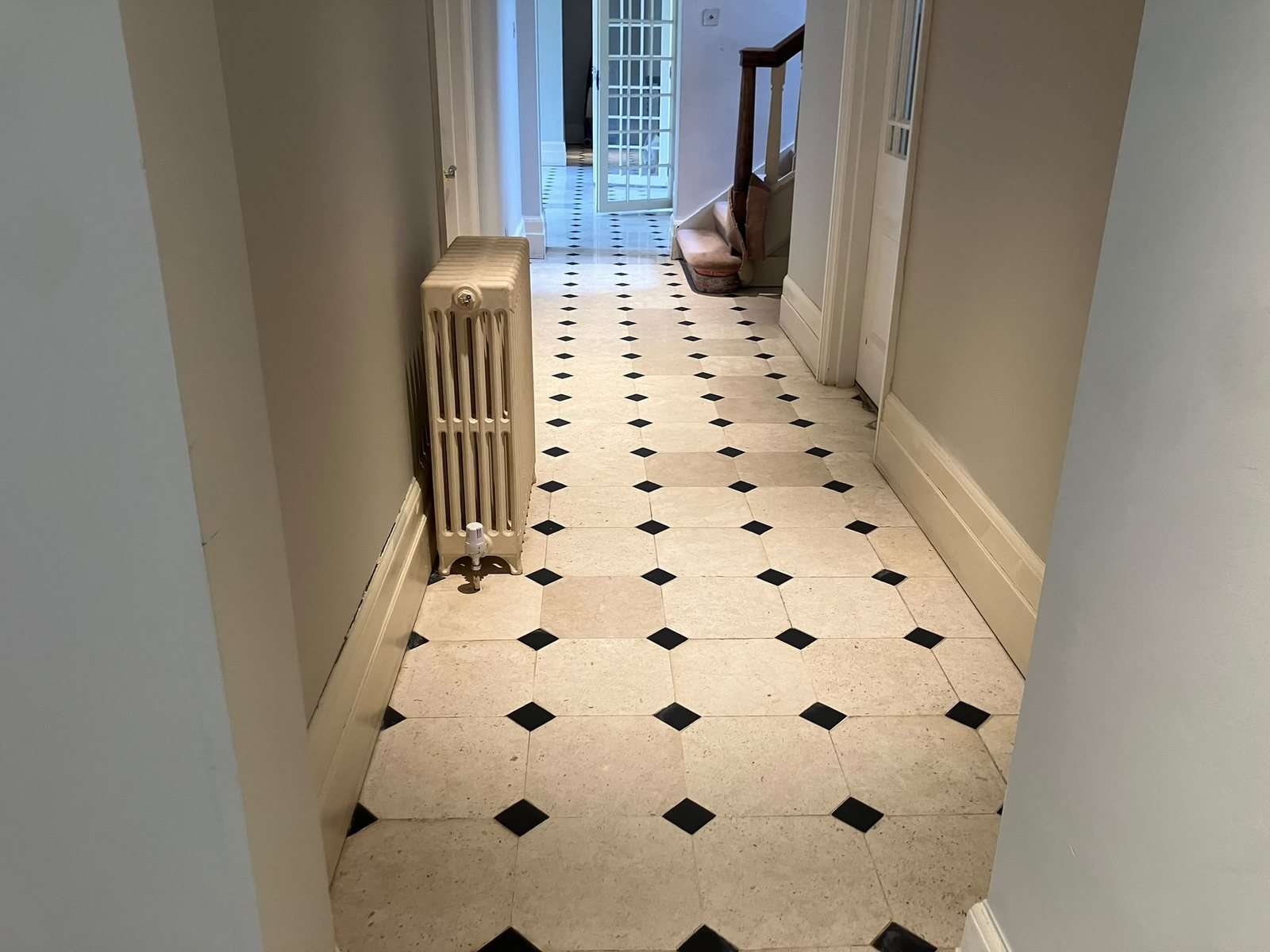
The hallway before and after. Photos by Stonelab.
- The floor
- Limestone with black inset squares. Hallways, an entrance hall and the main rooms of the house.
- The problem
- Covered by carpet for over 30 years, leaving a thick layer of carpet glue and trapped dirt, plus cracks across the floor.
- The fix
- Scrape and chemically strip the glue, grind and resurface in five passes, fill the cracks, then seal with a water based impregnator.
- The result
- A flat, even limestone floor with a beautiful subtle sheen, and an ecstatic client.
- Restored by
- Stonelab, Cobham, Surrey
The short version
- Strip: scrape off as much hardened glue as possible, then soften the last layers with solvent based strippers and an epoxy remover so the residue scrapes away.
- Grind: resurface the stone in five passes, each at a finer grit, to flatten the floor and close the pores for a natural sheen. Fill cracks with colour matched resin and grind them flush.
- Seal: once the floor is properly dry, apply two coats of a water based impregnating sealer to protect the stone and make cleaning easier.
Limestone is acid sensitive. Test every product on a hidden area first and never use acidic cleaners on it.
- StoneLimestone with black insets
- Under carpetMore than 30 years
- GrindingFive passes, finer each time
- SealerTwo coats, water based
Trade prices are lower than the retail prices shown
Every price in this case study is the retail price before VAT. Trade account holders see their own lower trade price on every product once logged in.
The Faber products used on this floor
Six Faber products took the floor from glue covered to sealed. Aftercare products are at the end of this case study.
-
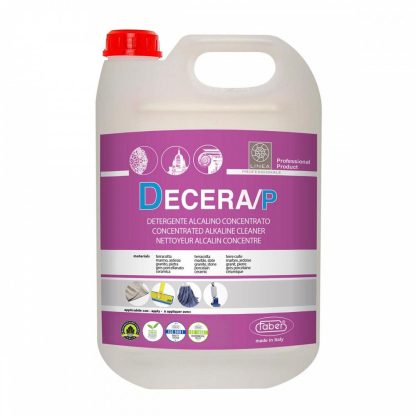
 StripFaber Decera PConcentrated alkaline cleaner for wax, resin and greasy residueRetail from £8.19 + VATTrade price: log in to see itView product
-
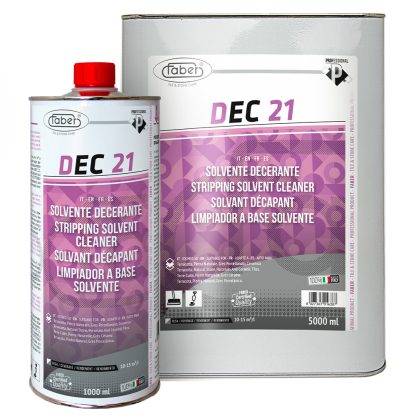
StripFaber Dec 21Solvent based remover for wax, sealers and old treatmentsRetail from £12.05 + VATTrade price: log in to see itView product
-
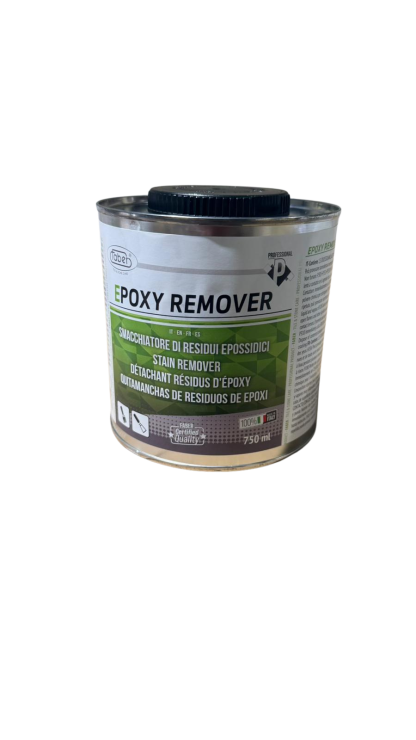
StripFaber Epoxy RemoverSolvent based stripper for epoxy, resins and mastics, 750mlRetail £27.86 + VATTrade price: log in to see itView product
-
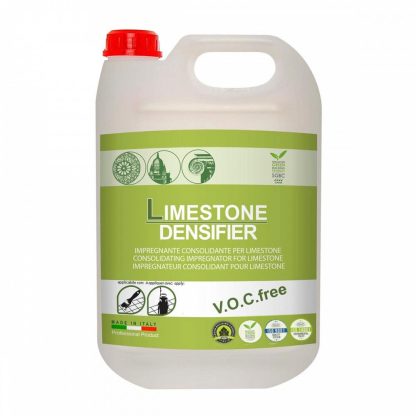
GrindFaber Limestone DensifierWater based hardener for limestone, an aid to polishingRetail from £18.55 + VATTrade price: log in to see itView product
-
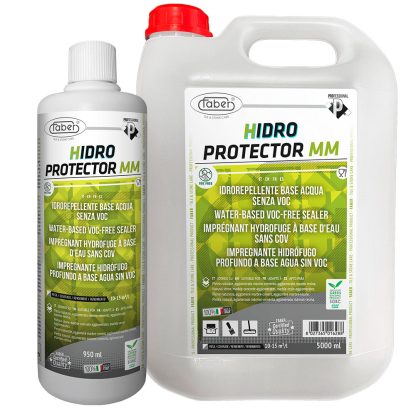
SealFaber Hidro Protector MMVOC free impregnator against damp, salts and stainsRetail from £28.41 + VATTrade price: log in to see itView product
-
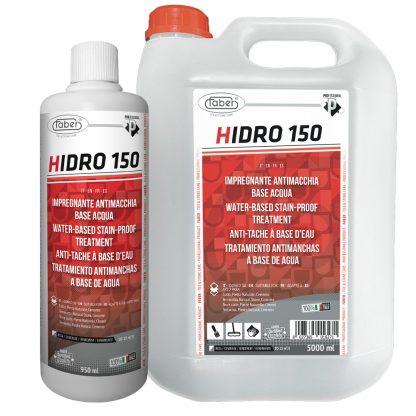
SealFaber Hidro 150Water based stain proof impregnator, food contact certifiedRetail from £30.14 + VATTrade price: log in to see itView product
Thirty years under carpet
Limestone with black inset squares is a classic floor for a period house, and this one runs through the hallways, the entrance hall and the main rooms. At some point it was carpeted over, and the carpet stayed down for more than 30 years.
When it was finally lifted, the stone underneath was covered in a thick layer of carpet glue. The glue had also trapped years of dirt between the carpet and the stone, so the floor was patchy, grey and stained, with cracks running across it in places.
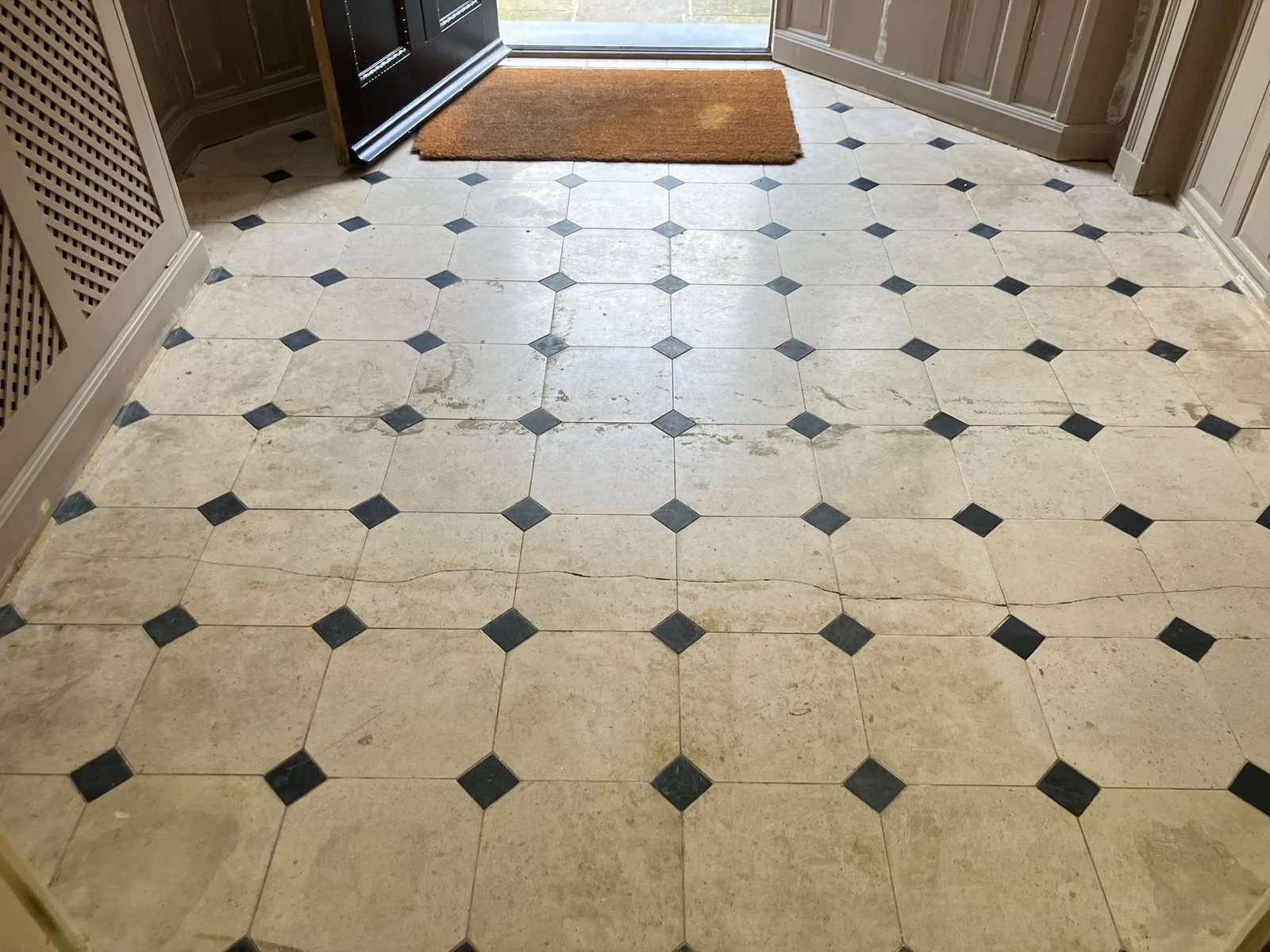
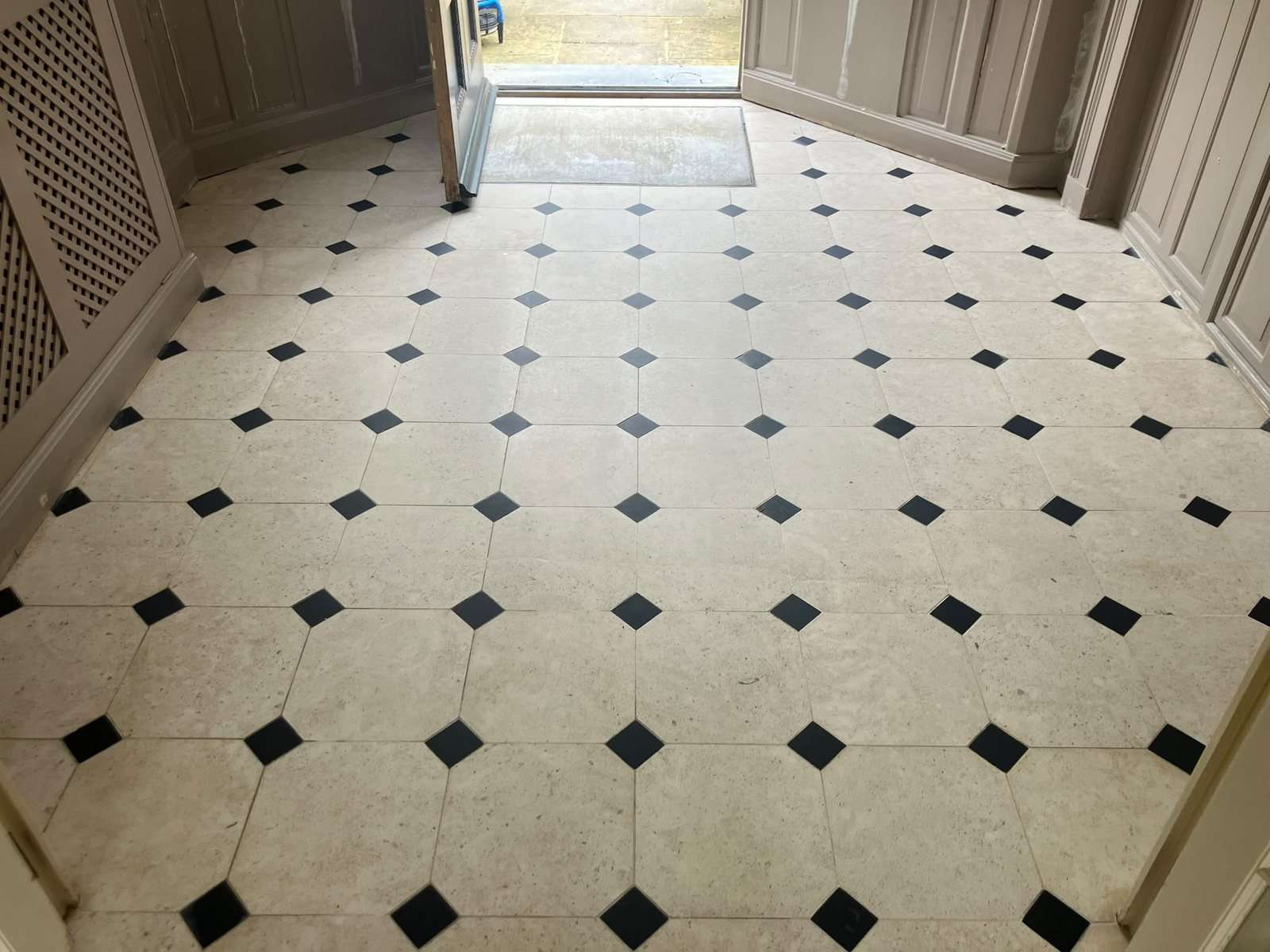
The entrance hall before and after. Note the crack across the floor in the before photo. Photos by Stonelab.
- Thick carpet glueHardened adhesive over much of the floor, which has to come off completely before any grinding or sealing.
- Trapped dirtDecades of dirt held between the glue and the stone, staining the surface.
- CracksCracks across the floor that needed filling so the finished surface would be seamless.
- An acid sensitive stoneLimestone etches with acid, so every product had to be safe on it.
Removing the carpet glue
Stonelab started by scraping off as much of the hardened glue as they could. That does two jobs. It removes the bulk of the adhesive, and it lets the chemicals reach the lower layers of glue directly, rather than sitting on top of the thickest part.
They then applied a combination of solvent based strippers and an epoxy remover to melt down the last layers of glue, so the remaining residue could be scraped away with ease. The aim at this stage is a completely clean stone surface. Any glue left behind would clog the grinding tools and show through the finished floor.
- Faber Dec 21A solvent based remover for wax, sealers, old treatments and greasy residues on stone, tile and porcelain.
- Faber Decera PA concentrated alkaline cleaner for greasy dirt, wax and resins. Faber pairs it with Dec 21 for double stripping of stubborn residues.
- Faber Epoxy RemoverA solvent based stripper that softens thick, cured synthetic residues such as epoxy, resins and mastics so they can be removed mechanically.
Chemicals work best on a thin layer. Taking off the bulk of hardened glue by hand first means the strippers reach the bottom layers and do far more work. See all Faber strippers and degreasers.
Grinding, resurfacing and crack repair
With the glue gone, Stonelab ground and resurfaced the stone to create a much flatter, more uniform floor. They passed over the floor five times, with a finer grit on each pass. Each pass removes the scratches of the one before and gradually closes the pores of the stone, which is what brings up the shine.
During this stage they also filled the cracks across the floor with an epoxy resin colour matched to the stone, then ground it smooth so the repairs sit seamlessly with the rest of the floor.
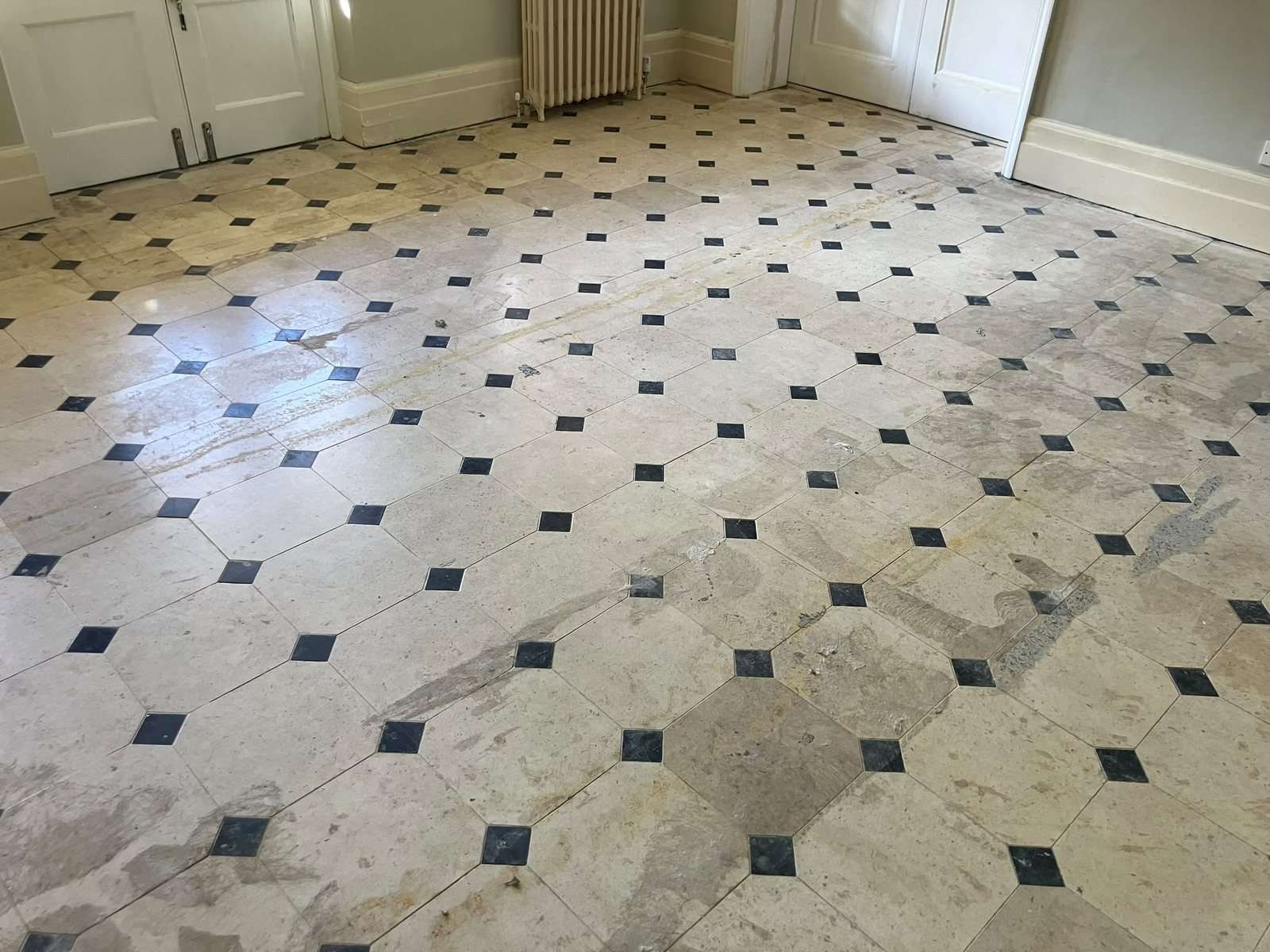
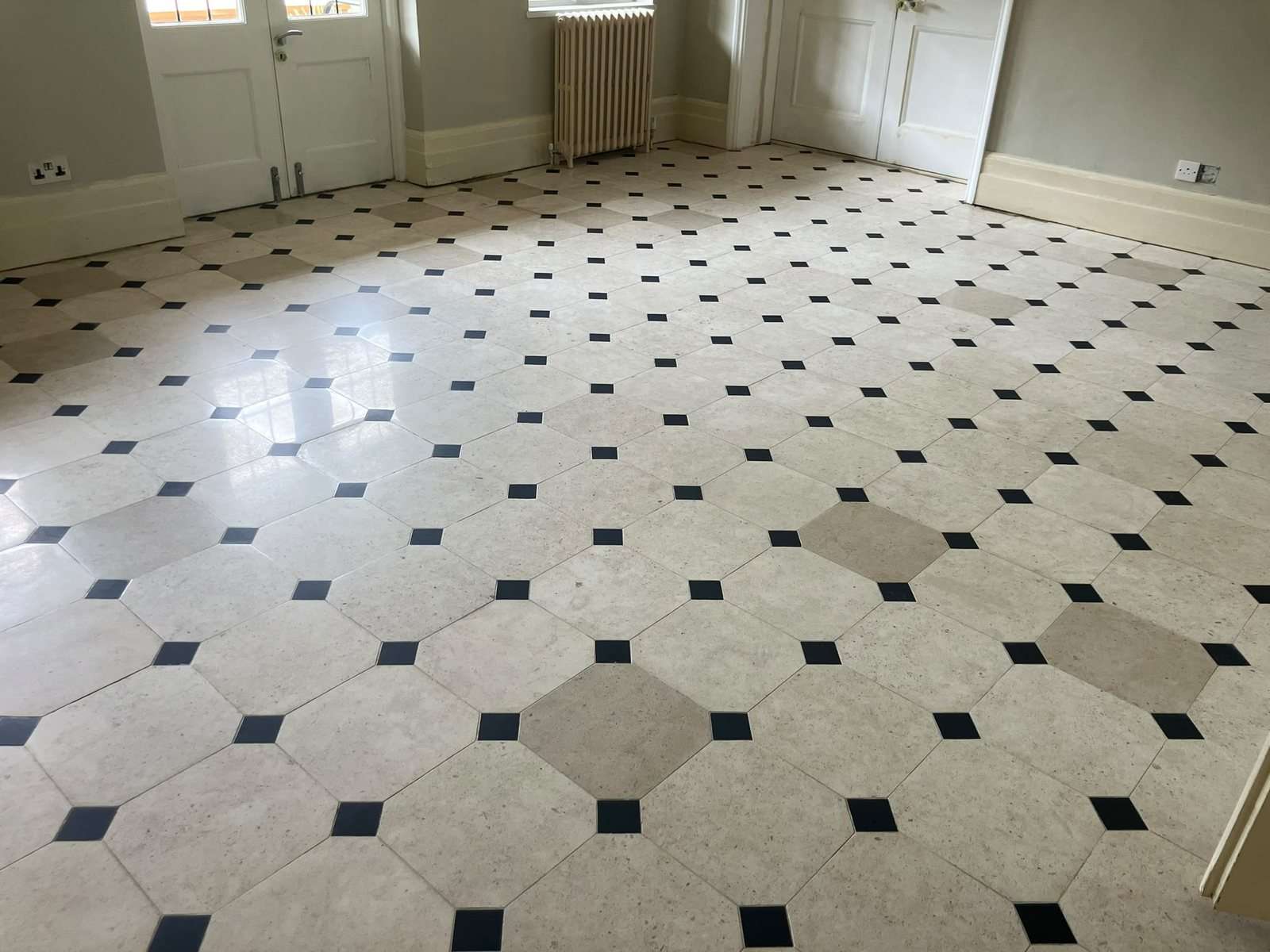
The main room before and after. Photos by Stonelab.
- Flatten firstThe first, coarser passes remove residue and level the floor so the finer grits work evenly.
- Five progressive passesSkipping grits leaves scratches that show in the final finish. Each step up refines the surface.
- Colour matched repairsTint the filler to the stone before it goes in, then grind it flush with the floor.
Faber Limestone Densifier is made for this stage on limestone. Applied during the grinding sequence, it hardens the stone from within and reduces how much water the stone soaks up, so machines work faster, drying between stages is quicker and diamond tools last longer. It also primes the stone for the stain proof sealer that follows.
Sealing the stone
Once the floor had been given time to dry out properly, Stonelab applied two coats of a water based impregnating sealant. An impregnator soaks into the stone rather than sitting on top as a film, so it protects the limestone without changing its look, and it makes general cleaning and maintenance much easier going forward.
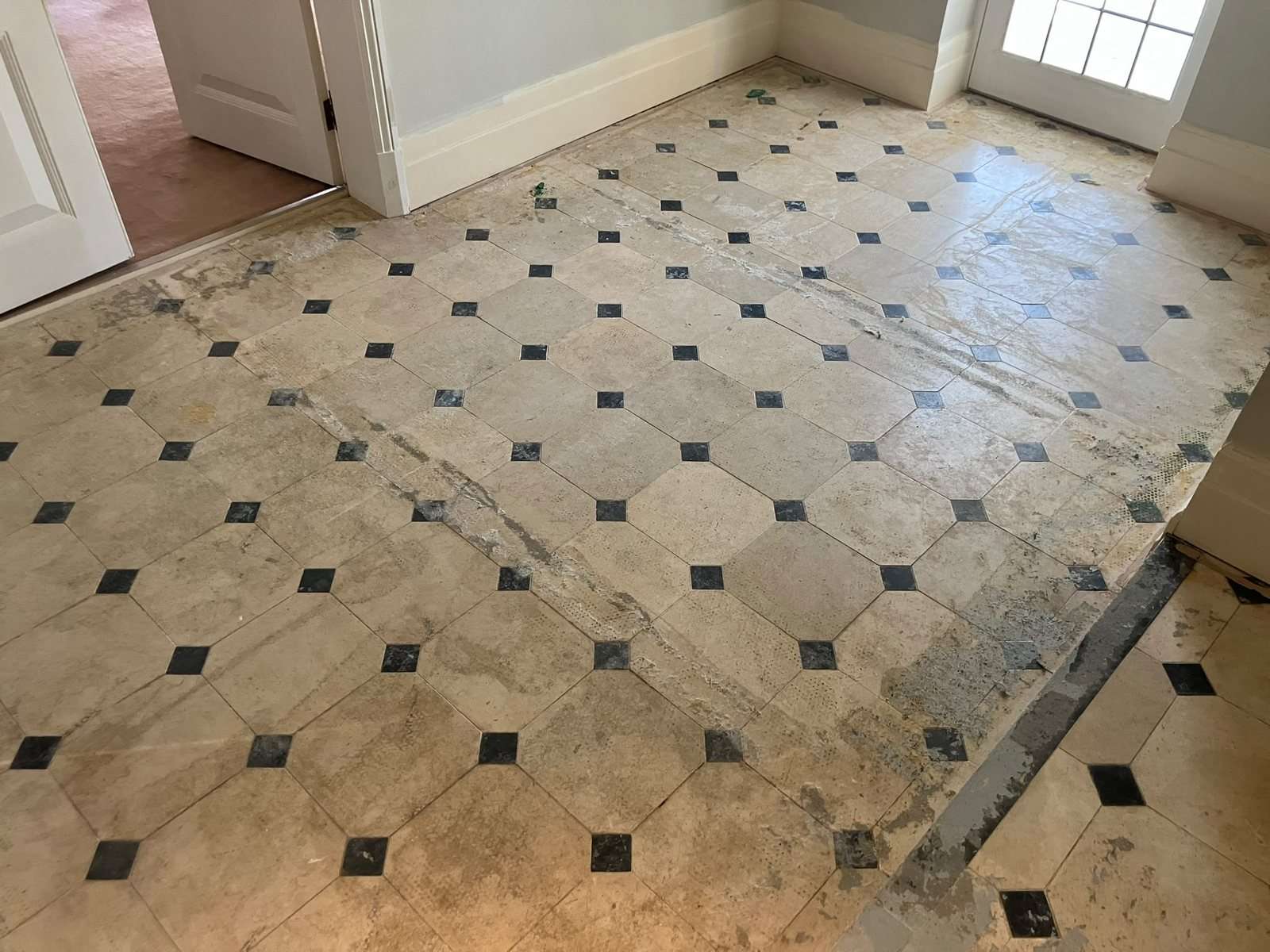
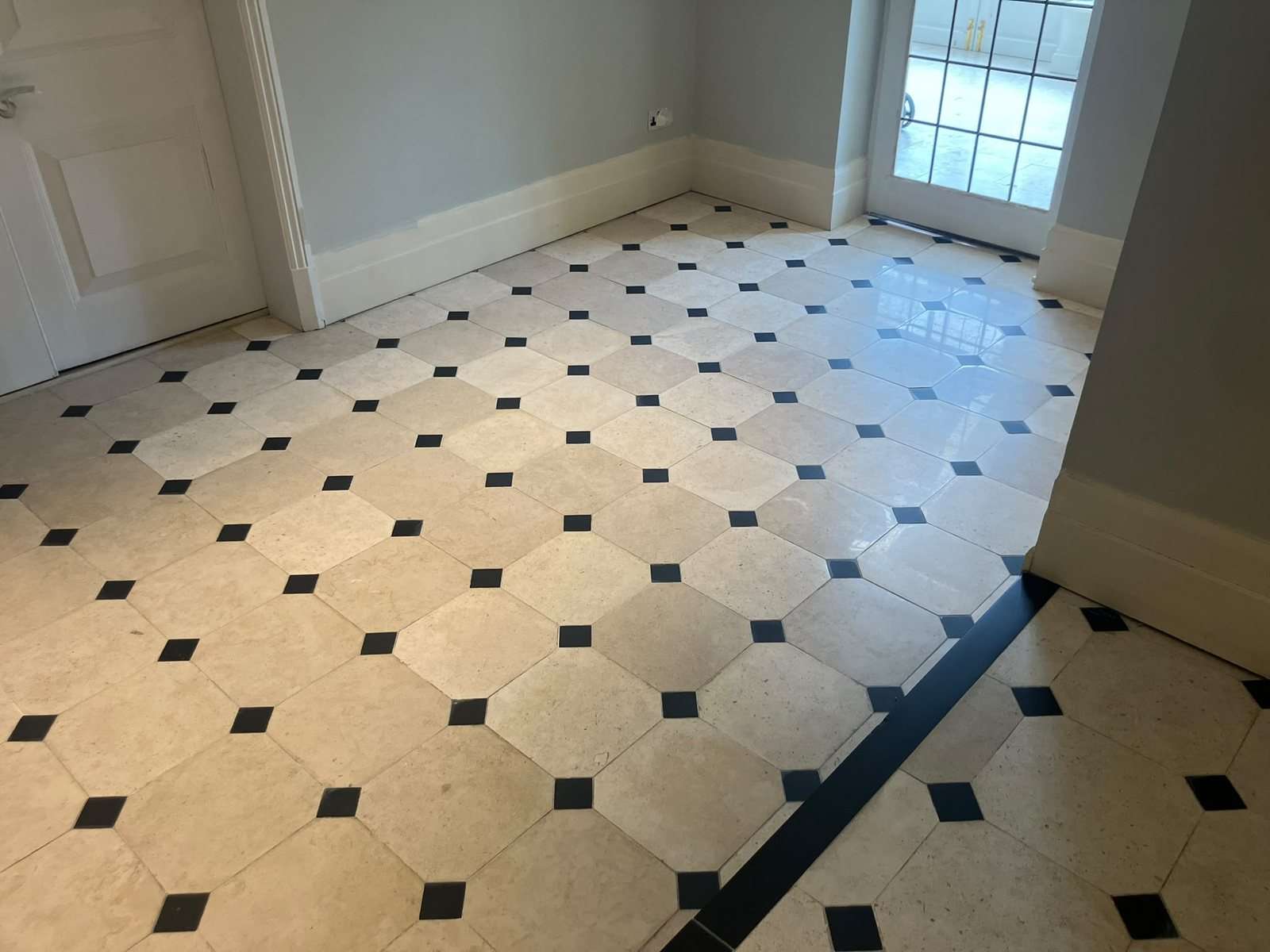
The garden room before and after. Photos by Stonelab.
- Faber Hidro 150A water based, stain proof impregnator that keeps the stone breathable and its look unchanged. Certified safe for food contact. Faber recommends applying it after Limestone Densifier for the best combined protection.
- Faber Hidro Protector MMA VOC free, water based impregnator that penetrates the full thickness of the stone, protecting against rising humidity, salts, staining and yellowing.
- Hidro 150 coverage
- 15 to 20 m² per litre
- Second coat
- At least 45 minutes after the first
- Surface dry
- About 1 hour
- Before sealing
- Floor fully dry
Grinding uses water, and limestone holds on to it. Sealing too soon traps moisture in the stone, so give the floor the time it needs. Our Hidro 150 sealing guide explains why the right impregnator matters.
A subtle sheen throughout
Compare the photos through this page. The glue, grey patches and staining are gone, the cracks have disappeared into the floor, and the limestone has an even, subtle sheen right through the house. In Stonelab's words, a beautiful subtle sheen across the whole floor for an ecstatic client.
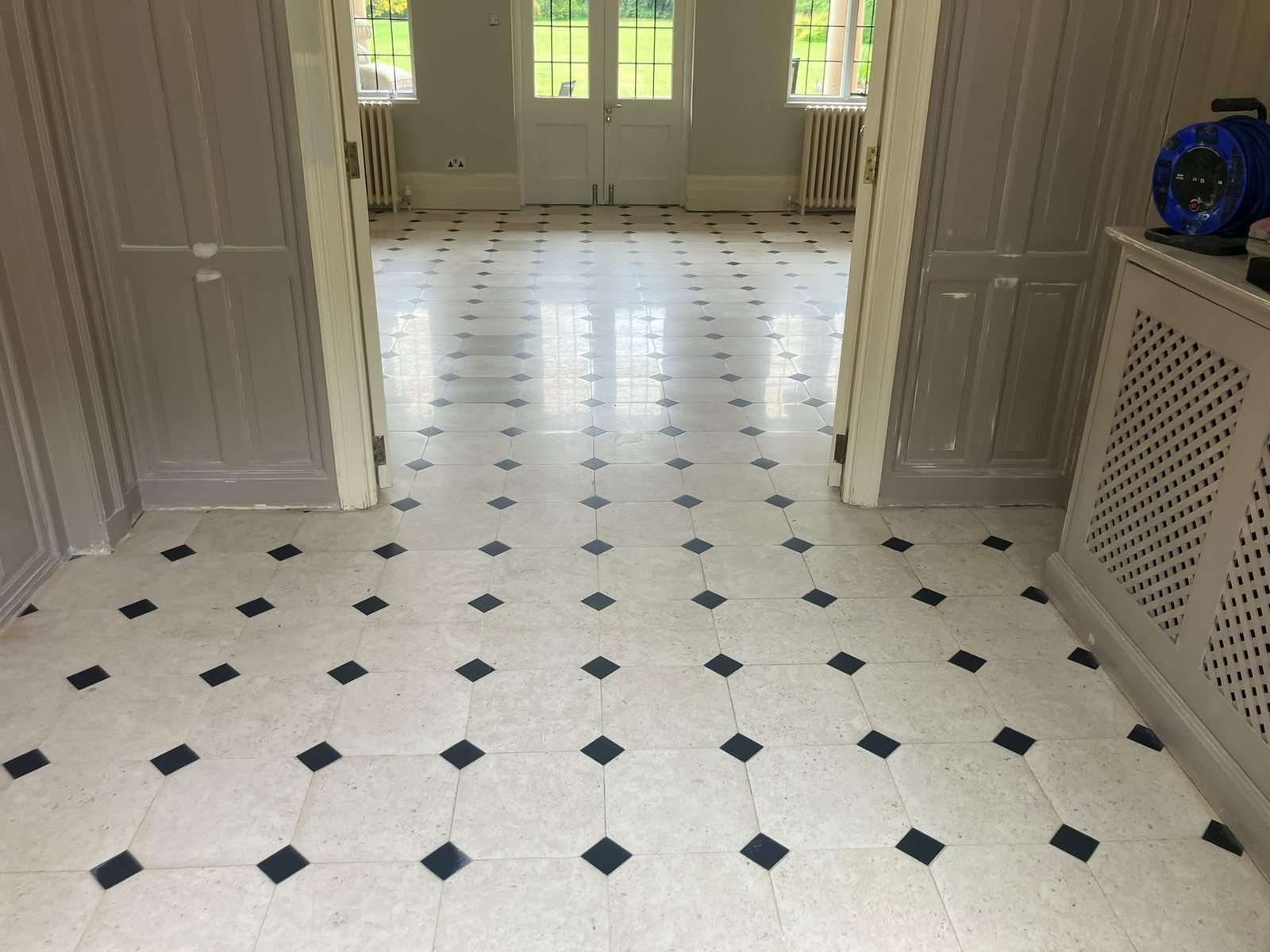
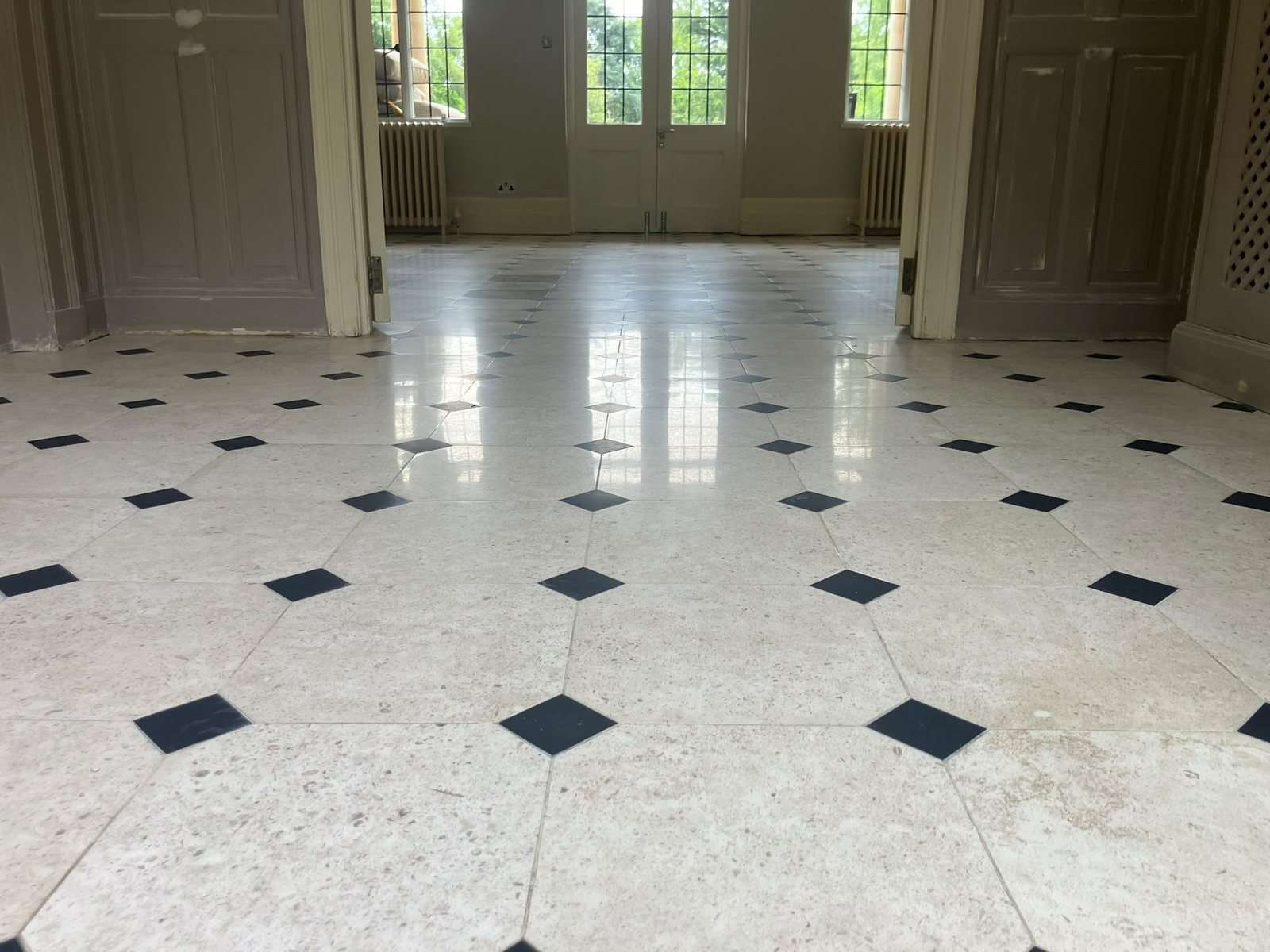
The finished floor from the entrance hall through to the main room. Photos by Stonelab.
- Clean stone: every trace of carpet glue and trapped dirt removed.
- Flat and even: five grinding passes have levelled the floor and closed the pores.
- Seamless repairs: colour matched fills ground flush with the stone.
- Protected: two coats of water based impregnator, with the natural look of the limestone kept.
Watch the job
Stonelab filmed the restoration. Watch the floor go from glue covered to finished.
Video by Stonelab.
Looking after a restored limestone floor
A sealed limestone floor is easy to look after, as long as the cleaning products suit the stone. Limestone is acid sensitive, so the rule is simple: pH neutral products only.
- Day to daySweep or vacuum to remove grit, then clean with Faber Neugel, a neutral gel made for absorbent stone that builds dirt resistance with every clean. AlgaFloor is a no rinse alternative.
- Avoid acidsMany supermarket limescale and bathroom cleaners are acidic and will etch limestone. See why The Pink Stuff is a risk on stone.
- Spills and stainsWipe spills up quickly. For anything that marks, our stain removal guide matches the remover to the stain.
- An aftercare kitThe Complete Natural Stone and Tile Maintenance Kit has Faber Soap, AlgaFloor and Ciao Cal in one order.
Worth lifting the carpet for
Thirty years under carpet and a thick layer of glue looked like the end of this floor. A methodical approach brought it back: strip the glue completely, grind through the grits to flatten and close the stone, repair the cracks, and seal with a water based impregnator.
The key takeaways
- Scrape off the bulk of hardened glue first, so strippers can reach the lower layers.
- Combine solvent based strippers and an epoxy remover for stubborn adhesive residues.
- Grind in progressive passes to flatten the floor and build a natural sheen.
- Fill cracks with colour matched resin and grind them flush for a seamless finish.
- Let the floor dry fully, then seal with a water based impregnator and clean with pH neutral products.
Stonelab
Cobham, SurreyA stone care company working since 1999, serving domestic and commercial clients across London, the Home Counties and the wider UK. Their services include stone floor cleaning and sealing, grinding and resurfacing, worktop and vanity polishing, staircase restoration, stain removal and chip and crack repairs.
Photos, video and project details in this case study come from Stonelab.
Restoring a stone floor like this one?
We stock the Faber range for stripping, cleaning, sealing and maintaining natural stone, with technical support from people who restore real floors. Log in to see your trade price.
- Orders placed Mon to Fri before 2PM are dispatched the same day for next working day delivery
- Not sure which stripper or sealer suits your floor, or want to talk trade pricing? Contact us
Frequently asked questions
Who restored this limestone floor?
The floor was restored by Stonelab, a stone care company based in Cobham, Surrey. Stonelab has worked in the industry since 1999 and serves domestic and commercial clients across London, the Home Counties and the wider UK.
How do you remove old carpet glue from a limestone floor?
Start by scraping off as much of the hardened glue as you can, so the chemicals can reach the lower layers. On this floor Stonelab then used a combination of solvent based strippers and an epoxy remover to soften the last layers of glue, which could then be scraped away. Always test any product on a small hidden area first.
Why grind a limestone floor?
Grinding and resurfacing flattens the floor, removes damage and old residue, and gives an even surface to work with. Working through the grits in stages, as Stonelab did with five passes, gradually closes the pores of the stone and builds up a natural sheen.
What does Faber Limestone Densifier do?
It is a water based treatment made for limestone. It hardens the stone from within, reduces how much water the stone absorbs during polishing, protects against rising damp and efflorescence, and acts as a primer for a stain proof sealer applied afterwards.
How were the cracks in the limestone repaired?
Stonelab filled the cracks with an epoxy resin colour matched to the stone, then ground it smooth so the repair blends into the rest of the floor. For crack and chip repairs in stone, HF Flooring Supplies stocks Faber GL 88 polyester mastic and tinting pastes.
What sealer is best for a restored limestone floor?
A water based impregnating sealer that protects without changing the look of the stone. Stonelab applied two coats once the floor had dried. Faber Hidro 150 is a water based, stain proof impregnator that is certified for food contact, and Hidro Protector MM is a VOC free treatment that also protects against rising damp and salts.
Can I use acidic cleaners on limestone?
No. Limestone is acid sensitive, so acidic cleaners and many supermarket limescale removers will etch and dull it. Use a pH neutral cleaner such as Faber Neugel or AlgaFloor for routine cleaning.
How do I look after a restored limestone floor?
Sweep or vacuum regularly and clean with a pH neutral cleaner. Faber Neugel suits absorbent stone such as limestone and builds dirt resistance over time. The Complete Natural Stone and Tile Maintenance Kit includes Faber Soap, AlgaFloor and Ciao Cal.
Do trade customers get lower prices?
Yes. The prices in this case study are retail prices before VAT. Trade account holders see their own lower trade price on every product once logged in. Open a trade account to get started.
All Faber products mentioned in this case study are available from HF Flooring Supplies.
