


One question comes up more than almost any other when people contact us about wood floor care: I do not actually know what finish my floor has, does it matter?
It matters a great deal. Use the wrong cleaner on the wrong finish and you can strip protection, leave a sticky residue, or create a dull haze that no amount of mopping will shift. Get it right, and a wood floor can look better at ten years old than it did when it was laid.
This guide shows you how to tell which finish you have in about thirty seconds, what each one needs day to day, and how to keep it looking its best for the long term.
The short version
- Lacquer sits on top. A clear, hard film protects the wood. Clean it with a pH neutral cleaner and refresh the film when it dulls.
- Oil lives in the wood. There is no film, so the oil needs topping up. Use Oil Refresher every fifth clean and a maintenance oil when the floor looks dry.
- Not sure which you have? Put a drop of water on the floor. A tight bead means lacquer. If it spreads or darkens the wood, the floor is oiled.
The most common cause of a dull, sticky wood floor is the wrong cleaner, used for too long, at too strong a dilution.
Hand this guide over with every finished floor
Most callbacks on a new finish come from the wrong cleaner, not the finish itself. Send customers this page at handover. Prices shown are Retail before VAT, and trade account holders see their own lower price on every product once logged in.
What is the difference between an oiled and a lacquered wood floor?
These two finishes behave in very different ways. Not just in how they look, but in how they protect the wood and how they need to be looked after.
Lacquered floors
Coated with a surface film, usually a waterborne or UV cured polyurethane or acrylic lacquer, that sits on top of the wood rather than soaking in. Think of it as a hard, clear shell. That shell is what you walk on, clean and protect. In good condition it is very durable and water resistant. When it wears through, the wood underneath is suddenly exposed.
Oiled floors
The oil soaks into the wood fibres and protects from within rather than sitting on the surface. There is no film and no shell, just treated wood. That gives oiled floors their warmth and natural feel underfoot. The trade off is that they need more regular care to keep the oil topped up, and they are less forgiving of liquid left sitting on the surface.
Neither finish is better in every way. They suit different priorities, different homes and different ways of living.
How to tell which finish you have
If the paperwork from when the floor was laid has gone, or you have moved into a property with existing wood floors, there is a simple test.
- Pick a quiet corner where a mark would not show.
- Place a single drop of water on the floor.
- Wait two to three minutes, then look closely and wipe it away.
A tight, round bead
The water sits up and wipes away cleanly without a mark. You almost certainly have a lacquered floor. The film is repelling the water.
It spreads, soaks in or darkens
The water flattens out or leaves a slightly darker patch when wiped. Your floor is oiled. The water is being drawn into the open wood pores.
Still unsure? Look along the floor towards a window so the light rakes across it. Lacquered floors show a subtle sheen even in matt grades, because you can see the film catching the light. Oiled floors look and feel more like bare wood, show the grain texture more clearly and feel less plasticky underfoot.
A worn oiled floor can let water soak in quickly even where the oil is still present elsewhere. If one area behaves differently to the rest, that part of the floor is usually telling you it needs maintenance.
Oiled vs lacquered, side by side
The key differences in one place. Use it to understand the floor you have, or to decide what you want on a newly sanded one.
| Oiled floor | Lacquered floor | |
|---|---|---|
| How it protects | Oil soaks into the wood fibres | A hard film sits on the surface |
| Look and feel | Natural, warm, close to bare wood | From invisible matt to satin and gloss |
| Water and spills | Wipe up promptly, do not let liquid sit | Very water resistant while the film is intact |
| Everyday cleaning | pH neutral cleaner, damp mop | pH neutral cleaner, damp mop |
| Ongoing care | Oil Refresher every fifth clean, maintenance oil when dry | Refresher once or twice a year in most homes |
| Scratches | Often repaired locally with a little maintenance oil | Through scratches need sanding and refinishing |
| When it is worn out | Re oil, usually without a full sand | Screen and recoat, or a full sand and refinish |
| Often chosen for | Character floors and a natural look | Busy homes and heavy traffic areas |
Cleaning: what is safe for each finish
This is where most people go wrong. Not through neglect, but by using products that seem reasonable and are actually unsuitable for their floor.
Both finishesThe universal rules
- Sweep or vacuum before you mop. Always. Grit is abrasive, and dragging a damp mop over it is the fastest way to create the micro scratches that dull a floor. Use a soft bristle broom or a vacuum on its hard floor setting, never a beater bar.
- Use a well wrung microfibre mop, not a wet one. Wood and standing water do not mix, whatever the finish. Damp is fine. Wet is not.
- Get the dilution right. More product does not mean a cleaner floor. Too strong a mix leaves a residue that builds into a dull, sticky film.
Lacquered floorsUse a pH neutral cleaner made for lacquer
Anything acidic will slowly etch the lacquer film, and anything strongly alkaline can soften or cloud it. Avoid products sold as floor soap, wood soap or natural cleaner on lacquer. They are usually designed for oiled floors and leave a residue on lacquer that builds into a dull, greasy film.
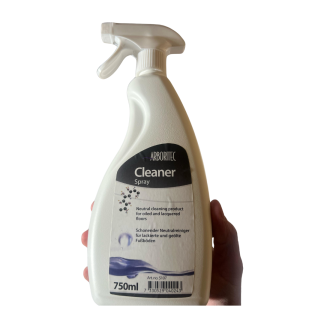
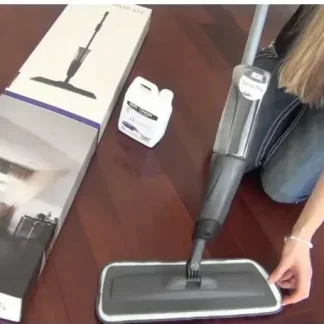
Arboritec Cleaner Concentrate is pH neutral and dries in around 15 minutes with no rinsing. For a no measuring option, the Arboritec Cleaner Spray comes ready mixed in a 750ml bottle, ideal for quick cleans and smaller areas. The Arboritec Spray Mop Kit pairs a spray mop with 1L of Cleaner Concentrate, so everything is in one box.
- Dilution
- 10ml per litre
- Water
- Lukewarm
- Rinse
- Not needed
Oiled floorsSame principle, plus regular top ups
Day to day, the rule is the same: a pH neutral cleaner, a damp mop and no standing water. Arboritec Cleaner Concentrate is our everyday cleaner for oiled floors too, and it is the cleaner in our oiled floor maintenance bundle.
The difference is that every clean slowly uses up a little of the oil, so an oiled floor needs topping up as part of the routine. That is what Oil Refresher is for, covered in the next section.
-
 Everyday cleaningArboritec Cleaner ConcentratepH neutral concentrate, 10ml per litre of waterRetail from £28.03 + VATTrade price: log in to see itView product
-
Quick cleansArboritec Cleaner SprayReady mixed, 750ml spray bottleRetail £9.85 + VATTrade price: log in to see itView product
-
Complete kitArboritec Spray Mop KitSpray mop with 1L of Cleaner ConcentrateRetail £46.77 + VATTrade price: log in to see itView product

Either finishWhat to avoid
- Steam mops. Heat and moisture together damage both lacquer and oil, and can make boards swell or warp.
- Vinegar or citrus cleaners. They are acidic and damage both finishes over time, however natural they seem.
- Washing up liquid or general household floor cleaners. Made for hard, non porous surfaces. They leave residue, strip protection, or both.
- Oil soap on lacquered floors. A very common mistake. Oil soap is made for oiled floors and leaves a greasy film on lacquer that attracts dirt.
Maintaining an oiled floor: the part most people underestimate
Oiled floors have a reputation for being high maintenance. That is partly deserved and often misunderstood. The upkeep is not difficult or time consuming. What it needs is regularity.
The oil in a wood floor is not permanent. Foot traffic, cleaning and everyday use slowly deplete it. As the oil level drops the wood becomes thirstier and more open to staining and moisture. The signs are a loss of warmth and depth in the colour, or busy areas starting to look grey or dull next to quieter parts of the room.
Step one, routineOil Refresher every fifth clean
Arboritec Oil Refresher is a floor soap made with saponified natural pine oil. Use it in place of your normal cleaner about every fifth clean. It cleans and re oils at the same time, so the floor is being topped up as part of the routine rather than as a separate job. A white version is available for white oiled floors.
- Sweep or vacuum to remove dust and grit.
- Mix 50ml of Oil Refresher with 1 litre of cold water.
- Mop with a damp, not wet, mop. No rinsing needed.
- If a light matt film shows once dry, buff with a dry cotton cloth.
Step two, when it looks dryMaintenance Oil when refreshing is no longer enough
Used consistently, Oil Refresher pushes deeper maintenance much further apart. In many homes that means a maintenance oil every few years rather than every year. When busy areas start to look dry despite regular refreshing, it is time for Arboritec Maintenance Oil, Satin. It is a ready to use, 38% solids oil that also suits UV oiled factory finished floors.
- Clean the floor thoroughly and let it dry.
- Shake the bottle well.
- Apply a thin, even layer with a cloth, mop or applicator pad and work it into the grain.
- Leave 3 to 4 hours before walking on it. Buff lightly for an even sheen if you like. Fully cured in 24 hours.
Scratches, scuffs and small damaged areas on an oiled floor can often be repaired on their own. Apply a little maintenance oil to the area, work it in and blend the edges. On a lacquered floor, a scratch that reaches the wood means sanding back and refinishing that area, and matching the sheen of the surrounding floor is notoriously difficult.
If an oiled floor has years of polish, wax or grease build up on it, Arboritec Remover lifts it before maintenance. Mix it with lukewarm water, do not let it dry on the floor, and wipe over with clean water afterwards.
-
Every fifth cleanArboritec Oil RefresherCleans and re oils in one step, also in whiteRetail from £24.30 + VATTrade price: log in to see itView product
-
When it looks dryMaintenance Oil, Satin38% solids maintenance oil, also for UV oiled floorsRetail from £31.52 + VATTrade price: log in to see itView product
-
Everything togetherOiled Floor Maintenance BundleOur complete trio for oiled floor care, at a savingRetail £75.47 + VATTrade price: log in to see itView product


Maintaining a lacquered floor: less often, but critical when needed
Day to day, a lacquered floor is low effort. Sweep, damp mop with the right cleaner, done. The lacquer film does the heavy lifting.
What it does need is attention to the condition of that film over time. A lacquer in good condition is hard and protective. A lacquer worn thin, particularly in hallways and doorways, offers little protection and starts to look patchy.
When it looks flatRefresher once or twice a year
Arboritec Refresher puts lacquer particles back into the surface and restores sheen to a tired floor without sanding. It is self dissolving, so each application breaks down the last one instead of building up layers. In most homes, once or twice a year is enough. Busier commercial floors may need it more often.
- Clean the floor first with Cleaner Concentrate and let it dry fully.
- Pour Refresher straight onto the floor. Do not dilute it.
- Spread thin and even with a clean, damp mop or lint free cloth.
- Allow about 1 hour before walking on it.
If the floor has ever been treated with polish or wax, deep clean it with Arboritec Remover first, or you may see streaks. Refresher is for lacquered floors only, not oiled ones. If the floor is finished in Arboritec Genuine Naked, Refresher may raise the sheen, so ask us before using it.
Deeper wear, or wear that has gone through to the wood, normally needs the floor sanding back and refinishing, either a screen and recoat or a full sand depending on the depth. That is a job for a professional floor contractor rather than a DIY project.
-
Once or twice a yearArboritec RefresherRestores sheen to lacquered floors, no build upRetail from £18.69 + VATTrade price: log in to see itView product
-
Everything togetherLacquered Floor Maintenance BundleCleaner Concentrate 1L and Refresher 1LRetail £46.72 + VATTrade price: log in to see itView product
-
Deep cleanArboritec RemoverLifts old wax, polish and grease build upRetail £13.18 + VATTrade price: log in to see itView product


Choosing between oil and lacquer
If your floor is being sanded, or you are fitting a new unfinished floor, you get to choose. Changing later means a full sand back to bare wood, so it is worth getting right first time.
- Choose oil ifYou want the most natural look and feel, you like the idea of repairing small areas yourself, and you are happy with a regular top up as part of cleaning.
- Choose lacquer ifThe floor takes heavy traffic, spills are likely, or you want the lowest day to day maintenance with a refresh once or twice a year.
What we supplyThe Arboritec finishes behind each option
For oil, Arboritec Miracle Oil 2K is a two component, 100% solid oil available in a range of colours, and Arboritec Hard Wax Oil is an oxidative hardening oil for indoor wood floors. Miracle Oil sample bottles let you test a colour on the wood before committing. See Miracle Oil 2K on a real oak floor in our Higham Hall case study by BC Stone and Floor Care.
For lacquer, the Arboritec range runs from Genuine Naked 2K, the lowest sheen in the range and virtually invisible on the floor, through Avenue 2K for heavy traffic, to 1K options such as Classic+ with no hardener to mix. Our lacquer page compares every option, and the lacquer coverage calculator works out quantities.
Most oils cannot be lacquered over, because the oil in the wood stops the lacquer bonding and it can peel or stay tacky. Arboritec Miracle Oil 2K is the exception. Unlike most hardwax oils, it can be top coated with Arboritec 2K waterborne finishes such as Avenue or Genuine, giving the colour of an oil with the protection and easy care of a lacquer. Follow the technical data sheet for timings, or ask us before you start. An older oiled floor with years of maintenance products in it, or a lacquered floor going to oil, still needs a full sand back to bare wood.
Everything for oiled and lacquered floors
We are the UK supplier for Arboritec, with cleaners, maintenance products, oils and lacquers in stock for next working day delivery.
- Orders placed Mon to Fri before 2PM are dispatched the same day for next working day delivery
- Not sure what your floor needs? Contact us
Frequently asked questions
Can I switch from oiled to lacquered, or the other way round?
Usually only after sanding the floor back to bare wood. Most oils cannot be lacquered over, because the oil stops the lacquer bonding and it can peel or stay tacky. The exception is Arboritec Miracle Oil 2K, which can be top coated with Arboritec 2K waterborne finishes such as Avenue or Genuine. Going from lacquer to oil always needs the film sanded off first.
Can you put lacquer over Miracle Oil?
Yes. Unlike most hardwax oils, Arboritec Miracle Oil 2K can be top coated with Arboritec 2K waterborne finishes such as Avenue or Genuine for extra protection and easier maintenance. Check the technical data sheet for timings, or ask us before you start.
My floor is dull and nothing seems to clean it. What is happening?
The most common cause is product build up, usually from the wrong cleaner or too strong a dilution over a long period. Floor soaps, wax based products and some multi surface cleaners all leave residues that accumulate. Arboritec Remover lifts the build up, then a regular routine with the right cleaner should bring the floor back.
Is engineered wood looked after the same way as solid wood?
Yes, in terms of surface care. The finish, oiled or lacquered, decides the routine, not whether the boards are solid or engineered. The same products apply.
How do I know when an oiled floor needs more oil?
The water drop test works here too. If water beads on the surface, the oil protection is still active. If it soaks in quickly, the floor needs maintenance. Visually, look for areas that have lost their warmth and richness compared with quieter parts of the room.
Can I use Arboritec Cleaner on both oiled and lacquered floors?
Yes. Arboritec Cleaner Concentrate is pH neutral and is the everyday cleaner we supply for both finishes, which makes it a practical choice if a property has a mix of floors. Oiled floors also need Oil Refresher about every fifth clean.
Can I use Arboritec Refresher on an oiled floor?
No. Refresher is made for lacquered floors. For oiled floors use Arboritec Oil Refresher, which cleans and re oils in one step.
Is a steam mop safe on a wood floor?
No. The combination of heat and moisture damages both lacquer and oil finishes and can make boards swell or warp. A well wrung microfibre mop with a pH neutral cleaner is the safe option.
Which finish is more hard wearing?
A lacquer in good condition gives the most surface protection against water, spills and heavy traffic. An oiled floor shows wear sooner but is easier to repair, because small areas can be re oiled without refinishing the whole floor.
