Posted on — Leave a comment

Better, or Just Safer? How to Know a Wood Floor Lacquer Is Good Before It Goes Down

Five questions to ask before choosing a wood floor lacquer, shown with a lacquer tin on an oak floor

It is the night before a big kitchen job. The floor is booked for sanding tomorrow, the client wants it finished by Friday, and you are ordering the lacquer. Ask most contractors what they are looking for and they will say the best finish. Watch what they actually order and it is something different: the one least likely to let them down.

That is not a criticism. It is how sensible people make decisions when they cannot see inside the tin. We rarely choose one product over another because we think it is better. We choose it because we are more certain it is good.

So the useful question when choosing a wood floor lacquer is not which one claims to be the best. It is how you can be certain a finish is good before it goes down on a paying job. This guide sets out five questions you can ask of any lacquer, explains why the words on the tin cannot answer them, and shows how Arboritec answers each one.

The short version

  1. Claims are cheap. Every tin says durable and hard wearing, so the label alone cannot give you certainty.
  2. Five questions cut through it: who makes it, what is in it, how the chemistry works, who supports it, and whether the maker invests in you.
  3. Then test it yourself. A sample board you have made and abused yourself is worth more than any brand name.

The question was never which lacquer claims to be best. It is which one you can be certain of.

01
The problem

Why the words on the tin cannot give you certainty

Every lacquer on the market says it is durable, hard wearing and easy to apply. Those are cheap claims: they cost nothing to make, so anyone can make them. They tell you what the maker wants you to believe, not what the finish will do in a hallway with two dogs.

  • Everyone uses the same wordsWhen every tin promises toughness, the promise stops carrying any information.
  • A familiar name proves marketing, not chemistrySeeing a brand everywhere online tells you about advertising budget and distribution. It is a reasonable shortcut, because a big name has a reputation to protect, but it says nothing about what is in the tin.
  • The failure shows up laterA finish that goes on beautifully can still wear through in a year. By then the client is living with it, and you are the one they call.
Certainty comes from things that are hard to fake: where a product comes from, what is in it, how it works, who stands behind it, and whether the maker invests in the people using it.
02
The checklist

Five questions to ask of any wood floor lacquer

Use these whatever brand you are looking at. A finish that answers all five clearly is one you can trust on a paying job.

QuestionA good answer looks likeWhy it matters
Who makes it, and for how long?A named manufacturer with years of floor finish historyA long track record is a reputation the maker cannot afford to lose
What is in it, and will they tell you?Current SDS and TDS, and real answers when you askOpenness is a sign of confidence in the formula
What does the chemistry actually do?A clear explanation of how the film resists wearA mechanism you understand is one you can explain to a client
Who answers when something goes wrong?Someone technical who has done the job themselvesSupport only matters on the day you need it
Will the maker invest in you?Training and recognition from the manufacturer itselfNobody spends money training people on a product they expect to fail
03
The answers

How Arboritec answers the five questions

Question oneWho makes it, and for how long?

Founded
1999
Where
Jörlanda, west coast of Sweden
First name
Nanofloor
Synteko
Floor finishes since 1944

Arboritec was founded in 1999 by a small team of Swedish coatings specialists. They set out to solve a problem contractors had lived with for decades: how to make a waterborne floor finish that performs like the old solvent based systems, without the fumes. Their answer was ceramic nanoparticles built into the lacquer, and they developed their first products under the Nanofloor name, after the technology itself.

Arboritec is owned by the Swedish industrial group Röko, and in 2019 it also took over Synteko, a Swedish floor finishes business founded in 1944. The name may be new to many UK contractors, but the company behind it has been making floor finishes for longer than most of us have been sanding them.

Question twoWhat is in it, and will they tell you?

Safety data sheets and technical data sheets are available across the Arboritec range, and when a question comes up that the paperwork does not answer, it goes straight to Arboritec's R&D team in Sweden.

An example

The nano ceramic in Vibrant primer does not appear in Section 3 of its safety data sheet. That is not an omission. Arboritec's R&D team confirmed the particles are chemically bonded into the polymer itself rather than added as a separate free ingredient, so they are not listed as one. A maker that will explain a detail like that is comfortable with you looking closely.

Question threeWhat does the chemistry actually do?

  • Bonded nano ceramicArboritec primers and lacquers contain ceramic particles under 14 nanometres across, surface treated so they bond chemically into the resin as it cures. Think of steel reinforcing bar tied into concrete, compared with gravel scattered on top. Loose particles are passengers in a film. Bonded ones carry load, from primer right through to topcoat.
  • A primer that fills, not just coatsParticles that small can get into the open pores and micro fissures sanding leaves behind, which are the same routes oils and extractives use to migrate up into a finish. That is why Vibrant is the primer to look at on awkward species such as iroko, always with a test patch first.
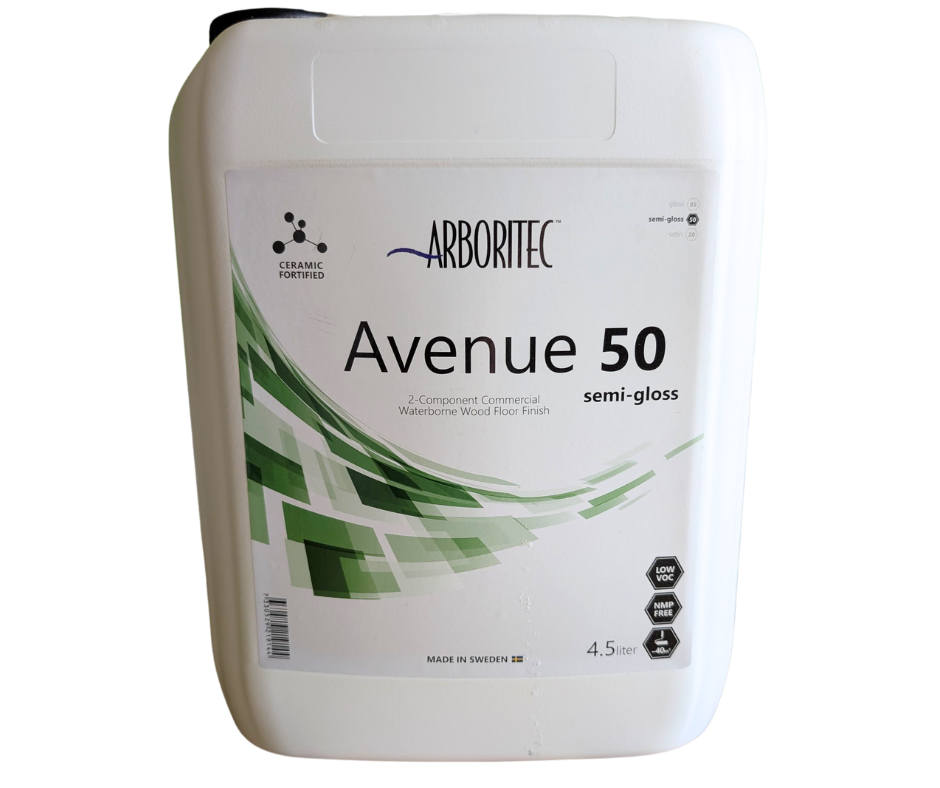
  • Crosslinking for toughnessAvenue 2K and Genuine 5 use Dual Cure Technology: water evaporates to form the film while the hardener crosslinks the resin into a tougher, more chemically resistant network. Classic+ is a 1K with a built in ADH crosslinker, so it keeps crosslinking as it cures without any mixing.
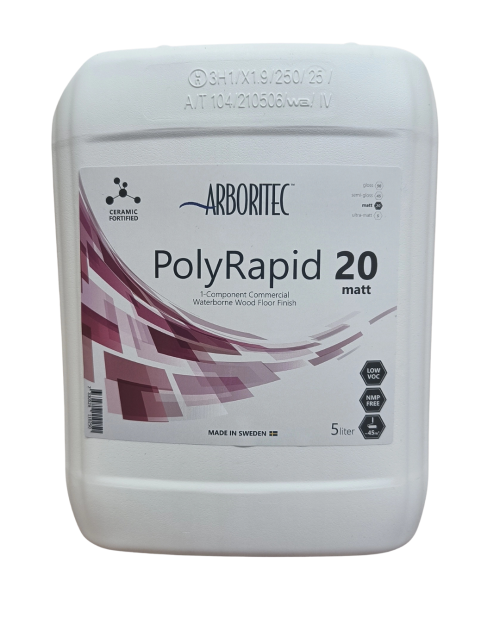
  • More build per coatPolyRapid shares the Classic+ formulation at a higher viscosity, so each coat lays down a thicker wet film. That makes a full system of primer plus two coats of PolyRapid.
Most primers coat the wood. Arboritec's primer fills it.

Question fourWho answers when something goes wrong?

  • One point of accountability. HF Flooring Supplies is Arboritec's sole UK distributor, so there is no chain of resellers passing your question along.
  • People who do the job. You speak to people who sand and finish floors themselves.
  • A short line to the chemist. Anything we cannot answer goes directly to Arboritec's technical and R&D staff in Sweden. When a job throws up an unusual timber, an old contaminated floor or an odd reaction, that matters more than any promise on a label.

Question fiveWill the maker invest in you?

This is the hardest signal to fake. Anyone can say they are committed to the UK market. Flying senior people over to train contractors in person costs real time and money, and that tells you far more about how long a manufacturer plans to be here than any words could.

Arboritec training course, 4 and 5 February 2027

Arboritec's CEO, two of its technical team and its R&D manager will be in the UK for a two day wood floor coatings course run through HF. Contractors who complete it can join the Arboritec endorsed Approved Applicator register. Places are limited, so contact us to register your interest.

04
The cost

The price question: count it differently

The price per tin is the wrong way to judge any finish. Work it out per square metre, then per year of wear. The finish is a small part of the cost of a sanding job, yet it is the only part the client touches every day for years. A finish that holds up longer between recoats, and keeps callbacks away, is cheaper in the way that matters to your business.

  • Arboritec First Coat waterborne wood floor primer, 5L
    PrimerFirst CoatNano ceramic primer for most timbers£82.37 + VATTrade price shown after loginView product
  • Arboritec Vibrant deep ambering wood floor primer, 3.78L
    PrimerVibrantDeep ambering primer for awkward species£71.79 + VATTrade price shown after loginView product
  • Arboritec PolyRapid high build 1K wood floor lacquer
    1K lacquerPolyRapidHigh build 1K, primer plus two coats£102.31 + VATTrade price shown after loginView product
  • Arboritec Avenue 2K waterborne wood floor lacquer for heavy traffic
    2K lacquerAvenue 2KDual cure for the heaviest traffic£132.69 + VATTrade price shown after loginView product

Prices shown are our standard prices. Trade account holders see lower trade pricing once logged in.

Trade customers

Your trade price is lower

Open a free trade account to see trade pricing across the full Arboritec range when you log in.

Open a trade account
05
For contractors

How to find out for yourself

Certainty you have earned yourself is worth more than anything we can tell you. Here is a simple way to get it.

  1. Order for a job you know well. Pick a hallway or kitchen where wear shows quickly, and order the system online.
  2. Make a sample board. Finish one half with Arboritec and the other with your usual system, following each technical data sheet.
  3. Test it yourself. Once fully cured, drag keys across it, leave a damp glass on it overnight and try a drop of red wine. Use whatever your clients actually put their floors through.
  4. Show the client. Let them see the board and hear why you chose the finish. A contractor who has done the test has something better than a brand name to point to.
  5. Go back and look. Revisit the floor after a few months of traffic and judge it on how it has worn.

Want to see finished floors first? Our case studies show real jobs by named contractors.

06
For homeowners

If you are a homeowner reading this

You do not need to understand lacquer chemistry to make a good choice. Ask your floor sander three things.

  • Which exact finish, and how many coats? A good contractor will answer without hesitating.
  • Why did you choose it for this room? A busy kitchen or hallway needs a tougher finish than a bedroom.
  • What training have you had in applying it? Manufacturer training shows they have invested in doing the job properly.

If you would like an Arboritec finish on your floor, ask your floor sander about it, or contact us and we will help where we can. Still deciding on the type of finish? Our guide to oiled versus lacquered wood floors explains the difference.

07
Conclusion

Certain before it goes down

The key takeaways

  • People choose the finish they are most certain is good, not the one they think is best, and that is a sensible way to decide.
  • The words on the tin cannot give you certainty, because every tin says the same thing.
  • Five questions cut through the claims: who makes it, what is in it, how it works, who supports it, and whether the maker invests in you.
  • Arboritec answers all five: Swedish floor finish chemistry since 1999, open data, bonded nano ceramic and crosslinking chemistry, a single UK distributor with a direct line to R&D, and manufacturer led training.
The question was never which lacquer claims to be best. It is which one you can be certain of, and now you know how to check.

Try Arboritec on your next job

We are the sole UK distributor for Arboritec, with stock on the shelf and technical support from people who finish real floors. Log in to see your trade price.

  • Orders placed Mon to Fri before 2PM are dispatched the same day for next working day delivery
  • Not sure which Arboritec system suits a job? Contact us
Questions

Choosing a wood floor lacquer

How do I choose a wood floor lacquer?

Look past the claims on the tin and ask five questions. Who makes it and for how long? What is in it, and are the SDS and TDS available? How does the chemistry resist wear? Who gives technical support when something goes wrong? Does the manufacturer offer training? A finish that answers all five clearly is one you can be confident in. Then make a sample board and test it yourself before using it on a paying job.

Is Arboritec a reliable brand?

Arboritec has been developing professional floor finishes in Sweden since 1999, when its first products were developed under the Nanofloor name. It is owned by the Swedish industrial group Röko, and in 2019 it took over Synteko, a Swedish floor finishes business founded in 1944. HF Flooring Supplies is the sole UK distributor and provides technical support with a direct line to Arboritec's R&D team.

What makes Arboritec lacquer different from other waterborne lacquers?

Arboritec primers and lacquers contain ceramic particles under 14 nanometres across that bond chemically into the resin as it cures, rather than sitting loose in the film. The 2K lacquers, Avenue 2K and Genuine 5, add Dual Cure Technology, where a hardener crosslinks the resin for extra chemical and abrasion resistance. Classic+ uses a built in ADH crosslinker to toughen a 1K finish without mixing.

Which Arboritec lacquer should I use for a busy kitchen or hallway?

For the heaviest residential and commercial traffic, Avenue 2K is the usual choice because its hardener crosslinks the film for the highest chemical and abrasion resistance in the range. For a ready to use 1K, Classic+ or PolyRapid works well, with PolyRapid laying a thicker film per coat. Use an Arboritec primer underneath, and choose Vibrant on oily or extractive rich timbers such as iroko, with a test patch first.

Is a more expensive floor lacquer worth it?

Judge a lacquer by its cost per square metre and per year of wear, not per tin. The finish is a small part of the total cost of a sanding job but takes all the wear afterwards. A finish that lasts longer between recoats and avoids callbacks usually costs less over the life of the floor.

I am a homeowner. What should I ask my floor sander about the finish?

Ask which exact finish and how many coats they plan to use, why they chose it for your room, how to clean and maintain it, and what training they have in applying it. A professional should answer all of these clearly. The finish is the layer that takes the wear, so it matters as much as the sanding.

Where can I buy Arboritec in the UK?

HF Flooring Supplies is the sole UK distributor of Arboritec. The full range, including First Coat and Vibrant primers, Classic+, PolyRapid, Avenue 2K, Genuine 5, Genuine Naked and Nordic Elastic, can be ordered online from hfflooringsupplies.co.uk, with next working day delivery on orders placed Monday to Friday before 2pm.

Posted on — Leave a comment

Nobody Ever Got Fired for Buying the Big Brand: What Rory Sutherland Teaches Us About Wood Floor Lacquer

It is nine at night, you are ordering for next week's job, and you have three lacquers open in different browser tabs. You add the one you always add to the basket. Not because you have tested it against the other two, but because if anything goes wrong, nobody will blame you for choosing it.

That instinct is completely normal, and many of our customers have described it to us in almost those words. It is also the biggest reason Arboritec wood floor lacquer is still a name many UK contractors have not tried, despite decades of professional use in Sweden and beyond.

One person has spent a career explaining why people make choices like this. Rory Sutherland, vice chairman of Ogilvy UK and author of the book Alchemy, argues that human decisions run on psychology far more than on logic. This article looks at three of his ideas, shows how each one plays out in the way floor finishes get chosen, and explains how HF Flooring Supplies is making Arboritec the safe choice as well as the better one.

The short version

  1. Satisficing: when we are uncertain, we pick the option that is good enough and unlikely to get us blamed, not the best one.
  2. Signalling: effort, cost and commitment build trust in a way words cannot. Training and endorsement are hard to fake.
  3. Perception: what something means to us matters as much as what it does. Unfamiliar can mean distinctive, once it is framed properly.

Good chemistry earns a place on the floor. It also has to feel safe to choose.

01
The thinker

Who is Rory Sutherland, and why does he matter to your floor?

Sutherland is one of the best known figures in British advertising. His central argument is that the most effective solutions to business problems often look illogical on a spreadsheet, because the people buying things are not spreadsheets. In Alchemy he groups the hidden reasons behind our choices into a handful of themes, including:

  • SatisficingWhen we are uncertain, we do not hunt for the best option. We pick one that is good enough and unlikely to embarrass us. The term comes from the economist Herbert Simon, and Sutherland returns to it often.
  • SignallingEffort, cost and commitment communicate trust in a way that words cannot.
  • PerceptionWhat something means to us can matter as much as what it physically does.

Every one of those is at work every time a contractor chooses a lacquer, and every time a homeowner agrees to it.

02
Satisficing

Why the safe choice wins

There is an old saying from the computer industry that nobody was ever sacked for buying IBM. IBM never used it as a slogan, yet Sutherland points out it became one of the most powerful marketing ideas ever, because it spoke to what buyers really feared. They were not trying to buy the best computer. They were trying to avoid being blamed.

Floor finishing works exactly the same way.

  • Blame is lopsidedIf a famous brand fails, it is bad luck. If an unfamiliar brand fails, it is your judgement that gets questioned.
  • The downside is visible, the upside is notA floor that fails costs you a callback and your reputation. A floor that wears a bit better than expected rarely earns a thank you.
  • Familiarity feels like evidenceSeeing a brand at the top of every search and listed by every online supplier feels like proof it works, even though that tells you about marketing budget and distribution, not chemistry.
So the real barrier for a better product is not proving it performs. It is removing the fear of being the person who tried something new.
03
Signalling

The black cab lesson

One of Sutherland's favourite examples of signalling is the London black cab. To get a licence, drivers spend years learning around 25,000 streets for the Knowledge. A sat nav could do the routing, but that is not the point. The sheer cost of qualifying tells you something about the person driving: they are committed, and they are not going anywhere.

Contractors send signals to clients all the time, whether they mean to or not.

Cheap signalCostly signal
Saying you use quality productsNaming a specialist system and explaining why you chose it
A logo on the vanFormal training with the manufacturer's own technical team
A low quoteA clear specification of coats, build and cure
Saying you know your stuffBeing on a manufacturer endorsed register

The cheap signals are easy for anyone to copy. The costly ones are hard to fake, which is why they are a far better guide for a homeowner deciding who to trust with their floor, and a far better way for a good contractor to stand out.

04
Perception

What Red Bull teaches us about being unfamiliar

Sutherland opens Alchemy with Red Bull. Before launch, it reportedly scored the worst taste test results the research agency had ever seen. It was expensive and came in a small can. By any logical measure it should have failed. Instead, those odd features made people believe it was potent, and it became one of the most successful drinks in history.

The lesson for flooring is not that a product should be unpleasant. It is that the features which look like weaknesses on paper can become strengths once you frame them properly. Being unfamiliar is one of those.

  • Unfamiliar means distinctiveYour client's neighbour did not get this finish on their floor. That makes your work stand apart.
  • A specialist import suggests specialist knowledgeA Swedish professional finish, sourced through a single UK distributor, tells the client you went looking for the right product rather than grabbing the nearest one.
  • A reason is worth more than a recognised nameA contractor who can explain why they chose a finish, and what it does on this floor, is showing real knowledge. Recognising a logo is not the same thing.
05
The solution

Making Arboritec the safe choice

Good chemistry earns a place on the floor. Sutherland's point is that it also has to feel safe to choose. Here is how both halves come together.

Part oneHow the chemistry works

  • Nano Ceramic FormulaArboritec lacquers use 12 nanometre ceramic silica particles that are surface treated so they bond chemically into the polymer as the film cures, rather than floating in it as a loose filler. A loose particle is a passenger in the film. A bonded one is load bearing. That bonded ceramic content runs through the whole range, from primer to topcoat.
  • Dual Cure TechnologyAvenue 2K and Genuine 5 2K are two component lacquers, mixed with a hardener just before use, and they cure in two ways at once. Water evaporates to form the film, while the hardener (Part B) crosslinks the resin into a tougher, more chemically resistant network.
  • Self crosslinking in a 1KClassic+ contains a built in ADH crosslinker, so it keeps crosslinking as it cures instead of relying on drying alone. That narrows the gap between a convenient 1K, single component and ready to use from the tin, and a full 2K system.

Part twoHow we remove the risk

  • Unfamiliar does not mean new. Arboritec was founded in 1999 in Jörlanda, on Sweden's west coast, and developed its first products under the Nanofloor name, after the ceramic technology it was built on. It is owned by the Swedish industrial group Röko, and in 2019 it also took over Synteko, a Swedish floor finishes business founded in 1944. The name may be new to the UK trade, but the chemistry and the company behind it are well established.
  • One UK distributor, one point of accountability. HF Flooring Supplies is Arboritec's sole UK distributor, so there is no chain of resellers between you and the people who know the product.
  • Technical backup from people who sand floors. Our team has hands on contracting experience and a direct line to Arboritec's own technical and R&D staff in Sweden.
  • Training with the manufacturer. Arboritec training courses run through HF, with Arboritec's own technical team in the room.
  • An Approved Applicator scheme. Contractors who complete the training can join an Arboritec endorsed Approved Applicator register. That is the black cab signal, applied to wood floors.
Next Arboritec training course

Our next wood floor coatings course runs on 4 and 5 February 2027, with Arboritec's technical and R&D team attending. Places are limited, so contact us to register your interest.

06
For contractors

How to present it to your client

  1. Name the system. Tell the client exactly which Arboritec products are going on and how many coats.
  2. Explain one feature in plain English. Pick the Nano Ceramic Formula or the dual cure, and describe what it means for their floor.
  3. Show your credentials. If you are trained or approved, say so and show the certificate.
  4. Own the choice. Present it as a deliberate specification, not an alternative to a brand they know.

Real floors help too. Our case studies show finished Arboritec floors by named contractors, which you can share with clients who want to see the result before they agree.

07
For homeowners

If you are a homeowner reading this

You do not need to know lacquer chemistry to choose a good contractor. A few simple questions will tell you a lot.

  • Ask which finish they are using. A good contractor will name the exact product and number of coats without hesitating.
  • Ask why they chose it for your room. A busy kitchen or hallway needs a tougher finish than a bedroom, and they should be able to explain the difference.
  • Ask about training. Manufacturer training or an approved applicator certificate shows they have invested in doing the job properly.
  • Ask how to look after it. The right cleaning products and a recoat plan will keep the floor looking good for years.

Still deciding between a lacquered and an oiled finish? Our guide to oiled versus lacquered wood floors explains the difference.

08
Conclusion

Safe to choose, and better on the floor

The key takeaways

  • People choose to avoid blame more often than to find the best. Rory Sutherland calls this satisficing.
  • Costly signals such as training and endorsement build trust that words alone cannot.
  • Being unfamiliar can be a strength once it is framed as distinctive and deliberate.
  • Arboritec combines the Nano Ceramic Formula and Dual Cure Technology with UK distribution, technical support and training that take the risk out of switching.
Nobody ever got fired for buying the big brand. But nobody ever stood out for it either.

Give your next floor a finish that sets your work apart

We are the sole UK distributor for Arboritec, with stock on the shelf and technical support from people who finish real floors. Log in to see your trade price.

  • Orders placed Mon to Fri before 2PM are dispatched the same day for next working day delivery
  • Not sure which Arboritec system suits a job, or want to talk trade pricing? Contact us
Questions

Choosing Arboritec wood floor lacquer in the UK

Who is Rory Sutherland?

Rory Sutherland is vice chairman of the advertising agency Ogilvy UK and author of Alchemy, a book about why people make choices that look illogical but make psychological sense. His ideas on satisficing, signalling and perception explain a lot about why contractors stick with familiar products, and how a lesser known brand can earn trust.

Why do most UK contractors use the same few lacquer brands?

Mostly because those brands feel safe. They are listed everywhere and clients recognise them, so if something goes wrong the contractor is not blamed for the choice. That is a decision about avoiding risk, not proof that those products perform best.

Is it risky to use Arboritec wood floor lacquer if my client has not heard of it?

The risk is lower than it seems. Arboritec has been developing professional floor finishes in Sweden since 1999, it is owned by the Swedish industrial group Röko, and HF Flooring Supplies is its sole UK distributor, with technical support and manufacturer training available. Trial it first on a floor you know well and follow the technical data sheet.

How can I convince a client to accept a finish they do not know?

Name the exact system you are using, explain one feature such as the Nano Ceramic Formula in plain English, and show any training or approval you hold. Clients trust a contractor who has clearly chosen a specification on purpose far more than one who simply uses whatever came up first.

I am a homeowner. Should I ask my contractor which lacquer they are using?

Yes. A professional floor sander should be happy to name the exact finish, explain why it suits your room and tell you how to look after it. If they cannot, it is worth asking more questions before work starts. The finish is the layer that takes all the wear, so it matters as much as the sanding.

What is the Arboritec Approved Applicator scheme?

It is an Arboritec endorsed register for contractors who have completed Arboritec training through HF Flooring Supplies. It confirms the contractor has had technical training from the manufacturer in applying the products effectively, giving clients an independent signal of competence.

Where can I buy Arboritec wood floor lacquer in the UK?

HF Flooring Supplies is the sole UK distributor of Arboritec. The range, including Classic+, PolyRapid, Avenue 2K, Genuine 5, Genuine Naked and Nordic Elastic, is available to order online from hfflooringsupplies.co.uk, with next working day delivery on orders placed Monday to Friday before 2pm.

Rory Sutherland's ideas are discussed here as commentary. He is not connected with HF Flooring Supplies or Arboritec.

Posted on — Leave a comment

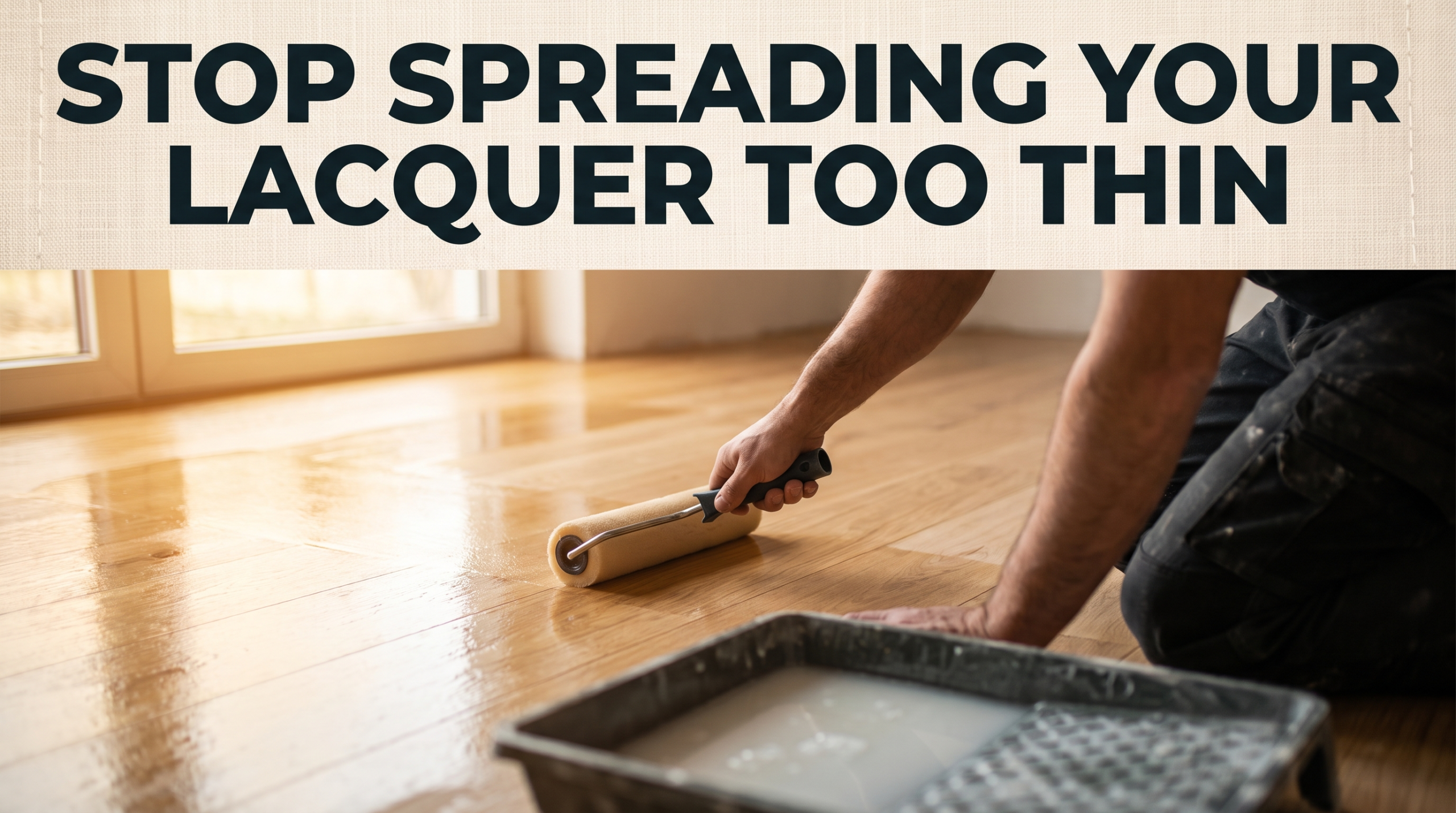
Wood Floor Lacquer Application Rate: Avoid Lap Lines

1. Introduction: The Floor Looked Perfect Until the Sun Came Through the Window

You’ve just finished the final coat. The floor looks flawless under the workshop lights, so you pack up, tell the client it’s ready, and head off to the next job. Three days later you get a call: “There are these faint lines running down the hallway — can you see them in this photo?” Under low, raking light — morning sun through a side window, or a lamp at floor level in the evening — a set of parallel streaks has appeared, running the exact width of your roller or applicator, spaced exactly where each pass overlapped the last.

Lap lines are one of the most common finish-quality complaints in wood floor refinishing, and they’re almost never a fault in the product. They’re a symptom of application rate — specifically, not enough finish going down per square metre for the coating to do what it’s designed to do. This article explains the mechanism behind lap lines, why “it looked even when I put it on” isn’t the same as “it was at the correct spread rate,” and how getting application rate right across your primer and lacquer coats is also what actually builds the protection you’re selling the client. We’ll use Arboritec’s system — First Coat, Seal Coat, Vibrant, Classic+, PolyRapid, and Avenue 2K — throughout, since it’s the only lacquer range HF Flooring Supplies stocks and every spread rate figure here comes straight from Arboritec’s own technical data sheets.

2. The Science of Flow, Levelling, and Wet Film Thickness

Every waterborne wood floor primer and lacquer is formulated to “flow and level” — meaning that once it’s on the floor, the liquid is meant to move slightly on its own, smoothing out roller stipple, brush marks, and the ridge where one pass overlaps the next, before it starts to dry. This isn’t automatic. It depends on there being enough liquid — enough wet film thickness — to actually flow.

Think of pouring golden syrup onto a warm pancake versus wiping a thin smear of it across with a knife. Pour a generous amount and it spreads out under its own weight, settling into a smooth, level layer with no ridges. Wipe on the thinnest possible smear and it stays exactly where the knife left it — every stroke mark, every overlap, stays visible because there simply isn’t enough volume of liquid to move and merge.

Wood floor lacquer behaves the same way. Arboritec’s own technical data sheets for Avenue 2K, Seal Coat, and Vibrant all use near-identical wording in the application instructions: apply a sufficient amount of product to ensure good levelling of roller or applicator marks. That’s not filler text — it’s the manufacturer telling you the spread rate figure on the same page is the minimum amount of wet film needed for the flow-and-level chemistry to actually work.

3. Why the Obvious Approach — Spreading It Further — Fails

A contractor who’s run short on a job, or who’s trying to make one tub stretch across a bigger area than it’s rated for, will often thin the application rather than order more product. It looks fine going on. Here’s why it doesn’t stay that way:

  1. A thinner wet film runs out of time to flow before it starts to set. Levelling only happens in the window before the coating begins to flash off and gel. Spread the same litre of product over more square metres and the film is thinner everywhere — which means it reaches that gel point faster, with less time and less material to smooth the overlap zones. The ridge where two passes meet doesn’t get the chance to melt into a single, continuous film.

  2. You lose the wet edge faster than you can work. Every waterborne finish needs the next pass to overlap into an edge that’s still wet, so the two merge into one film. Thin the application and that “still wet” window shrinks — by the time you’ve finished the next section and come back to lap in, the previous edge has already started to skin over. The result is a visible line, not a seam.

  3. “Looks even” and “at spec” are two different things. A coat can look perfectly uniform to the eye while sitting well below the product’s stated spread rate — waterborne lacquers are designed to look glassy and wet immediately after application regardless of how thin the film actually is. The lap lines and the thin dry film underneath both only become obvious once the coating has fully dried and cured, by which point the client has already seen it.

4. The Real Cost: Protection Is Built Coat by Coat, at a Specified Rate

Lap lines are the visible symptom, but the more expensive problem is invisible: under-spreading a primer or lacquer doesn’t just risk lap lines, it also means less dry film ends up on the floor than the system was designed to deliver. A wood floor’s wear resistance, chemical resistance, and scratch resistance aren’t abstract properties of the product in the tub — they’re properties of the cured film thickness that’s actually sitting on the wood, built up coat by coat. Spread a product too thin and you can apply the “correct number of coats” and still hand the client a floor that’s under-protected for the traffic it’s about to see.

This is exactly why Arboritec publishes a spread rate — in litres per square metre or square feet per gallon — for every product in its system, and why that number, not a visual check, is the actual specification:

ProductStated coverageCoats (typical system)
Arboritec First Coat (primer)10–12 m²/litre (50–60 m² per 5L tub)1 coat
Arboritec Seal Coat (primer)8–11 m²/litre (95–131 g/m² with a roller)1 coat
Arboritec Vibrant (primer)Approx. 9.8–12.3 m²/litre (400–500 sq ft/gallon per Arboritec’s TDS)1 coat
Arboritec Classic+ (1K lacquer)Approx. 9–11 m²/litre (45–55 m² per 5L tub)3 coats bare wood, or 2 coats over primer
Arboritec PolyRapid (1K lacquer)8–10 m²/litre2 coats over primer — see below
Arboritec Avenue 2K (2K lacquer)Approx. 9.8–12.3 m²/litre (400–500 sq ft/gallon per Arboritec’s TDS)2–3 coats over primer

Look closely at Classic+ against PolyRapid: PolyRapid has a noticeably lower spread rate — 8–10 m²/litre against Classic+’s 9–11 m²/litre — because it’s formulated with a higher viscosity (a 34/35-second rating, against a standard lacquer’s viscosity). That’s not a flaw or an inefficiency; it’s the entire point of the product. A higher-viscosity finish lays down a thicker wet film per coat at the same application effort, which is why Arboritec state that two coats of PolyRapid over primer deliver the same dry film build as three coats of Classic+. Application rate and viscosity are two sides of the same mechanism — they both control how much material actually ends up on the wood — which is exactly why you can’t compensate for spreading a product too thin by simply “adding another coat later” once the problem is already visible; you have to abrade back and correct it properly.

5. How to Get Application Rate Right on Every Job

  1. Check the TDS spread rate before you start, not while you’re applying. Work out the floor’s square metreage and calculate how many litres of primer and how many litres of lacquer you actually need at the manufacturer’s stated rate — don’t estimate by eye once you’re on your knees with a roller.
  2. Order enough product to hit the correct rate across the whole floor, with a margin. Running out mid-room and thinning the last few square metres to make a container stretch is the single most common cause of lap lines turning up in one specific area of an otherwise good job.
  3. Apply with the tool the TDS specifies. Arboritec recommends a 10mm roller for Avenue 2K, Classic+, and PolyRapid, and a lightweight T-bar applicator for the primers — the applicator affects how consistently the film thickness comes off in your hands, not just how it looks.
  4. Work in sections sized to your own speed, and always lap into a wet edge. Never come back to an edge that’s already started to flash off — if in doubt, work smaller sections rather than larger ones so you can always return to a genuinely wet line.
  5. Choose the right product for the coat count you need, rather than improvising with a standard one. If the job calls for fewer coats to save time on site, specify PolyRapid rather than thinning Classic+ or skipping a coat — the higher-build formulation is designed to deliver the same protection in fewer passes.
  6. Let each coat flow out undisturbed. Don’t go back over an area once it’s started to set to “fix” a patch you’re not happy with — that re-introduces exactly the ridge and lap-line problem the correct application rate was there to prevent. If a section genuinely needs correcting, let it dry fully, abrade, and recoat.

6. Conclusion

Lap lines aren’t a product defect and they’re not bad luck — they’re what happens when a waterborne primer or lacquer is spread thinner than the wet film thickness it needs to flow, level, and merge overlapping passes before it starts to set. The same under-application that causes lap lines is also quietly under-building the dry film that’s meant to protect the floor, coat by coat, at the rate the manufacturer tested and specified. Getting the application rate right — checking the TDS coverage figure, ordering enough product, and keeping a genuinely wet edge as you work — is what separates a finish that looks good in the workshop light from one that still looks good three years and a few thousand footsteps later.

Click here to shop the full Arboritec primer and lacquer range from HF Flooring Supplies and get the coverage rate right on your next job, first time.

Frequently Asked Questions — Wood Floor Lacquer Application Rate and Lap Lines

Q: What actually causes lap lines in a wood floor lacquer finish? A: Lap lines form where two overlapping passes of primer or lacquer meet but don’t merge into a single continuous film before the coating starts to set. This almost always happens because the product was applied at a lower rate — a thinner wet film — than the manufacturer’s stated coverage figure, giving the finish less material and less time to flow together at the overlap.

Q: How do I work out how much primer or lacquer I need for a floor? A: Measure the floor’s total square metreage, then divide by the product’s stated coverage rate from its technical data sheet — for example, Arboritec First Coat covers 10–12 m² per litre, so a 60 m² floor needs roughly 5–6 litres for one coat. Always round up rather than down, and calculate per coat if you’re applying more than one layer.

Q: Can lap lines be fixed once the lacquer has fully dried? A: Yes, but not by adding another coat on top without preparation. The affected area needs to be lightly abraded to key the surface and remove the visible ridge, then recoated at the correct application rate so the new coat can flow out properly. Spot-recoating without abrading usually just adds a second layer of the same problem.

Q: Does applying more product than specified give a glossier or better finish? A: No. Over-spreading past the stated rate risks pooling, sagging on any vertical surfaces like skirting, and a longer drying time, without improving durability — the manufacturer’s coverage figure is the tested rate for correct flow, levelling, and cure, not a minimum to be exceeded for a better result.

Q: What’s the practical difference between Classic+ and PolyRapid’s coverage rates? A: Classic+ covers approximately 9–11 m² per litre and is typically applied in three coats on bare wood (or two over a primer), while PolyRapid’s higher viscosity gives it a lower coverage rate of 8–10 m² per litre — meaning each coat lays down more material, so two coats of PolyRapid over primer deliver the same dry film build as three coats of Classic+.

Q: Why do temperature and humidity affect lap lines? A: Both primers and lacquers need a set window of open time to flow and level before they start to gel, and that window shortens in high temperatures or low humidity. Arboritec’s application instructions specify a 13°C–25°C range with 40–60% relative humidity, and recommend adding 2% Arboritec Extender in hot, dry conditions specifically to keep the open time long enough to avoid lap lines.

Q: Can I thin a waterborne lacquer with water to make it go further? A: No — Arboritec’s application instructions for Classic+, PolyRapid, and Avenue 2K all explicitly state not to dilute the finish. Diluting reduces the solids content of the film below what the product was formulated and tested at, undermining both the flow-and-level behaviour and the final dry film build regardless of how many coats you apply afterwards.

Posted on — Leave a comment

Floor Sanding Abrasive Grain Types: Aluminium Oxide, Silicon Carbide, Zirconia & Ceramic Explained

Ask most people what abrasive they are running and they will tell you the grit. 40, 60, 80, 100. Fair enough, grit decides how coarse the scratch is. But grit is only one part of the story.

The grain type decides how fast you cut and how long the belt lasts. The grade within that grain type decides whether you are paying for a harder mineral or just a marketing word. The backing decides whether the whole thing survives the job without cooking. And the grit standard, the coat, and the sequence decide whether all of that actually shows up as a clean, even floor.

Most spec sheets shout the grit and whisper everything else. This is a proper look at what is under the number, with real examples from the abrasives we stock and use ourselves, so it is not just theory.

The short version

  1. Grain: decides cut rate and belt life. Zirconia and ceramic fracture in tiny steps and stay sharp, which is why they last.
  2. Backing and coat: heavy X or Y cloth or a hybrid backing for belts, and a semi open coat for resinous wood and old finishes.
  3. Sequence: never skip a grit, and replace a belt as soon as it stops biting.

Two belts both labelled ceramic can behave completely differently, so check what is actually in the grain.

  • Grains coveredAluminium oxide, silicon carbide, zirconia and ceramic
  • Also coversBacking, open and closed coat, grit standards
  • BrandMenzer belts, discs, screens and pads
  • IncludesWhich abrasive to pick for each job
01
The basics

Two properties decide everything: hardness and toughness

Every abrasive grain lives or dies on two properties, and they pull in opposite directions.

Hardness is the grain's ability to scratch the material in front of it. It is measured on the Mohs scale, with talc at 1 and diamond at 10. For the four grains used in floor sanding and woodworking, the numbers sit surprisingly close together.

Mohs hardness of the four grains
  • Silicon carbideabout 9.5
  • Ceramic aluminaabout 9.4
  • Aluminium oxideabout 9.0
  • Zirconia aluminaabout 8.5

Toughness, or friability, is how the grain breaks down under pressure. This is the property people forget, and it matters more than raw hardness. A grain that never fractures just goes blunt and starts burnishing your floor instead of cutting it. A grain that fractures in a controlled way keeps snapping off tiny worn edges to reveal fresh sharp ones underneath, so it stays sharp as it wears. That is the self sharpening effect you will see quoted, and it is real physics, not marketing.

So the hardest grain on the list is not automatically the best. Silicon carbide is the hardest of the four, yet it has one of the shortest working lives, because it is brittle and sheds fast.

02
Staying sharp

How grains stay sharp: macro, micro and nano fracturing

This is the bit that separates a cheap belt from an expensive one, so it is worth understanding.

Silicon carbide and aluminium oxide

Structure
Monocrystalline. Each grain is essentially one large crystal.
How it breaks
Along big planes of weakness, with big chunks coming off at a time. It only does this a handful of times before the grain is spent. That is macro fracturing.

Zirconia alumina and ceramic alumina

Structure
Engineered grains built from thousands of tiny micron and submicron crystals packed together.
How it breaks
In tiny increments, shedding microscopic fragments rather than lumps. Zirconia can micro fracture hundreds of times across its life. Ceramic can do it thousands of times, which is why it is sometimes called a nano fracturing grain.

More fracturing events means the grain exposes fresh cutting edges again and again instead of dulling. That is the whole reason zirconia and ceramic hold their cut rate long after cheaper grains have gone smooth and started riding on top of the wood.

03
The grains

The four grains, and where each one earns its keep

One thing worth saying up front: the grain name on the box is the mineral, not the grade. Within every one of these families there is a quality and price ladder, driven by the purity of the mineral, how tightly the grain is graded for size, and the quality of the bond holding it down. A cheap silicon carbide and a premium silicon carbide are both silicon carbide, and they behave nothing alike. So treat the type as the starting point, not the whole answer.

Grain 1Aluminium oxide: the honest workhorse

Best for
Low pressure and finishing work
Weak spot
Wears quickly under drum sander pressure
Our pick
White fused grade for finishing

Blocky shaped grain with sharp edges. It is the most common abrasive on the market and it is cheap, but on its own under drum sander pressure it wears down too quickly to be the star of a heavy cut. Where it shines is low pressure and finishing work: orbital discs, hand sheets, and between coats abrading. Its blocky shape leaves a fine, consistent scratch pattern with no stray deep scratches, which is exactly what you want when you are keying a finish rather than removing timber.

And it is not one thing. Brown aluminium oxide, around 95% pure, is the tough, cheap, semi friable everyday grade. White fused aluminium oxide, 99% plus, is more friable and runs cooler, which makes it better for lacquers and between coats. Same aluminium oxide on the label, two different price points and two different behaviours. It is why we stock the white fused grade specifically for finishing work rather than a general purpose brown. Our Menzer UltraNet 150mm mesh discs and UltraPad discs in 150mm and 406mm all use white fused grain, precisely because a final sand or a lacquer cut back needs the cooler, more consistent cut rather than raw aggression.

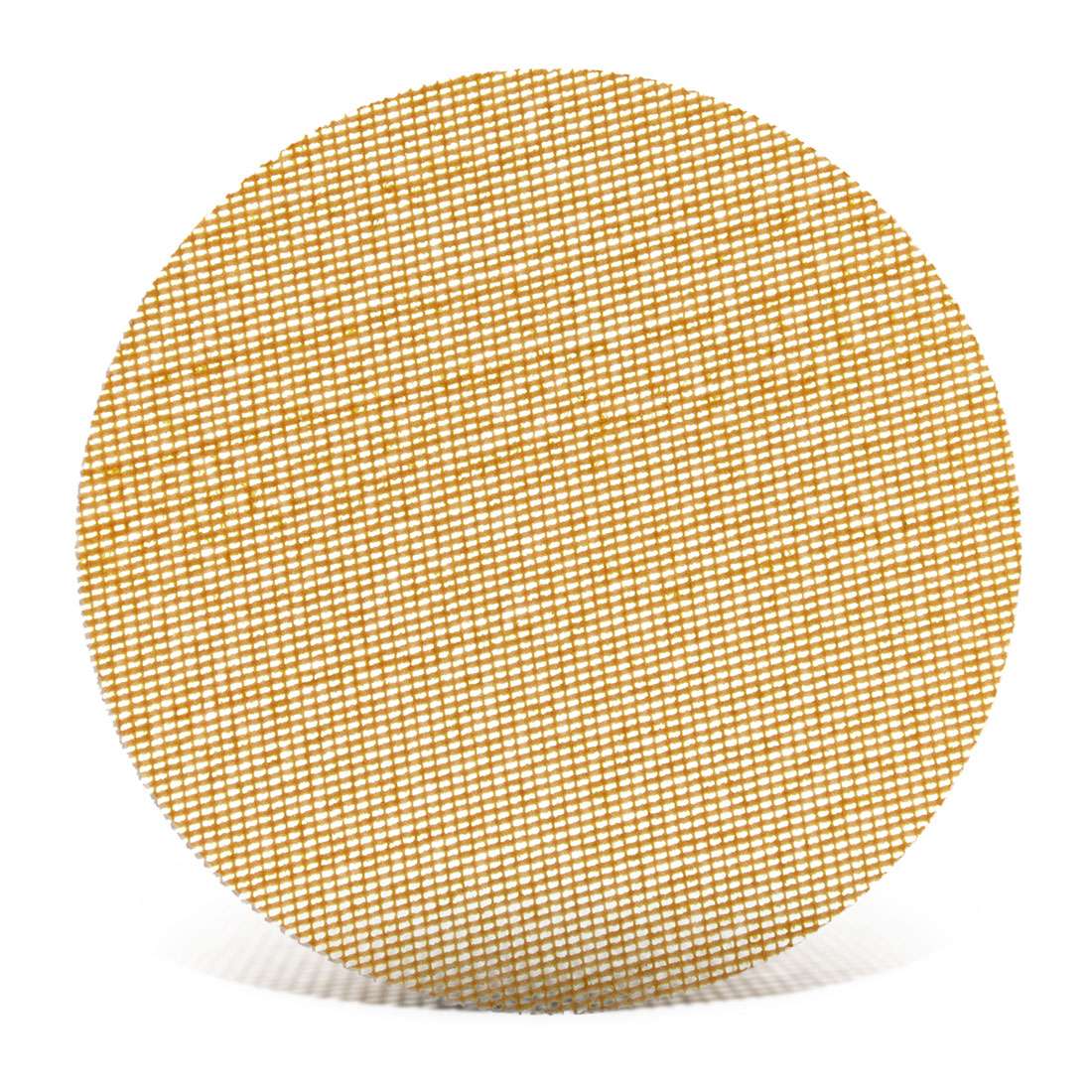
  • Menzer UltraNet 150mm white fused aluminium oxide mesh sanding discs
    Mesh discMenzer UltraNet 150mmWhite fused aluminium oxide mesh discs, pack of 50£51.25 + VATView product
  • Menzer UltraPad 150mm white aluminium oxide sanding disc
    DiscMenzer UltraPad 150mm3 in 1 fleece, white aluminium oxide£44.56 + VATView product
  • Menzer UltraPad 406mm white fused aluminium oxide disc
    DiscMenzer UltraPad 406mm16 inch white fused aluminium oxide£69.62 + VATView product

Grain 2Silicon carbide: sharp, fast, and short lived

Best for
Screens, stone, screed and concrete
Weak spot
Friable, sheds heavily early on
Our pick
Menzer 406mm open net screens

The hardest of the four and the sharpest, with a long, pointy grain. It cuts raw wood and old coatings fast, and its sharpness can leave a lovely fine scratch, which is why it turns up on screens, mesh and finishing grits. It is also the standard grain for stone, screed and concrete, anywhere you are not cutting timber. The trade off is friability. It sheds heavily, especially early in its life, and those long grain fragments can occasionally dig in and leave an errant deep scratch. On screens you will sometimes see the shed grain get trapped and drag a coarse line across the floor. A brilliant tool for the right stage, but not a grain to lean on for a long, hard cut.

Are all silicon carbides the same? Not remotely. There is black silicon carbide, roughly 95 to 98% pure, which is the common, cheaper one, and green, 99% plus pure, which is harder, sharper and more expensive. On top of the purity, the thing that separates a good SiC from a cheap one is grading consistency, meaning how tightly the grain is screened to a uniform size. Cheap grain has a loose size spread, which means the odd oversized particle riding proud of the rest, and that is exactly what leaves rogue scratches you then have to chase out. Pay a bit more and you are often paying for consistency as much as purity.

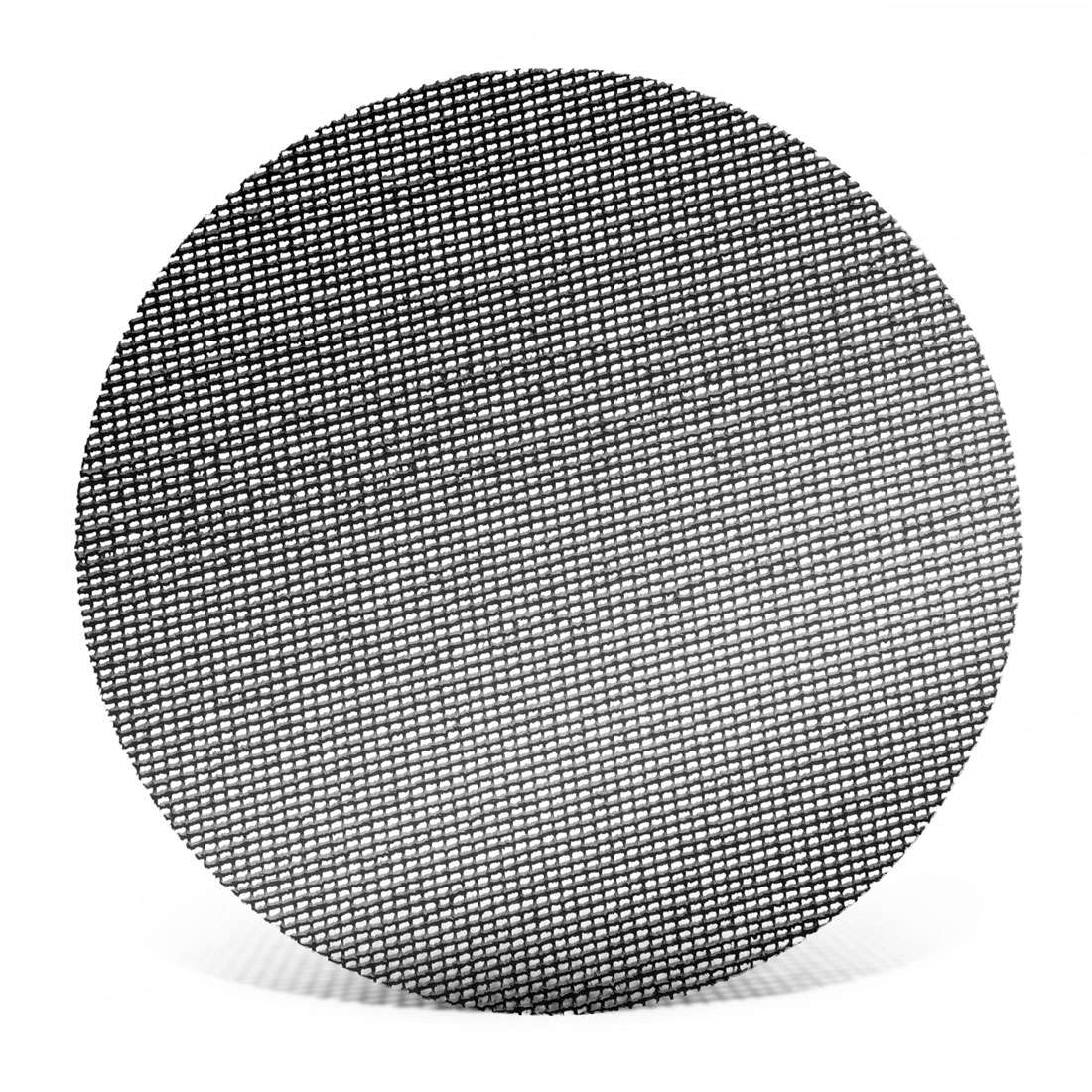
Menzer silicon carbide 406mm open net sanding screen

Menzer silicon carbide 406mm screens

£31.37 + VAT

Built with a genuine open net mesh so dust pulls straight through rather than packing between the grains, keeping the screen cutting cool instead of glazing over.

Shop silicon carbide screens

Grain 3Zirconia alumina: the drum belt hard worker

Best for
Belt and drum sanding on demanding floors
Needs
Firm pressure to self sharpen
Our pick
Menzer Blue Zirconia

A tough, co fused grain, aluminium oxide married to zirconium oxide, long and spindly in shape. It micro fractures and self sharpens, so it lasts far longer than silicon carbide on hard woods and tough coatings. This is the go to grain for belt and drum sanding on demanding floors. One important catch: zirconia needs firm pressure to work. Starve it of load and it will not fracture and resharpen. It will glaze over and start generating heat instead of cutting. Give it the pressure it wants and it earns its place.

Here too there is a spread. Zirconia is sold in different alloy ratios, with grades around 25% and 40% zirconia, and the fineness of the crystal structure, set by how fast the melt is quenched in manufacture, makes a real difference to how well it holds up. A budget zirconia belt and a premium one can be a world apart in life and cut, even at the same grit.

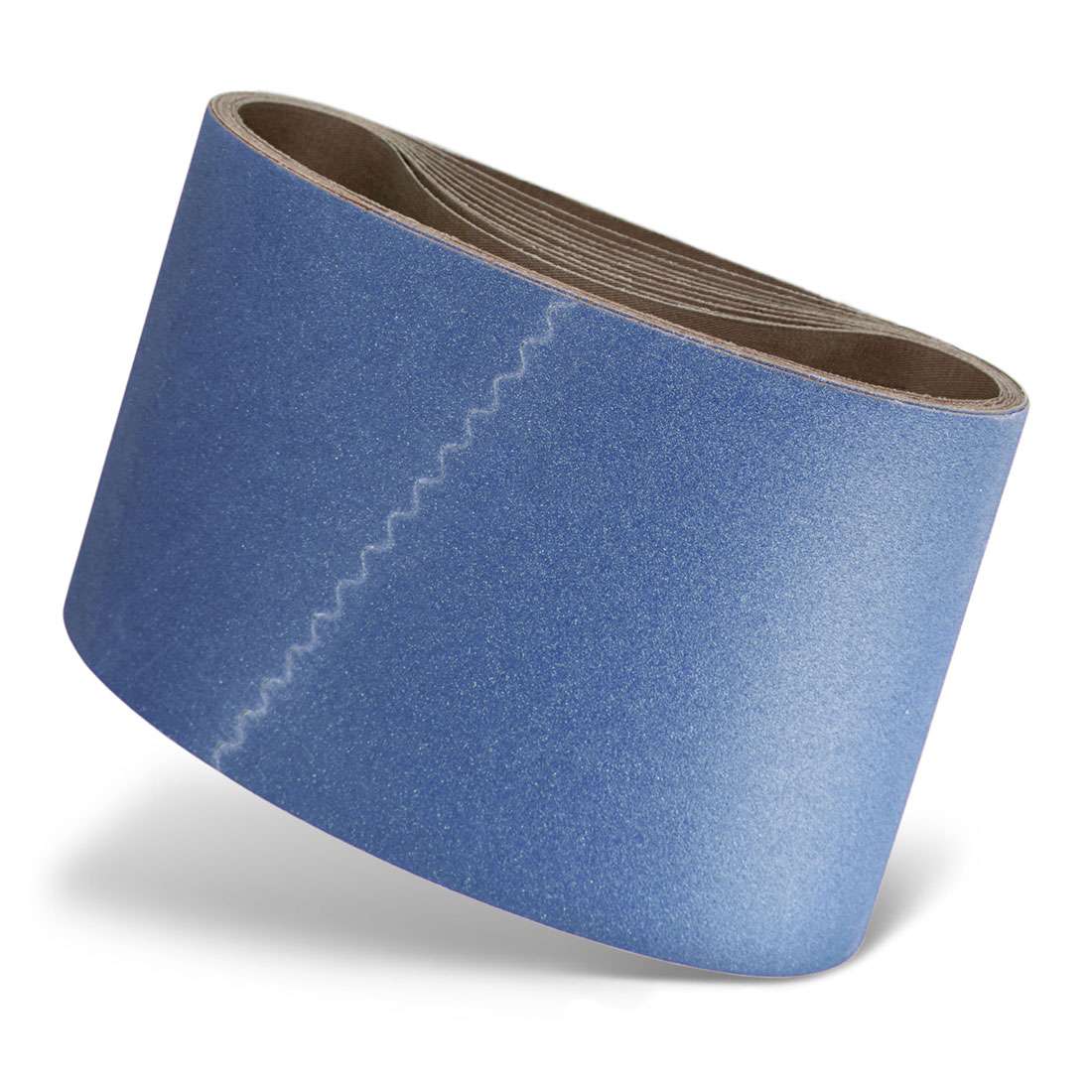
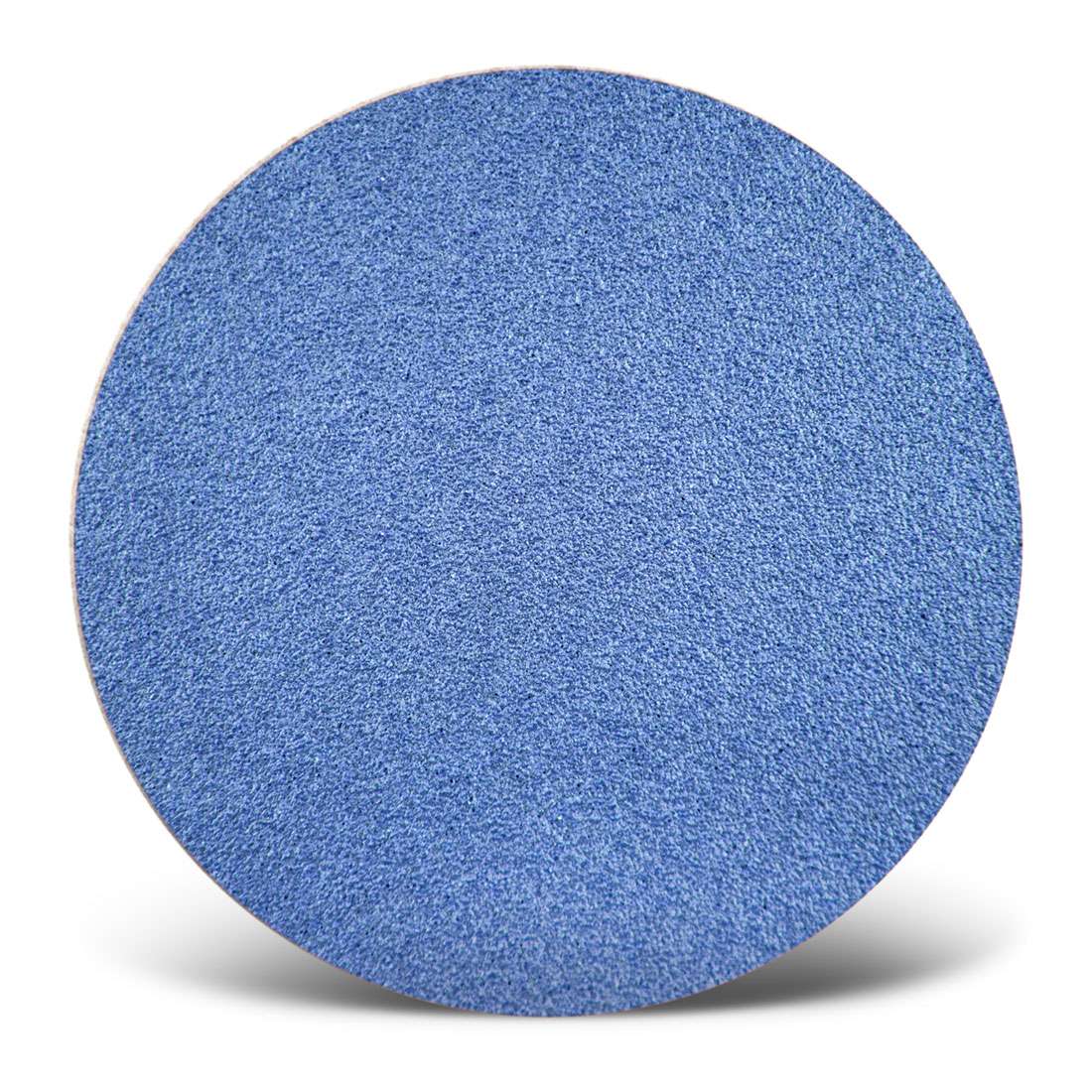
This is the grain behind our own Menzer Blue zirconia belts, 200 x 750mm, and the matching 178mm edger discs. They use self sharpening zirconia alumina on a hybrid polyester reinforced backing rather than basic cotton cloth, semi open coated to resist lacquer and resin clogging. It is the everyday workhorse for general stripping and hardwood profiling.

  • Menzer Blue zirconia sanding belt 200 x 750mm
    Drum beltMenzer Blue Zirconia belt200 x 750mm, pack of 10, 24 to 100 gritFrom £35.62 + VATView product
  • Menzer Blue zirconia sanding disc 178mm
    Edger discMenzer Blue Zirconia disc178mm matching edger disc, 40 to 100 gritFrom £52.50 + VATView product

Grain 4Ceramic alumina: the premium grain

Best for
Exotic and very hard timbers, hardened finishes, sports floors
Needs
Adequate pressure and the right machine
Our pick
Menzer Ruby HD, 100% ceramic

This is the engineered end of the spectrum. Ceramic grain is made by a sol gel, or seeded gel, process. Alumina is grown from a gel and sintered below its melting point, producing a grain made of thousands of submicron crystallites, around 0.2 to 0.5 microns each, instead of a few big fused crystals. That ultra fine structure lets it shed microscopic fragments continuously. It stays sharp, runs cool, and lasts three to five times longer than a conventional aluminium oxide in the right application. It is the first choice for exotic and very hard timbers, aluminium oxide hardened finishes, and sports floors.

The newest ceramics go a step further with shaped grain. The grain is formed into precise triangular structures and stood up on the backing like rows of tiny cutting tools. Instead of ploughing through the surface, these points slice, fracturing into fresh sharp edges as they go, cutting faster and cooler with less pressure. 3M Cubitron and Norton RazorStar are the best known examples, though those specific products are aimed at metal grinding rather than wood.

The catch with ceramic mirrors zirconia: it is engineered to self sharpen under adequate pressure and the right machine. Run it too light and heat sensitive, and you never activate the mechanism you paid for. The belt glazes and you have spent premium money for a mediocre cut.

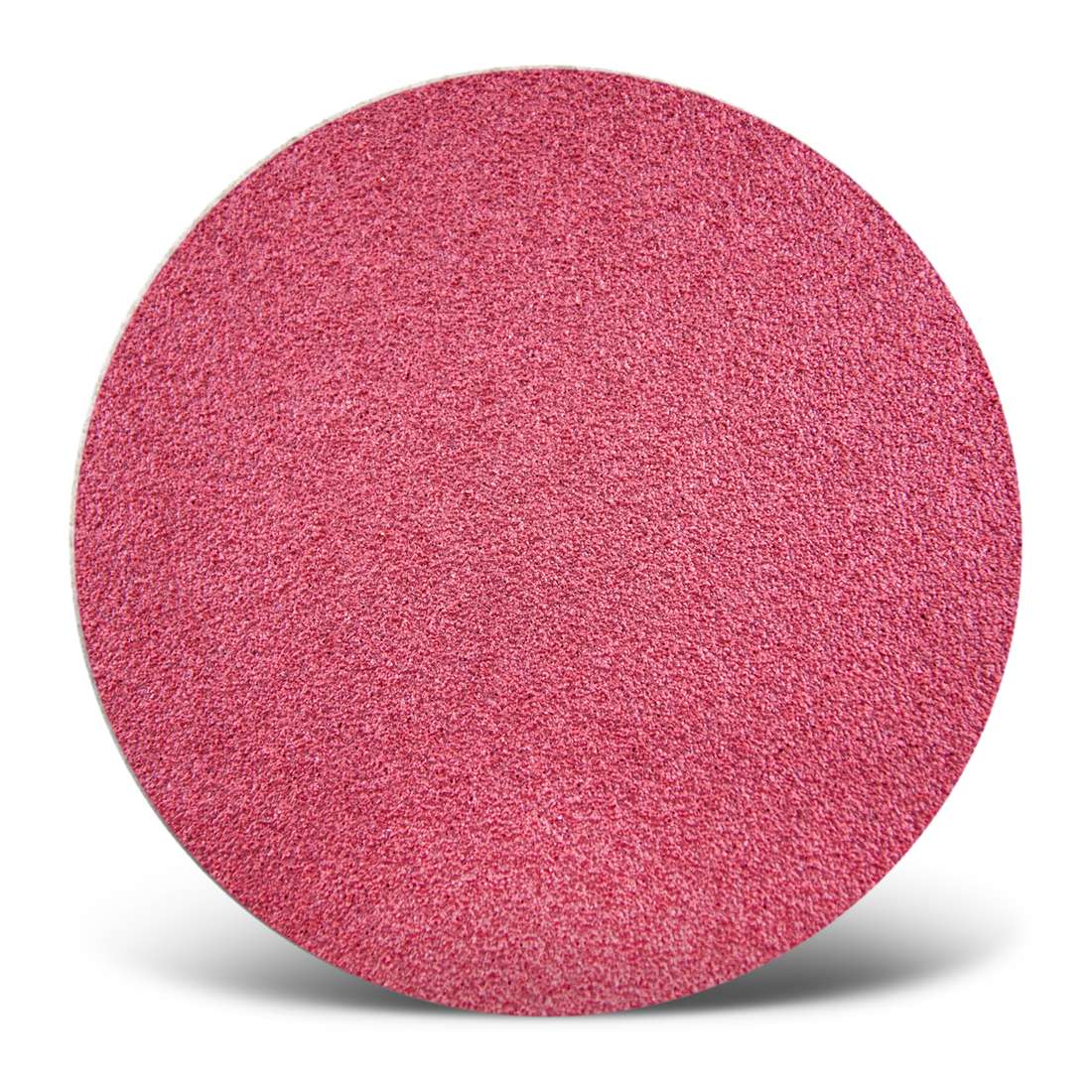
Our Menzer Ruby HD belts, 200 x 750mm, and 178mm discs are 100% microcrystalline ceramic, not a blend, on the same anti chatter hybrid backing as Blue Zirconia, semi open coated. Menzer's own testing has it outlasting a standard zirconia belt by up to three times on dense hardwoods and heavily coated floors.

  • Menzer Ruby HD 100% ceramic sanding belt 200 x 750mm
    Drum beltMenzer Ruby HD belt100% ceramic, 200 x 750mm, pack of 10, 40 to 100 gritFrom £68.37 + VATView product
  • Menzer Ruby HD ceramic sanding disc 178mm
    Edger discMenzer Ruby HD disc100% ceramic, 178mm matching edger disc, 40 to 100 gritFrom £76.87 + VATView product
04
Read the label

How much ceramic is actually in your ceramic belt?

Ceramic has the widest spread of the lot. At one end, an entry level ceramic belt that is mostly aluminium oxide, or zirconia, with a modest dose of ceramic grain. At the other, a high content shaped grain product with a grinding aid coating. Both wear the word ceramic and the price gap between them is enormous.

Here is the part the labels do not tell you. Grain type on a box is not a pass or fail, it is a spectrum. Because aluminium oxide is cheap and ceramic and zirconia are expensive, manufacturers routinely blend grains: a proportion of premium grain cut with cheaper grain to hit a price point. A belt sold as ceramic might be a minority of ceramic grain sitting in an aluminium oxide crowd, or blended with zirconia, which is itself a step down in price from true ceramic. Two belts, both stamped ceramic, can behave completely differently on the floor.

The blend content is rarely printed anywhere you can see it. So the only reliable way to judge is by behaviour. Does it hold its cut rate deep into the belt's life, does it stay cool, does it leave a consistent scratch, and how many square metres does it actually sand before it is done? A true high ceramic content belt keeps cutting when a blended one has quietly gone smooth.

This is exactly why it is worth being upfront about our own range rather than letting the word ceramic do the talking on its own.

Menzer Ruby HD

Grain
Stated plainly as 100% ceramic, no blend
Best for
Dense hardwoods, heavy restoration, drum and edger
Price
Belts from £68.37 + VAT, pack of 10

Menzer Purple HD 150mm

Grain
Honestly listed as a ceramic blend
Best for
A genuinely good disc for edging and worktop finishing on a Festool Rotex
Price
From £30.00 + VAT, priced lower than the 100% ceramic Ruby HD

Neither is the wrong product. But which one you are actually buying should be clear from the label, not something you have to guess at from how it performs three belts in.

05
The backing

The backing matters as much as the grain

Here is the mistake almost everyone makes: obsess over grit and grain, then grab whatever backing happens to be on the shelf. That is backwards. The backing is what carries the grain through the cut. It decides how the abrasive behaves under pressure, heat and flex, not just the mineral sitting on top of it. The backing needs to match how the abrasive moves during the job.

  • PaperThe cheapest and lightest, graded A to F or G. A weight is thin and flexible for fine hand work, and it climbs to E and F weight, the heavy, strong paper used for floor sanding discs, sheets and rolls. Light paper is fine for finishing. It has no place taking a heavy cut.
  • ClothGraded J, X and Y, jeans, drills, then the heaviest polyester. Far more tear resistant than paper, and it survives the constant flexing of a belt going round and round, which is exactly why floor sanding belts want a proper heavy X or Y cloth. A belt on a light backing will stretch, distort and tear before the grain is even worn out.
  • Film (polyester)A dead consistent, uniform thickness, so it leaves a very even scratch pattern with minimal clogging. Great for fine and between coats work.
  • Mesh or netLets dust pull straight through the whole face of the disc. Far less loading and a cooler cut, so the disc lasts longer and clogs less. It has become the standard for orbital and edge work with good extraction.

It is why Menzer build the Blue Zirconia and Ruby HD ranges on a heavyweight polyester reinforced hybrid backing rather than basic woven cotton cloth. That construction resists stretch under heat and load, so the belt tracks true on the drum from the first metre to the last instead of creeping. The fibre structure also damps machine vibration before it reaches the floor, which is what actually stops chatter marks rather than just reducing them.

The cheap discWhy the cheap disc is cheap, and why it cooks

Pick up a budget disc next to a quality one and the difference is in your hand before you have even sanded: the cheap one weighs almost nothing. That is not a bonus. It is a thin, poor backing with a mean, lightweight bond holding the grain on. And that lightness is exactly where it fails you.

A thin, cheap backing cannot take heat. Under a machine it builds up temperature fast, and once it is hot a few things go wrong at once. The bond softens and the grain starts shedding before it is actually worn, so you are throwing away sharp grit. The backing curls, loads up and glazes. And in the worst case that heat goes into the floor, with scorched timber, or a finish that softens and burns rather than abrades. A thin backing also wears through before the grain is spent, so you bin the disc with life still in it.

The real cost

You bought it because it was cheap by the box. You pay for it in discs per job, heat marks and time.

06
The specs nobody checks

Open coat vs closed coat, and grit standards

There is a second spec hiding on every belt and disc that has nothing to do with grain or grit: how much of the backing is actually covered in grain.

Closed coat

Around 90 to 95% of the surface carries grain. The most aggressive option, but on resinous pine, old wax, or a soft gummy old coating it loads up solid and starts sliding instead of cutting.

Semi open coat

Around a 30% reduction in coverage. Gaps give sanding debris somewhere to go, so the abrasive keeps clearing itself and stays cooler. Both Ruby HD and Blue Zirconia are built this way.

Open coat

Fully open, down to roughly 50 to 70% coverage. The most room for debris, for the materials that cause loading worst.

Those gaps give sanding debris somewhere to go instead of packing solid, so the abrasive keeps clearing itself and stays cooler for longer on exactly the materials that cause loading. It is a genuinely deliberate spec choice, not an afterthought. Wood is resinous and often carries old wax or finish residue, so a wood floor abrasive needs some relief built in, even at a small cost to outright aggression.

Compare that to something like Norton RazorStar, a metal grinding ceramic that runs fully closed coat. Metal does not gum up an abrasive the way timber does, so it manages heat through a grinding aid coating instead of through spacing. Same underlying physics, different substrate, different answer.

Grit standardsGrit numbers are not universal: P100 is not the same as 100

Here is a trap that catches people out without them ever realising why a sequence went wrong. There are two different grading standards for grit, and they do not always mean the same particle size.

FEPA

What it is
The European standard. Anything with a P in front of the number, such as P100 or P120.
Where you will see it
Most UK and European abrasives. It also holds a tighter tolerance band on particle size than CAMI.

CAMI

What it is
The American standard. Just a plain number with no P.
Where you will see it
A lot of US made or US branded product.

At coarse grits the two systems are close enough not to matter. Above roughly P220, though, they diverge. A CAMI graded 400 is noticeably finer than a P400, closer to a P800. Mix an unlabelled American product into a European graded sequence at the fine end and you can unknowingly skip a step, or double up on one, without the numbers ever telling you.

The sequenceWhy you cannot skip grits

This is the bit that makes the whole sequence work. Each grit only removes the depth of scratch left by the grit before it. An 80 grit belt leaves a scratch of a certain depth. A 100 or 120 that follows it is only deep enough to remove that 80 grit scratch, nothing more.

Skip from 40 straight to 80

The 80 sands the peaks of the 40 grit scratch pattern smooth, but it cannot reach into the valleys.

Work through the full sequence

Every grit does the job of removing the one before it, so the surface ends up properly level.

The floor can look perfectly sanded dry. Then you put oil or lacquer on it, the finish sits in those unreached valleys, and the coarse scratch pattern ghosts straight back through the coating, usually worse under raking light. The fix is simply not skipping. It is worth noting both Ruby HD and Blue Zirconia are stocked across the full 40g, 60g, 80g and 100g run for exactly this reason. The progression only works if you are not missing a rung.

07
Know when to change

The dull belt is not just slow, it is doing damage

A worn out belt does not announce itself. It fades, and a lot of contractors keep running it because it still feels like it is working. It is not. A spent grain stops shearing wood fibre and starts burnishing, polishing and case hardening the surface instead of removing material.

That matters for two reasons. First, a burnished surface takes stain and oil unevenly. The compressed, glazed timber absorbs less than timber that has been properly opened up by a sharp cut, and you get patchy, blotchy colour that has nothing to do with the wood species and everything to do with a belt that should have been changed twenty minutes earlier. Second, burnishing generates heat, and heat on a worn belt is how you end up with scorch marks and a belt that is now not just dull but glazed solid.

Learning to feel the difference is one of the more valuable, least talked about skills in this trade. A sharp belt bites and pulls the machine forward slightly. A dull one skates.

When in doubt, change it

The belt is cheap. The comeback is not.

08
Practical reality

Match the grain to the machine, and to the wood

A few practical realities worth having in your head before you buy.

  • Ceramic and zirconia need a machine that can drive themBoth grains rely on pressure to trigger the self sharpening fracture that makes them worth the money. Put a premium ceramic belt on a light or underpowered machine and you will never load it hard enough to activate what you paid for. Ruby HD and Blue Zirconia are both built for full size drum and belt sanders such as the Lägler Hummel, Bona Belt and Frank or Pallmann Cobra, which can actually deliver the pressure these grains need.
  • Match the mineral to the materialZirconia and ceramic are built for wood. The moment you are on stone, screed or concrete, or cutting back a hard old lacquer, silicon carbide is usually the better suited mineral, which is why it dominates screens and stone prep discs.
  • Watch the edger against the drumIf your edger is running a different grain or grade than your drum machine, the two leave subtly different scratch patterns, invisible dry and glaringly obvious once oil or lacquer catches the light. Buy matched grain families. Our Blue Zirconia and Ruby HD both come as a 200 x 750mm belt and a matching 178mm edger disc in the same grain and grade, so the edge lines up with the field instead of leaving a visible ring where the two meet.
09
The honest case

What it means on the job, and why the cheap belt is not cheap

Here is the honest case for spending more per belt. It comes down to two payoffs.

  1. A clean scratch pattern makes the next grit easier work. When a grain cuts consistently, it leaves an even scratch of predictable depth. The next grit up only has to remove that shallow, uniform layer, so one clean pass and the previous scratch is gone. When a grain is inconsistent or worn out, it leaves an uneven pattern with the odd deep stray scratch. Now the next grit has to chase those out, and you will sometimes have to drop back a grit to catch them.
  2. Longevity turns into cost per square metre and hours saved. A self sharpening grain holds its cut rate from the first metre to the last, so you change belts less often and every belt does more work. A cheap belt dulls, stops cutting, and starts burnishing, which is not just slow. It is a risk: heat, glazing, chatter, and burns that mean rework.

It is a genuine trade off worth doing the maths on rather than assuming.

Menzer Blue Zirconia belt

Price
Baseline
Belt life on demanding hardwoods
Baseline

Menzer Ruby HD ceramic belt

Price
Roughly double at the entry grit
Belt life on demanding hardwoods
Up to three times, on Menzer's own data

Pay twice, get three times the belt life on the jobs where it counts, and you have come out ahead on cost per square metre before you have even counted the saved belt changes and machine downtime. That is the quiet truth about quality abrasives: they do not just cost more, they earn more.

10
Quick pick

Which HF abrasive for the job

JobWhat we would reach for
Everyday stripping, general hardwood profiling (drum)Menzer Blue Zirconia 200 x 750 belt
Dense or exotic hardwoods, heavy restoration (drum)Menzer Ruby HD 100% ceramic 200 x 750 belt
Matching edger for everyday strippingMenzer Blue Zirconia 178mm disc
Matching edger for dense hardwood and restorationMenzer Ruby HD 178mm disc
Edging and worktop finishing on a Festool RotexMenzer Purple HD 150mm ceramic blend disc
Fine finishing and between coats (Bona FlexiSand and similar)Menzer UltraPad 150mm or UltraNet 150mm mesh
Final buffer sand, cutting back lacquer (16 inch buffer)Menzer UltraPad 406mm
Screens for stone, screed, or cutting back hard old lacquerMenzer Silicon Carbide 406mm screens

A few more habits worth keeping regardless of which abrasive you are running.

  • Backing: heavy X or Y cloth or hybrid reinforced backing for belts and drums, film or mesh for finishing. Be suspicious of any disc that feels weightless.
  • Grit numbers: check for the P. FEPA and CAMI are not the same particle size above P220.
  • Sequence: never skip more than one grit stage. The next grit can only remove the scratch the last one left.
  • A belt that has gone smooth mid job: it is not the grit, it is a spent grain. You are now burnishing, not cutting. Change it.

Match the grain to the job

We stock the full Menzer floor sanding range, belts, discs, screens and pads across zirconia, 100% ceramic, ceramic blend, and white fused aluminium oxide grains, so you can match the grain to the job rather than to whatever the wholesaler had on the shelf.

  • Orders placed Mon to Fri before 2PM are dispatched the same day for next working day delivery
  • Not sure which grain, grade or backing suits your floor? Get in touch
Questions

Frequently asked questions

What is the difference between open coat and closed coat sanding belts?

Closed coat means the grain covers 90 to 95% of the backing for the most aggressive cut. Open and semi open coats leave gaps between the grains, around 50 to 70% coverage for fully open and about a 30% reduction for semi open, so sanding debris has somewhere to go instead of packing solid. Resinous wood, old wax and gummy coatings need that relief to avoid loading and heat build up. Hard, clean timber can usually take a closed coat.

Is all zirconia sanding belt self sharpening?

Genuine zirconia alumina grain is inherently self sharpening because of its fine microcrystalline structure, but the zirconia content varies by product, commonly 25% or 40%, and cheaper grain can be blended with aluminium oxide to hit a price. It also only self sharpens under adequate machine pressure. Run it too light and it glazes instead of fracturing.

Can you skip grits when sanding a wood floor?

No. Each grit only removes the scratch depth left by the grit before it. Skipping a stage, 40 straight to 80 for example, leaves the coarser scratch pattern in the valleys, which looks fine dry but ghosts back through oil or lacquer once it is applied.

How do you know how much ceramic is in a ceramic sanding belt?

Manufacturers rarely publish the exact ceramic content, and many ceramic belts are blended with aluminium oxide or zirconia to hit a price point. The only reliable way to judge is by how the belt performs: whether it holds its cut rate, stays cool, and lasts the number of square metres a genuine high content ceramic should.

Do sanding belts and discs go off if stored too long?

The abrasive mineral itself does not degrade, but the resin bond and backing are sensitive to humidity and temperature swings. Damp storage softens the bond and curls the backing, and very dry conditions make it brittle. Properly stored abrasives can last years. Poor storage is the real risk, not age on its own.

Posted on — Leave a comment

1K vs 2K Waterborne Lacquer: What Independent Lab Testing Actually Shows

Large herringbone parquet floor finished with Arboritec Avenue 2K waterborne lacquer in a commercial public hall

When a contractor chooses between a single-component (1K) and a two-component (2K) waterborne lacquer, they’re usually weighing convenience against durability. The 1K is simpler — no mixing, no pot life to manage. The 2K demands more discipline on site. But how much does that trade-off actually cost in real-world performance terms?

We recently had access to independent application laboratory benchmark data comparing twelve professional waterborne parquet lacquers — seven 1K formulations and five 2K formulations — tested head-to-head on identical substrates under controlled conditions. The products included some of the most widely-used names in the professional flooring market. The results are instructive, and in some areas, striking.


How the testing was done

The benchmark used standardised professional coating test methods across three substrate types:

  • Opacity chart (80µm wet film, 1 week cure at 22°C/48% RH) — for chemical resistance, gloss, film appearance, and nail scratch
  • Oak wood (two coats at 120µm wet each, cured 24h then 1 week at RT) — for chemical resistance, BHMR, and scuff resistance
  • Glass (80µm bar coater, 1 week cure) — for König pendulum hardness and nail scratch

Every product was tested at the same film build, in the same conditions, with the same cure schedule. This matters — real-world comparisons between products often fail because application variables differ. Here, they didn’t.


Understanding the Taber abrasion test — and what it actually measures

Before getting to the numbers, it’s worth explaining the Taber abrasion test properly — because it’s widely quoted in product datasheets and just as widely misunderstood.

The Taber Test is a standardised wear testing machine used across the coatings, plastics, and flooring industries. A flat test specimen is mounted on a rotating turntable, and two weighted abrasive wheels bear down on it as it spins. After a set number of rotations — in this benchmark, 500 rotations at 1kg load — the specimen is weighed again and the difference in milligrams is recorded. Lower mg loss means less material removed, which means better resistance to that specific type of abrasion.

The CS-17 vs CS-10 wheel distinction

This is where it gets important for anyone interpreting Taber data from product datasheets — because not all Taber results are comparable, and manufacturers don’t always make the wheel choice obvious.

There are two wheels in common use for coating testing:

CS-10 (Calibrase, mild abrasion) — A relatively soft, resilient rubber-and-aluminium-oxide wheel that produces mild, fine abrading action. Taber Industries describes it as simulating “normal handling, cleaning, or polishing” conditions. In flooring terms, think of it as representing the cumulative effect of foot traffic grit, dry-mopping, and light daily abrasion — the kind of micro-scratching that builds up over months and gradually dulls a floor’s sheen. It is the wheel most commonly used by flooring lacquer manufacturers on their own commercial datasheets, and it tends to produce more flattering numbers than the alternative.

CS-17 (Calibrase, harsh abrasion) — A harder, denser wheel that produces significantly more aggressive abrasion. Taber’s own documentation describes it as producing “harsher abrasion than the CS-10 wheel.” In flooring terms, it more closely represents the kind of concentrated mechanical stress that occurs in high-traffic zones — heavy footfall on grit, furniture legs under load, or repeated rolling castor contact. The same lacquer will typically post a considerably higher mg loss figure on the CS-17 than on the CS-10, which is exactly why comparing two products tested on different wheels is meaningless.

The benchmark discussed in this post used the CS-17 wheel at 1kg load — the more demanding of the two standard options. This is significant context when reading the results below, and it’s also why these figures will look higher than the CS-10 numbers you may be used to seeing on manufacturer datasheets.

To illustrate the difference in terms of what each wheel is simulating: the CS-10 is asking “how does this lacquer hold up to everyday foot traffic and regular cleaning over time?” The CS-17 is asking “how does this lacquer hold up to the most punishing zone in the building — the entrance mat threshold, the bar servery, the corridor where every delivery trolley passes?” Both are valid questions. They just aren’t the same question.

What mg loss actually means in practice — and what it doesn’t

Here is the critical caveat that rarely makes it into product marketing: a Taber mg loss figure does not directly predict how long a lacquer will last before it needs maintenance or recoating.

The Taber test is a comparative tool, not an absolute durability predictor. It tells you how one product performs relative to another under identical controlled conditions. What it cannot tell you is the real-world timeline before a floor’s appearance deteriorates to the point where a client wants it refinished.

This matters for two reasons. First, the total film build on a real floor is considerably thicker than a test specimen, applied in multiple coats on a substrate with its own surface texture, porosity, and mechanical behaviour. Real-world wear is more complex than the contact mechanics of a lab specimen on a turntable. Second, and more importantly for wood floors: in practice, a lacquer finish is almost never worn through to bare wood before maintenance becomes necessary. What actually triggers refinishing is the loss of sheen in high-traffic zones — the progressive dulling and micro-scratching that makes a floor look tired — long before any meaningful film thickness has been lost.

A lacquer that loses 24mg over 500 CS-17 rotations at 1kg load does not mean the floor will wear through to bare wood in 500 footsteps. It means that under that specific, highly concentrated mechanical assault, it lost 24mg of material. The real-world implication is: relative to a product that loses 50mg or 70mg under the same conditions, it will take considerably longer to show visible dullness in traffic lanes, and considerably longer before a maintenance coat is needed.

With that context established, the results become genuinely useful.


Mechanical performance: where 2K pulls away

Taber abrasion resistance (CS-17 wheel, 500 rotations, 1kg load)

The 2K formulations tested posted Taber results between 11mg and 25mg. The 1K formulations ranged from 23mg to 72mg — with the worst-performing 1K losing nearly three times as much material as the best 2K.

Arboritec Avenue 2K recorded 24mg, placing it solidly in the upper tier of the 2K group. One 2K formulation in the test returned an unusually low 11mg — though its König hardness figure suggests a very different formulation balance that makes the headline number less straightforward than it appears.

Crucially, every single 1K product in the benchmark performed worse than every 2K product on Taber abrasion, without exception. The 1K range ran from 23mg at its best to 72mg at its worst. Even the strongest 1K result sat at the lower boundary of the 2K range.

In a busy restaurant corridor, a commercial retail entrance, or a hospitality environment with high-frequency wet cleaning, that gap translates directly into how frequently the floor needs maintenance attention. A product losing three times as much material under the same stress will show visible wear sooner, require maintenance coats sooner, and cost more to maintain across the floor’s lifetime.

König pendulum hardness

König hardness is measured in seconds of oscillation on glass: a pendulum is placed on the cured film surface, set swinging, and the time for it to damp to a defined amplitude is recorded. Longer oscillation time = harder film = greater resistance to indentation and deformation under point loading.

Avenue 2K recorded 99 seconds — the highest result among all five 2K formulations tested. Among the 1K group, König results ranged from 35 to 129 seconds — but this range requires careful interpretation.

Higher König hardness in the 1K group does not automatically mean a better overall finish. In coating formulation, hardness and chemical resistance are in tension with each other, and hardness must be read alongside chemical resistance data to understand what a formulation is actually doing. Several of the high-hardness 1K products in this benchmark posted very poor chemical resistance scores — suggesting brittle or insufficiently crosslinked films that are stiff but chemically vulnerable. A lacquer with high König hardness but zero resistance to 48% ethanol at 16 hours does not have good overall durability. It has a hard film. That is not the same thing.

Avenue 2K’s 99-second König result, read alongside its strong chemical resistance and low Taber loss, indicates a formulation that balances hardness, crosslink quality, and chemical integrity together — rather than optimising one metric at the expense of the others.


BHMR and scuff resistance: the real-world appearance test

This is where the benchmark becomes most directly relevant to what a floor looks like over the years of its working life — and it’s the section that deserves the most attention from anyone specifying or applying professional lacquer.

Black heel mark resistance and scuff resistance were assessed on oak wood after a full one-week cure. Each was scored on two dimensions: the black marking left on the surface (0–5, where 5 = no visible mark) and the surface damage sustained (0–5, where 5 = no visible damage). Both dimensions matter — a product might resist marking but still show mechanical damage, or leave a mark that wipes clean while causing no lasting surface change. The two scores together give a fuller picture of how a finish actually behaves under contact stress.

The testing was carried out in two separate ways:

BHMR (black heel mark resistance) — a weighted contact applied to the lacquered surface to simulate the sharp, concentrated loading of a shoe heel strike. This captures what happens under a single high-load impact: a brisk footfall, a pivot, a heel coming down hard on a threshold.

5 x Scuff — this is where the test becomes genuinely illuminating. Rather than a single impact, an abrasive pad is placed under controlled pressure and drawn across the cured lacquer surface five times in succession. The repeated traversal simulates the cumulative low-angle abrasive contact that is the real mechanism of floor finish degradation: a dragged chair leg, a shoe shuffled repeatedly across the same spot, the back-and-forth of a doorway threshold. Five passes under a standardised load is a deliberately modest simulation — real floors endure this kind of contact thousands of times. A product that shows damage after five controlled passes in a lab is telling you something important about how it will perform over years of service.

Why scuff resistance matters more than most people realise

When clients describe a floor as “looking old” or “tired,” they rarely mean it’s been scratched through to bare wood. What they’re describing is the cumulative visual effect of repeated scuffing: a slight haze in the traffic zone, a dulled path across the kitchen, faint drag marks near the dining table. None of these individually break the film — but together, they change how the floor looks in raking light. This is the mechanism the 5 x scuff test is specifically designed to capture.

Industry research into wood floor coating selection confirms that BHMR — which evaluates whether a scuff can be removed and what surface damage remains — is one of the most critical tests for flooring applications precisely because of this link to visible in-service appearance. A coating that allows dirt to embed in soft or damaged surface film creates progressive “dirt paths” in traffic lanes, a well-recognised failure mode that is the single most common reason clients report dissatisfaction with a floor finish long before any film breakthrough occurs.

The results

The 5 x scuff results across the benchmark were among the most differentiating in the entire dataset.

Avenue 2K scored 5/5 on both scuff damage dimensions on oak — both the black marking score and the surface damage score at their maximum. This is the standout result: five repeated pad traversals under controlled pressure on cured oak, and no visible marking, no visible surface damage.

Across the 1K group, scuff performance was considerably more variable and in several cases very poor. Multiple 1K products scored 0 or 1 on scuff damage — meaning visible surface degradation after just five repeated passes. One 1K product scored 0/0 across both scuff dimensions, a complete failure in both marking resistance and surface integrity. This is the lacquer equivalent of what a client sees when they notice the floor is “marking easily” within months of installation. The standout exception within the 1K group was Arboritec Classic+, which posted the strongest scuff scores of any 1K product in the test — a result that separates it meaningfully from its category peers, even if it still cannot match Avenue 2K’s clean 5/5.

Even among the 2K group, scuff performance varied. Avenue 2K’s clean 5/5 scuff damage result on oak was the best in the field — not just the best 2K result, but the best result across all twelve products tested on that dimension.

On BHMR, Avenue 2K scored 5/5 on oak damage — again the top result in the 2K group and equal to the top result across the whole test field.

What this looks like on a real floor

To translate these scores into practical terms: a product that scores 0–1 on scuff damage after five controlled pad traversals in a lab environment, on freshly applied and fully cured oak specimens, is going to show visible wear paths in a real hallway within months. The test is deliberately modest — five passes under a set load, on a pristine specimen. Real floors endure far more.

A product that scores 5/5 under those same conditions — as Avenue 2K did — is demonstrating that the cured film resists not just the first insult, but the fifth, with no accumulation of visible damage. In a real floor, this translates to the high-traffic zones continuing to look like the low-traffic zones for considerably longer. The floor ages more uniformly. The contrast between the corridor path and the undisturbed perimeter develops more slowly. Maintenance intervals extend.

For contractors, this matters commercially as well as technically. A floor that holds its appearance for four or five years before a client calls is a very different proposition to one that looks tired after eighteen months. The scuff resistance data is the clearest predictor in this benchmark of which category each product belongs to.


Chemical resistance: the other dimension of longevity

Chemical resistance was tested on both test chart (opacity card) and oak wood, using a standardised set of reagents at set contact times, scored immediately and after a recovery period (0–5 scale, 5 = no visible effect).

The reagents used were: water at 1h and 16h; ethanol 48% at 1h and 16h; ammonia 10% at 1h; acetic acid 10% at 1h; and coffee at 16h. Each was scored both immediately after removal and again after a recovery period — giving both immediate resistance and the film’s ability to recover once the stressor is removed.

Why these specific reagents?

Each represents a real chemical stressor that a domestic or commercial floor finish encounters in service.

Ethanol 48% represents the alcohol content of hand sanitisers, surface disinfectants, and cleaning sprays. Post-pandemic, high-frequency alcohol-based disinfection has become standard in commercial environments and many domestic ones. A lacquer that fails against 48% ethanol at 16 hours will show visible degradation wherever sanitiser is routinely dispensed or spilled — reception desks, kitchen counters, bar tops, bathroom thresholds.

Ammonia 10% is present in many general-purpose household cleaners, some floor care products, and at lower concentrations in pet urine. A floor finish that deteriorates under ammonia contact will show it quickly in a pet-owner household or any environment where ammoniated cleaners are routine. It’s also worth noting that some cheaper consumer-marketed “wood floor cleaners” contain ammonia compounds — a common cause of premature lacquer failure that often gets blamed on the original finish rather than the cleaning product.

Acetic acid 10% represents vinegar and vinegar-based cleaning products, which remain common in both domestic and food-service environments. Reactivity to acetic acid also gives useful information about the film’s broader sensitivity to mild organic acids — relevant in food prep areas and anywhere with acidic spillage risk.

Water at 16h simulates an extended spill or pooled water that is not cleaned up promptly. A floor finish that whitens, blisters, or softens under prolonged water contact will fail in bathrooms, kitchens, utility rooms, and anywhere that wet cleaning is routine.

Results on test chart

The gap between 1K and 2K formulations was pronounced, and for some 1K products, severe.

Several 1K products scored zero against ethanol at 16 hours — both immediately and after recovery. A score of zero means complete film failure at the test site: visible whitening, softening, or loss of adhesion. Multiple 1K formulations also posted poor to very poor results against ammonia and acetic acid.

Among the 2K formulations, results were generally strong. Avenue 2K scored 5/5 on 16-hour ethanol resistance both immediately and after recovery — a result no 1K product matched. On water at 16h, ammonia, and acetic acid, Avenue 2K consistently returned scores of 4 or 5.

Even within the 2K group, the weakest performer on chemical resistance was a reminder that two-component classification alone doesn’t guarantee uniform quality.

Results on oak

Chemical resistance on real oak is a more demanding and more practically relevant test than on opacity chart. Oak introduces variables around surface porosity, tannin chemistry, and differential absorption that are absent from a flat chart substrate. Performance on oak is closer to what a floor finisher and their client will actually experience.

The 2K formulations performed consistently well on oak across nearly all reagents. Avenue 2K and the other leading 2K products achieved maximum scores against the full ammonia exposure sequence — 2 minutes, 10 minutes, and 1 hour. Most 1K products failed at the 1-hour ammonia mark, with several scoring zero.

Avenue 2K also scored 5/5 on 16-hour water resistance after recovery, and 5/5 on acetic acid after recovery. Its weakest scores on oak were against prolonged ethanol and coffee — a pattern consistent across the entire test group regardless of 1K or 2K classification, suggesting this reflects the current general limits of waterborne lacquer chemistry rather than a specific product weakness.

Arboritec Classic+ was the best-performing 1K in the test group — meaningfully better than its 1K peers, and competitive with some 2K products on specific reagents — but against prolonged ethanol and ammonia, even Classic+ could not match the top 2K performers.


Putting the full picture together

The 1K vs 2K gap is real, systematic, and not about one test

Across every performance dimension measured — Taber abrasion, König hardness, BHMR, scuff resistance, and chemical resistance on both chart and oak — the 2K formulations outperformed the 1K group. In most areas, the gap was not marginal. In scuff resistance and chemical resistance, it was often decisive.

The underlying reason is chemistry. A 2K waterborne lacquer cures through a polyurethane crosslinking reaction between a waterborne polyol (the base component) and an isocyanate hardener (the crosslinker). When fully cured, the result is a dense, tightly crosslinked polymer network with high film integrity. A 1K system relies on oxidation, water evaporation, or coalescence alone — mechanisms that produce a less fully crosslinked film. That difference in network density is what drives the gap in both chemical resistance and scuff behaviour: a tightly crosslinked film resists solvent penetration and surface deformation at the molecular level in ways that a 1K film structurally cannot match.

Not all 2K products are equal

Among the five 2K formulations, meaningful variation existed. Avenue 2K led on mechanical and surface performance — highest König hardness in the group, best BHMR and scuff scores, consistently strong chemical resistance. One 2K formulation posted a notably low Taber loss but had lower König hardness, suggesting a softer, more compliant film — a different formulation trade-off rather than a straight improvement. The weakest 2K performer on chemical resistance was a reminder that 2K classification is a necessary but not sufficient condition for good performance.

Not all 1K products are equal either

Within the 1K group, Arboritec Classic+ consistently outperformed its peers — better BHMR, better scuff resistance, more credible chemical resistance on oak. If a project genuinely requires a 1K system for operational reasons, Classic+ is the evidence-based choice from this test group. The worst 1K performers in this benchmark scored zero on scuff damage and failed multiple chemical resistance tests outright.


When to specify 2K

The benchmark data supports clear specification guidance across project types.

Commercial and high-traffic specifications — restaurants, retail, hotels, offices, entrance areas — should default to 2K as the minimum standard. The scuff resistance data alone makes a compelling case: products that degrade visibly under five controlled pad passes in lab conditions are not suited to environments where hundreds of footfalls per day are the norm.

Residential specifications where appearance longevity matters — clients who care about how their floor looks in year three as well as year one, households with pets, high-activity families, or properties with open-plan kitchen-dining-living areas where a single floor surface takes varied traffic — will see the 2K scuff and chemical resistance advantage express itself as a meaningfully longer interval before the floor looks like it needs attention.

Any project where recoat interval matters — for property managers, landlords, or building operators maintaining multiple floors, the lifecycle cost case for 2K is straightforward. A finish that holds its appearance longer requires maintenance less frequently, and the cost differential of the original product is typically recovered many times over in reduced maintenance labour.

The argument for 1K has always been convenience: no mixing, no pot life, no waste if the job runs short. That is a legitimate operational consideration on small domestic projects with fast turnaround. But the performance data makes clear that convenience has a real cost — and in any environment where the floor’s appearance over the years is part of the brief, that cost is not trivial.


About Arboritec Avenue 2K

Avenue 2K is a waterborne two-component polyurethane lacquer formulated for professional application on wood floors. It combines the crosslinked film durability of a 2K system with a practical mix ratio and working pot life suited to professional site use.

Its performance profile across this benchmark — leading König hardness in the 2K group, the best BHMR and scuff scores across all twelve products tested, consistent top-tier chemical resistance on both test chart and oak — reflects a formulation designed for demanding end-use environments rather than one built around a single headline datasheet number.

The Avenue 2K range extends across the full professional sheen spectrum. At the ultra-matte end, Genuine 5 delivers an almost reflection-free finish that has become increasingly popular for specification work where a natural, low-sheen aesthetic is required — it is also particularly forgiving in terms of hiding minor surface variation and micro-scratching over time. At the opposite end, Genuine Naked is a full-matte 2K finish for projects where the most understated possible appearance is the brief. Between these extremes, the range covers the sheen levels that represent the majority of professional specifications.

Whichever sheen is specified, the underlying 2K chemistry and the performance profile demonstrated in this benchmark remain consistent across the range.

Explore Arboritec Avenue 2K Genuine 5 and Genuine Naked 2k

About Arboritec Classic+

For projects where a 1K system is genuinely the right operational choice — tight turnaround schedules, smaller domestic jobs where pot life management isn’t practical, or situations where a mixing error simply cannot be risked — Classic+ is the product the benchmark data points to.

It also helps explain why Classic+ outperformed every other 1K product in the test group, rather than simply asserting that it did. Classic+ is not a conventional 1K waterborne lacquer — it crosslinks upon application without a separate catalyst, building a degree of network structure into the cured film that standard 1K coalescence systems do not achieve. Combined with Arboritec’s Small Particle Technology (SPT), which integrates ceramic particles deep into the polyurethane matrix to create a denser, harder protective layer, the result is a 1K product that behaves more like a 2K than its category label suggests. That chemistry is the reason for its benchmark-leading scuff and BHMR scores within the 1K field — it isn’t luck or formulation variance, it’s a structural advantage built into how the film cures.

For projects where even more protection is needed, Arboritec Part B hardener can be added to the final coat of Classic+. This takes the product a step further still — introducing an isocyanate crosslinker that drives additional network density in the topcoat — without committing the entire job to a full 2K system with its associated pot life and waste considerations. It is particularly useful in higher-demand areas within an otherwise domestic specification: a hallway or kitchen that takes noticeably heavier traffic than the rest of the floor.

Classic+ is available in Ultra-Matte (5), Satin (20), Semi-Gloss (50), and Gloss (90) — covering the full sheen range for domestic and lighter commercial specifications.

It doesn’t close the gap to Avenue 2K entirely — no 1K system can, and the chemical resistance data in particular shows where the 2K crosslink density advantage remains decisive — but it sits in a fundamentally different category to the weakest 1K performers in this test, several of which failed outright on scuff and chemical resistance.

If 1K is the answer to the question, Classic+ is where the evidence points.

Explore Arboritec Classic+ Explore Arboritec Part B Hardener

Is 2K lacquer always better than 1K for wood floors?

In terms of raw performance — abrasion resistance, scuff resistance, and chemical resistance — yes, the independent benchmark data is consistent: 2K systems outperform 1K systems across every metric tested. However, “better” depends on context. For a small domestic bedroom with light traffic and straightforward cleaning, a high-quality 1K like Classic+ may be entirely adequate and operationally easier to apply. For anything with sustained foot traffic, frequent wet cleaning, or exposure to alcohol-based products, the performance gap makes 2K the more defensible specification.

What is the difference between the CS-17 and CS-10 Taber wheel?

Both are used in standardised abrasion testing, but they simulate different types of wear. The CS-10 is a softer wheel that replicates mild everyday abrasion — the kind of micro-scratching from foot traffic and cleaning that gradually dulls a floor’s sheen over time. The CS-17 is a harder, more aggressive wheel that simulates the concentrated mechanical stress of high-traffic zones: grit underfoot, furniture legs, heavy footfall. Most manufacturer datasheets use the CS-10, which produces more favourable numbers. The benchmark discussed in this post used the CS-17 — the more demanding and more revealing of the two.

A Taber abrasion figure of 24mg sounds like a lot of wear. Will the lacquer actually wear through?

No — and this is one of the most common misunderstandings around Taber data. The mg loss figure is a comparative measure under a deliberately aggressive, concentrated test load. In real-world use on a properly applied floor, the finish will show cosmetic wear — a gradual loss of sheen in traffic lanes — long before there is any risk of the film wearing through to bare wood. The Taber figure tells you how one product compares to another, not how many footsteps the floor will tolerate. A product posting 24mg versus one posting 72mg will hold its appearance meaningfully longer under equivalent real-world conditions.

What makes Classic+ different from other 1K lacquers?

Two things separate Classic+ from conventional 1K products. First, it crosslinks upon application without a separate catalyst — building a more developed polymer network in the cured film than standard 1K systems, which rely on coalescence or oxidation alone. Second, it incorporates ceramic particles via Arboritec’s Small Particle Technology (SPT), which creates a denser, harder protective layer without compromising film clarity. These two characteristics explain why Classic+ outperformed every other 1K product in a twelve-product independent benchmark across scuff resistance, BHMR, and chemical resistance on oak.

Can I add a hardener to Classic+ to improve performance further?

Yes. Arboritec Part B hardener can be added to the final coat of Classic+ for projects where an additional level of protection is needed — higher-traffic areas, or rooms where chemical exposure is more likely. Adding Part B introduces an isocyanate crosslinker that drives additional network density specifically in the topcoat, pushing performance closer still to a full 2K system. The rest of the job can be applied as standard 1K, so the added complexity is limited to a single coat where it matters most.

Does sheen level affect the durability of Avenue 2K?

No — the 2K polyurethane chemistry and the performance profile it delivers are consistent across the Avenue range regardless of sheen. Genuine 5 (ultra-matte) and Genuine Naked (full-matte) use the same underlying 2K crosslinked system as the mid-sheen options. Sheen level is controlled by matting agents in the formulation and does not affect abrasion resistance, scuff resistance, or chemical resistance in any meaningful way.

Why does my floor lacquer deteriorate where we use hand sanitiser?

Hand sanitisers typically contain 60–70% ethanol or isopropanol. The benchmark tested chemical resistance against 48% ethanol — already a demanding standard — and several 1K products in the test showed complete film failure at 16-hour exposure, scoring zero. In practice, a sanitiser dispenser that drips onto a lacquered floor repeatedly over months creates exactly this type of prolonged alcohol contact. 2K systems — and specifically those that perform well on the ethanol resistance test — are far more resistant to this failure mode. If sanitiser contact is a regular occurrence in a space, it is a strong argument for a 2K specification.

Is waterborne 2K lacquer suitable for commercial floors?

Yes — modern waterborne 2K polyurethane lacquers are formulated specifically for high-demand commercial environments. The performance data in this benchmark reflects testing conditions designed to simulate commercial-level stress: CS-17 Taber abrasion, extended chemical exposure, and repeated scuff cycles. Avenue 2K achieved the highest mechanical scores in the 2K test group and is suitable for restaurants, retail, hospitality, offices, and high-traffic residential applications.

Posted on — Leave a comment

Oiled vs Lacquered Wood Floors: How to Tell and Care for Each

One question comes up more than almost any other when people contact us about wood floor care: I do not actually know what finish my floor has, does it matter?

It matters a great deal. Use the wrong cleaner on the wrong finish and you can strip protection, leave a sticky residue, or create a dull haze that no amount of mopping will shift. Get it right, and a wood floor can look better at ten years old than it did when it was laid.

This guide shows you how to tell which finish you have in about thirty seconds, what each one needs day to day, and how to keep it looking its best for the long term.

The short version

  1. Lacquer sits on top. A clear, hard film protects the wood. Clean it with a pH neutral cleaner and refresh the film when it dulls.
  2. Oil lives in the wood. There is no film, so the oil needs topping up. Use Oil Refresher every fifth clean and a maintenance oil when the floor looks dry.
  3. Not sure which you have? Put a drop of water on the floor. A tight bead means lacquer. If it spreads or darkens the wood, the floor is oiled.

The most common cause of a dull, sticky wood floor is the wrong cleaner, used for too long, at too strong a dilution.

For contractors

Hand this guide over with every finished floor

Most callbacks on a new finish come from the wrong cleaner, not the finish itself. Send customers this page at handover. Prices shown are Retail before VAT, and trade account holders see their own lower price on every product once logged in.

Open a trade account
01
The basics

What is the difference between an oiled and a lacquered wood floor?

These two finishes behave in very different ways. Not just in how they look, but in how they protect the wood and how they need to be looked after.

Lacquered floors

Coated with a surface film, usually a waterborne or UV cured polyurethane or acrylic lacquer, that sits on top of the wood rather than soaking in. Think of it as a hard, clear shell. That shell is what you walk on, clean and protect. In good condition it is very durable and water resistant. When it wears through, the wood underneath is suddenly exposed.

Oiled floors

The oil soaks into the wood fibres and protects from within rather than sitting on the surface. There is no film and no shell, just treated wood. That gives oiled floors their warmth and natural feel underfoot. The trade off is that they need more regular care to keep the oil topped up, and they are less forgiving of liquid left sitting on the surface.

Neither finish is better in every way. They suit different priorities, different homes and different ways of living.

02
Thirty seconds

How to tell which finish you have

If the paperwork from when the floor was laid has gone, or you have moved into a property with existing wood floors, there is a simple test.

  1. Pick a quiet corner where a mark would not show.
  2. Place a single drop of water on the floor.
  3. Wait two to three minutes, then look closely and wipe it away.
Water sits in a beadLacquer film on top

A tight, round bead

The water sits up and wipes away cleanly without a mark. You almost certainly have a lacquered floor. The film is repelling the water.

Water soaks inOil inside the wood

It spreads, soaks in or darkens

The water flattens out or leaves a slightly darker patch when wiped. Your floor is oiled. The water is being drawn into the open wood pores.

Still unsure? Look along the floor towards a window so the light rakes across it. Lacquered floors show a subtle sheen even in matt grades, because you can see the film catching the light. Oiled floors look and feel more like bare wood, show the grain texture more clearly and feel less plasticky underfoot.

Good to know

A worn oiled floor can let water soak in quickly even where the oil is still present elsewhere. If one area behaves differently to the rest, that part of the floor is usually telling you it needs maintenance.

03
At a glance

Oiled vs lacquered, side by side

The key differences in one place. Use it to understand the floor you have, or to decide what you want on a newly sanded one.

Oiled floorLacquered floor
How it protectsOil soaks into the wood fibresA hard film sits on the surface
Look and feelNatural, warm, close to bare woodFrom invisible matt to satin and gloss
Water and spillsWipe up promptly, do not let liquid sitVery water resistant while the film is intact
Everyday cleaningpH neutral cleaner, damp moppH neutral cleaner, damp mop
Ongoing careOil Refresher every fifth clean, maintenance oil when dryRefresher once or twice a year in most homes
ScratchesOften repaired locally with a little maintenance oilThrough scratches need sanding and refinishing
When it is worn outRe oil, usually without a full sandScreen and recoat, or a full sand and refinish
Often chosen forCharacter floors and a natural lookBusy homes and heavy traffic areas
04
Day to day

Cleaning: what is safe for each finish

This is where most people go wrong. Not through neglect, but by using products that seem reasonable and are actually unsuitable for their floor.

Both finishesThe universal rules

  • Sweep or vacuum before you mop. Always. Grit is abrasive, and dragging a damp mop over it is the fastest way to create the micro scratches that dull a floor. Use a soft bristle broom or a vacuum on its hard floor setting, never a beater bar.
  • Use a well wrung microfibre mop, not a wet one. Wood and standing water do not mix, whatever the finish. Damp is fine. Wet is not.
  • Get the dilution right. More product does not mean a cleaner floor. Too strong a mix leaves a residue that builds into a dull, sticky film.

Lacquered floorsUse a pH neutral cleaner made for lacquer

Anything acidic will slowly etch the lacquer film, and anything strongly alkaline can soften or cloud it. Avoid products sold as floor soap, wood soap or natural cleaner on lacquer. They are usually designed for oiled floors and leave a residue on lacquer that builds into a dull, greasy film.

Arboritec Cleaner Concentrate is pH neutral and dries in around 15 minutes with no rinsing. For a no measuring option, the Arboritec Cleaner Spray comes ready mixed in a 750ml bottle, ideal for quick cleans and smaller areas. The Arboritec Spray Mop Kit pairs a spray mop with 1L of Cleaner Concentrate, so everything is in one box.

Dilution
10ml per litre
Water
Lukewarm
Rinse
Not needed

Oiled floorsSame principle, plus regular top ups

Day to day, the rule is the same: a pH neutral cleaner, a damp mop and no standing water. Arboritec Cleaner Concentrate is our everyday cleaner for oiled floors too, and it is the cleaner in our oiled floor maintenance bundle.

The difference is that every clean slowly uses up a little of the oil, so an oiled floor needs topping up as part of the routine. That is what Oil Refresher is for, covered in the next section.

  • Arboritec Cleaner Concentrate 1L pH neutral wood floor cleaner
    Everyday cleaningArboritec Cleaner ConcentratepH neutral concentrate, 10ml per litre of waterRetail from £28.03 + VATTrade price: log in to see itView product
  • Arboritec Cleaner Spray ready mixed wood floor cleaner 750ml
    Quick cleansArboritec Cleaner SprayReady mixed, 750ml spray bottleRetail £9.85 + VATTrade price: log in to see itView product
  • Arboritec Spray Mop Kit with 1L Cleaner Concentrate
    Complete kitArboritec Spray Mop KitSpray mop with 1L of Cleaner ConcentrateRetail £46.77 + VATTrade price: log in to see itView product

Either finishWhat to avoid

  • Steam mops. Heat and moisture together damage both lacquer and oil, and can make boards swell or warp.
  • Vinegar or citrus cleaners. They are acidic and damage both finishes over time, however natural they seem.
  • Washing up liquid or general household floor cleaners. Made for hard, non porous surfaces. They leave residue, strip protection, or both.
  • Oil soap on lacquered floors. A very common mistake. Oil soap is made for oiled floors and leaves a greasy film on lacquer that attracts dirt.
05
Oiled floors

Maintaining an oiled floor: the part most people underestimate

Oiled floors have a reputation for being high maintenance. That is partly deserved and often misunderstood. The upkeep is not difficult or time consuming. What it needs is regularity.

The oil in a wood floor is not permanent. Foot traffic, cleaning and everyday use slowly deplete it. As the oil level drops the wood becomes thirstier and more open to staining and moisture. The signs are a loss of warmth and depth in the colour, or busy areas starting to look grey or dull next to quieter parts of the room.

Step one, routineOil Refresher every fifth clean

Arboritec Oil Refresher is a floor soap made with saponified natural pine oil. Use it in place of your normal cleaner about every fifth clean. It cleans and re oils at the same time, so the floor is being topped up as part of the routine rather than as a separate job. A white version is available for white oiled floors.

  1. Sweep or vacuum to remove dust and grit.
  2. Mix 50ml of Oil Refresher with 1 litre of cold water.
  3. Mop with a damp, not wet, mop. No rinsing needed.
  4. If a light matt film shows once dry, buff with a dry cotton cloth.

Step two, when it looks dryMaintenance Oil when refreshing is no longer enough

Used consistently, Oil Refresher pushes deeper maintenance much further apart. In many homes that means a maintenance oil every few years rather than every year. When busy areas start to look dry despite regular refreshing, it is time for Arboritec Maintenance Oil, Satin. It is a ready to use, 38% solids oil that also suits UV oiled factory finished floors.

  1. Clean the floor thoroughly and let it dry.
  2. Shake the bottle well.
  3. Apply a thin, even layer with a cloth, mop or applicator pad and work it into the grain.
  4. Leave 3 to 4 hours before walking on it. Buff lightly for an even sheen if you like. Fully cured in 24 hours.
The spot repair advantage

Scratches, scuffs and small damaged areas on an oiled floor can often be repaired on their own. Apply a little maintenance oil to the area, work it in and blend the edges. On a lacquered floor, a scratch that reaches the wood means sanding back and refinishing that area, and matching the sheen of the surrounding floor is notoriously difficult.

If an oiled floor has years of polish, wax or grease build up on it, Arboritec Remover lifts it before maintenance. Mix it with lukewarm water, do not let it dry on the floor, and wipe over with clean water afterwards.

  • Arboritec Oil Refresher floor soap for oiled wood floors
    Every fifth cleanArboritec Oil RefresherCleans and re oils in one step, also in whiteRetail from £24.30 + VATTrade price: log in to see itView product
  • Arboritec Maintenance Oil Satin for oiled wood floors
    When it looks dryMaintenance Oil, Satin38% solids maintenance oil, also for UV oiled floorsRetail from £31.52 + VATTrade price: log in to see itView product
  • Arboritec oiled floor maintenance bundle
    Everything togetherOiled Floor Maintenance BundleOur complete trio for oiled floor care, at a savingRetail £75.47 + VATTrade price: log in to see itView product
06
Lacquered floors

Maintaining a lacquered floor: less often, but critical when needed

Day to day, a lacquered floor is low effort. Sweep, damp mop with the right cleaner, done. The lacquer film does the heavy lifting.

What it does need is attention to the condition of that film over time. A lacquer in good condition is hard and protective. A lacquer worn thin, particularly in hallways and doorways, offers little protection and starts to look patchy.

When it looks flatRefresher once or twice a year

Arboritec Refresher puts lacquer particles back into the surface and restores sheen to a tired floor without sanding. It is self dissolving, so each application breaks down the last one instead of building up layers. In most homes, once or twice a year is enough. Busier commercial floors may need it more often.

  1. Clean the floor first with Cleaner Concentrate and let it dry fully.
  2. Pour Refresher straight onto the floor. Do not dilute it.
  3. Spread thin and even with a clean, damp mop or lint free cloth.
  4. Allow about 1 hour before walking on it.
Before you use Refresher

If the floor has ever been treated with polish or wax, deep clean it with Arboritec Remover first, or you may see streaks. Refresher is for lacquered floors only, not oiled ones. If the floor is finished in Arboritec Genuine Naked, Refresher may raise the sheen, so ask us before using it.

Deeper wear, or wear that has gone through to the wood, normally needs the floor sanding back and refinishing, either a screen and recoat or a full sand depending on the depth. That is a job for a professional floor contractor rather than a DIY project.

  • Arboritec Refresher for lacquered wood floors
    Once or twice a yearArboritec RefresherRestores sheen to lacquered floors, no build upRetail from £18.69 + VATTrade price: log in to see itView product
  • Arboritec lacquered floor maintenance bundle with Cleaner Concentrate and Refresher
    Everything togetherLacquered Floor Maintenance BundleCleaner Concentrate 1L and Refresher 1LRetail £46.72 + VATTrade price: log in to see itView product
  • Arboritec Remover wax and polish remover for wood floors
    Deep cleanArboritec RemoverLifts old wax, polish and grease build upRetail £13.18 + VATTrade price: log in to see itView product
07
New or sanded floors

Choosing between oil and lacquer

If your floor is being sanded, or you are fitting a new unfinished floor, you get to choose. Changing later means a full sand back to bare wood, so it is worth getting right first time.

  • Choose oil ifYou want the most natural look and feel, you like the idea of repairing small areas yourself, and you are happy with a regular top up as part of cleaning.
  • Choose lacquer ifThe floor takes heavy traffic, spills are likely, or you want the lowest day to day maintenance with a refresh once or twice a year.

What we supplyThe Arboritec finishes behind each option

For oil, Arboritec Miracle Oil 2K is a two component, 100% solid oil available in a range of colours, and Arboritec Hard Wax Oil is an oxidative hardening oil for indoor wood floors. Miracle Oil sample bottles let you test a colour on the wood before committing. See Miracle Oil 2K on a real oak floor in our Higham Hall case study by BC Stone and Floor Care.

For lacquer, the Arboritec range runs from Genuine Naked 2K, the lowest sheen in the range and virtually invisible on the floor, through Avenue 2K for heavy traffic, to 1K options such as Classic+ with no hardener to mix. Our lacquer page compares every option, and the lacquer coverage calculator works out quantities.

Switching finish, and the Miracle Oil exception

Most oils cannot be lacquered over, because the oil in the wood stops the lacquer bonding and it can peel or stay tacky. Arboritec Miracle Oil 2K is the exception. Unlike most hardwax oils, it can be top coated with Arboritec 2K waterborne finishes such as Avenue or Genuine, giving the colour of an oil with the protection and easy care of a lacquer. Follow the technical data sheet for timings, or ask us before you start. An older oiled floor with years of maintenance products in it, or a lacquered floor going to oil, still needs a full sand back to bare wood.

Everything for oiled and lacquered floors

We are the UK supplier for Arboritec, with cleaners, maintenance products, oils and lacquers in stock for next working day delivery.

  • Orders placed Mon to Fri before 2PM are dispatched the same day for next working day delivery
  • Not sure what your floor needs? Contact us
Questions

Frequently asked questions

Can I switch from oiled to lacquered, or the other way round?

Usually only after sanding the floor back to bare wood. Most oils cannot be lacquered over, because the oil stops the lacquer bonding and it can peel or stay tacky. The exception is Arboritec Miracle Oil 2K, which can be top coated with Arboritec 2K waterborne finishes such as Avenue or Genuine. Going from lacquer to oil always needs the film sanded off first.

Can you put lacquer over Miracle Oil?

Yes. Unlike most hardwax oils, Arboritec Miracle Oil 2K can be top coated with Arboritec 2K waterborne finishes such as Avenue or Genuine for extra protection and easier maintenance. Check the technical data sheet for timings, or ask us before you start.

My floor is dull and nothing seems to clean it. What is happening?

The most common cause is product build up, usually from the wrong cleaner or too strong a dilution over a long period. Floor soaps, wax based products and some multi surface cleaners all leave residues that accumulate. Arboritec Remover lifts the build up, then a regular routine with the right cleaner should bring the floor back.

Is engineered wood looked after the same way as solid wood?

Yes, in terms of surface care. The finish, oiled or lacquered, decides the routine, not whether the boards are solid or engineered. The same products apply.

How do I know when an oiled floor needs more oil?

The water drop test works here too. If water beads on the surface, the oil protection is still active. If it soaks in quickly, the floor needs maintenance. Visually, look for areas that have lost their warmth and richness compared with quieter parts of the room.

Can I use Arboritec Cleaner on both oiled and lacquered floors?

Yes. Arboritec Cleaner Concentrate is pH neutral and is the everyday cleaner we supply for both finishes, which makes it a practical choice if a property has a mix of floors. Oiled floors also need Oil Refresher about every fifth clean.

Can I use Arboritec Refresher on an oiled floor?

No. Refresher is made for lacquered floors. For oiled floors use Arboritec Oil Refresher, which cleans and re oils in one step.

Is a steam mop safe on a wood floor?

No. The combination of heat and moisture damages both lacquer and oil finishes and can make boards swell or warp. A well wrung microfibre mop with a pH neutral cleaner is the safe option.

Which finish is more hard wearing?

A lacquer in good condition gives the most surface protection against water, spills and heavy traffic. An oiled floor shows wear sooner but is easier to repair, because small areas can be re oiled without refinishing the whole floor.

Posted on — Leave a comment

Why Environment is Everything in Floor Finishing

When a professional floor sander opens a bottle of Arboritec Avenue 2K or Genuine 5, they are not just pouring a liquid onto wood. They are initiating a complex chemical reaction designed to create a ceramic-fortified shield. However, even the most advanced nanotechnology in the world cannot overcome a hostile environment.

In this industry we have experienced products seemingly being “watery” across various brands. While it is tempting to blame the liquid in the bottle, the reality is almost always found in the site conditions. Understanding the physics of your workspace is the difference between a high-spec success and a costly failure.


The Viscosity Fact Check: 25s vs 17s

A common misconception is that a lacquer should have a specific feel to be considered high quality, yet technical data proves otherwise.

Viscosity is measured using a DIN 4 cup, which calculates how many seconds it takes for a liquid to flow through a standard funnel.

  • Arboritec Avenue 2K: Measures at 25 seconds.
  • Competitor Ceramic Finish: Measured at 17 seconds.

Technically, Avenue is nearly 50 percent thicker than a competitor product. If it feels watery on a specific day, the product is not the problem. The variable that changed is the temperature. As heat increases, the molecules move faster and the internal friction of the liquid drops. If your lacquer was left in a van on a sunny April day, it might have reached 30 degrees Celsius. At that heat, even the thickest professional lacquer will flow like water.


The Invisible Heater: Solar Gain and Thermal Mass

If you are reading this on a sunny day then it’s a perfect example of the solar trap. It might be a crisp 10 degrees Celsius outside, but if the sun has been beaming through a window for three hours, your substrate is an invisible heater.

Wood acts as a thermal mass. It absorbs radiant energy from the sun and holds onto it. While the air in the room might feel a comfortable 20 degrees, a wood floor in direct sunlight can easily hit 30 to 35 degrees Celsius.

The Hand Test Failure

Many professionals rely on the hand test, but this is a dangerous deception. Human skin temperature is roughly 33 to 35 degrees Celsius. Heat always moves from warm to cool.

  • If you touch a floor that is 25 degrees, heat leaves your hand and moves into the wood.
  • Your brain interprets this as a cool sensation.
  • In reality, 25 degrees is already the danger zone for lacquer.

By the time a floor actually feels warm to your touch, it is already 13 degrees above the ideal application temperature. This heat causes flash drying, where the surface of the lacquer skins over before the air underneath can escape. This is the primary cause of bubbling and pinholes.


The Zero-Failure Site Standard

To protect the integrity of the Atomic Rebar ceramic matrix, you must control the site. Treat every job as if you are brand new to the process to ensure no steps are skipped.

1. Product Acclimatization

Do not leave your primer or lacquer in a vehicle. Bring all tubs into the room well before work begins. This allows the liquid to reach and stay at the stable room temperature of 18 to 22 degrees Celsius.

2. The Two-Hour Solar Shield

Windows must be blocked out using blinds or brown paper at least two hours before you apply the first coat. This is not just about stopping the light; it is about allowing the thermal mass of the wood to cool down and stabilize.

3. Precision Sanding

The finish is only as good as the prep. Refine the floor to a 100g/120g finish as your professional standard. This provides the ideal mechanical key for the primer to bond without sinking too deep into the grain.

4. Controlled Ventilation

Timing is critical for a clear, cloud-free floor.

  • During Application: Keep the room sealed. No drafts. Air moving across a wet floor causes uneven drying and ridges.
  • The 30-Minute Rule: Wait 30 minutes after you finish coating. Then, take active steps to create airflow. Open windows or use fans to move the evaporated moisture out of the room so the finish can cure correctly.

The Ceramic Matrix Advantage

Unlike traditional finishes that use heavy additives, Arboritec builds the ceramic directly into the polymer matrix.

  • No Settling: You do not have to worry about the protection sinking to the bottom of the bottle.
  • Uniformity: Every drop contains the same level of wear resistance and fire safety.
  • Atomic Rebar: This integrated chemistry creates a microscopic skeleton within the finish, providing elite durability without a plastic appearance.

Winter Risks and Prolonged Dry Times

In the winter, a cold floor acts like a refrigerator. If the surface is below 15 degrees Celsius, the evaporation process slows to a crawl. Moisture can stay trapped in the film for hours. 

Use an Infrared Laser Thermometer to verify the floor is at least 18 degrees before you pour. If the floor is too cold, the chemical cross-linking in a 2K system might not efficiently happen correctly, leaving you with a softer, under-cured finish.


A professional floor sander is as much a scientist as they are a craftsman. By using tools like an IR thermometer and following a strict site guide, you remove the guesswork. You move from subjective feelings to objective data.

When the environment is right, the Arboritec 3-in-2 system (one coat of primer and two coats of 2K lacquer) provides a commercial-grade shield that is technically superior and provides long term durability.  

Do not Just Coat It. Arboritec It.

Posted on — Leave a comment

Wood Floor Maintenance — The Questions UK Homeowners Get Wrong

The Wood Floor Maintenance Questions We Get Asked Most — Answered Properly

Wooden floors are one of the most beautiful features a UK home can have. Whether it’s engineered oak in a modern open plan kitchen, original Victorian pine boards in a period terrace, or wide plank hardwood in a country farmhouse — done well, a wooden floor adds warmth, character and lasting value.

But maintaining one properly? That’s where most people go wrong.

Search online and you will find thousands of conflicting opinions. Vinegar is fine. Never use vinegar. Steam mops are brilliant. Steam mops will destroy your floor. Clean every day. Clean as little as possible. It is genuinely confusing, and the consequences of following bad advice can be expensive and sometimes irreversible.

We have been supplying professional wood floor care products to flooring contractors and homeowners across the UK for years. These are the questions we get asked most often — answered properly, without the noise.

  1. How do I clean my wood floors without damaging them?

This is the question we get asked more than any other, and the answer is simpler than most people expect.

For day to day maintenance, a microfibre dust mop is your best tool. It picks up the fine grit and dust particles that cause surface scratches far more effectively than a traditional broom, which just moves debris around.

When the floor needs a proper clean, the single most important rule is to use as little moisture as possible. Wood and water are not friends. A spray mop with a barely damp pad is the correct approach — never a soaking wet mop, never a bucket and string mop, never standing water left on the surface.

The cleaner you use matters enormously. It must be pH neutral and specifically formulated for sealed wood floors. Anything outside of a neutral pH — whether acidic or alkaline — will gradually break down your floor’s finish over time.

For a ready to go solution, the Arboritec Spray Mop Kit including 1 litre of cleaner is ideal for homeowners who want everything in one place. If you already have a spray mop, the Arboritec Cleaner Concentrate dilutes economically for regular use, or the ready mixed Cleaner Spray Bottle is perfect for quick everyday cleans without any measuring.

  1. Can I use a steam mop or vinegar on my wood floors?

No. And this needs to be said clearly because both of these are widely recommended online and both will damage your floor.

Vinegar is acidic — typically around pH 2.5. Repeated use on a sealed wood floor gradually breaks down the finish, leaving it looking dull, cloudy and eventually unprotected. The damage accumulates over months and by the time it is visible it is often too late to reverse without refinishing.

Steam mops are worse. They force heat and moisture simultaneously into the surface — exactly the combination that wood floors are most vulnerable to. The moisture penetrates between boards and into the wood structure itself, causing swelling, cupping where the board edges rise, and in some cases finish delamination where the lacquer or oil coating begins to lift away from the wood beneath it.

Neither should ever be used on a sealed wooden floor regardless of what any social media hack suggests. Replace them with the Arboritec Cleaner Spray Bottle — pH neutral, residue free and safe for all sealed wood floor finishes.

  1. How do I remove scratches from my wood floor?

The answer depends entirely on how deep the scratch is.

Surface scratches that only affect the finish layer — the ones that look white or hazy but you cannot feel with your fingernail — can often be addressed with a finish restorer or maintenance coat. These are not in the wood itself, just in the protective coating on top. For a lacquered floor the Arboritec Refresher for Lacquered Floors is specifically designed to restore the surface appearance and add a fresh protective layer without a full resand.

Deeper scratches that have broken through the finish into the raw wood beneath are a different problem. Depending on the severity, these may require wood filler, localised sanding and spot refinishing, or in the case of badly damaged boards, professional board replacement.

One important thing worth knowing — the type of finish your floor has determines what products and treatments can be used on it. A lacquered floor and an oiled floor require completely different approaches. Using the wrong product on the wrong finish type can make things significantly worse rather than better.

  1. How often does a wood floor need refinishing?

On a typical UK household floor with normal foot traffic, a full sand and refinish is usually needed every seven to ten years. Heavy traffic, large dogs, or years of cleaning with the wrong products can bring that forward considerably.

The water bead test is the most reliable indicator. Drop a small amount of water onto a high traffic area of the floor — near a doorway or in front of a sofa are usually the areas that wear fastest. If the water beads on the surface the finish is still intact and doing its job. If it soaks in and creates a dark patch within a few seconds the finish is worn through and the bare wood is exposed.

For lacquered floors showing early signs of wear but not yet needing a full resand, the Arboritec Refresher for Lacquered Floors can extend the life of the finish significantly by adding a fresh protective layer. For oiled floors, regular use of Arboritec Maintenance Oil Satin replenishes the oil in the wood and keeps the surface protected between full recoat treatments.

  1. Are rugs safe to use on wood floors?

Yes — but the rug pad underneath matters as much as the rug itself.

Never use a rug with a rubber or latex backing directly on a wood floor. These materials can trap moisture against the floor surface and in some cases chemically react with the floor finish, causing permanent discolouration through a process called plasticiser migration. The dark staining this leaves beneath a rug is extremely difficult to sand out completely.

Always use a breathable felt rug pad or one specifically labelled as safe for sealed wood floors. Move rugs periodically so the floor beneath them gets even light exposure — prolonged coverage can cause colour difference between covered and uncovered areas, particularly on floors near windows.

  1. How do I protect my wood floor from dog scratches?

Completely scratch-proofing a wood floor against an active dog is not realistic — the physics of claws on wood makes it impossible. But there is a great deal you can do to manage it.

The most effective thing is keeping claws trimmed short and filed smooth. Long claws concentrated on a small contact point do significantly more damage than well-maintained shorter ones. Place runners in high impact zones — hallways, areas near back doors, the spots where dogs launch themselves off sofas — where the most concentrated claw contact happens.

If a dog has an accident on the floor, clean it up immediately. Urine left on a wood floor quickly penetrates the finish and into the wood grain, causing dark staining that is extremely difficult to remove even with sanding. The Arboritec ready mixed Cleaner Spray is ideal for immediate spot cleaning — pH neutral, safe for all sealed wood floor finishes and requires no dilution.

  1. What is the difference between screening and sanding?

These terms describe fundamentally different processes and it is worth understanding the distinction clearly before committing to either.

Screening — sometimes called a buff and coat or maintenance coat — is a light surface abrasion of the existing finish layer to provide a key for a fresh coat of lacquer or finish to bond to. It refreshes the surface appearance and adds a new protective layer, but it does not remove scratches that are in the wood itself. It is a maintenance procedure, not a restoration.

Full sanding strips the floor completely back to bare wood. Every scratch, every stain and every layer of old finish is removed. A fresh start. Because it removes actual wood material the process can only be repeated a limited number of times before the boards become too thin — typically three to five full sands depending on the board thickness and profile. Engineered floors have a thinner wear layer and fewer sanding cycles available than solid boards.

If your floor has significant surface scratches in the finish but the wood itself is in good condition, a buff and coat with the Arboritec Refresher for Lacquered Floors may be all that is needed. If scratches are in the wood or there is deep staining, a full sand is the only proper answer.

  1. Why are gaps appearing between my floorboards?

In most cases gapping is a completely normal seasonal behaviour rather than a sign of a problem.

Wood is a hygroscopic material — it absorbs and releases moisture from the surrounding air, expanding when humidity is high and contracting when humidity is low. In UK homes this typically means gaps appear in winter when central heating runs continuously and indoor air becomes dry, then close back up in summer when ambient humidity rises.

If the gaps open and close seasonally they are normal and nothing needs to be done. Running a humidifier in winter to keep indoor relative humidity between 40% and 55% will minimise the movement significantly.

Gaps that remain open year round, or that appear unevenly across the floor rather than consistently between all boards, are worth investigating further as they may indicate a fitting issue, subfloor movement or a moisture problem that needs addressing at the source.

  1. Can wood floors be installed in a kitchen or bathroom?

Kitchen — yes, with care and the right expectations. Wood floors are increasingly common in UK kitchen spaces and can look exceptional. The key is treating spills as an emergency rather than something to deal with later. A mat in front of the sink and dishwasher catches the inevitable drips. The floor must be finished with a robust, well-maintained lacquer or hardwearing oil to give it the best chance of coping with the environment. The Arboritec Lacquered Floor Maintenance Bundle has everything needed to keep a lacquered kitchen floor in good condition between professional treatments.

Bathroom — generally no, and we would strongly advise against it in a full bathroom. The combination of steam from showers, water splashing around baths and basins, and consistently elevated humidity creates conditions that wood floors simply are not designed to handle well. Even the best finished wood floor will struggle over time in a full bathroom environment. Porcelain or stone tile is a far more appropriate choice.

A cloakroom with good ventilation and no bath or shower is a borderline case where it can work — but it requires discipline with ventilation and immediate clean-up of any moisture.

  1. Why does my wood floor look cloudy or hazy no matter how much I clean it?

This is one of the most common problems we see and the cause is almost always the same thing — the wrong cleaning products used over a prolonged period.

Oil soaps, wax-based cleaners, multi-surface sprays, shine restorer polishes and acrylic floor treatments all leave a residue on the surface. Over time that residue builds up into a dull, sticky film that traps dirt and creates the hazy appearance. The harder you clean with the same products the worse it gets because you are just adding more residue on top of existing residue.

The solution is to strip the build-up from the surface first with Arboritec Remover — specifically designed to break down and lift old product residues, wax and polish build-up from sealed wood floors without damaging the finish beneath. Once the build-up is cleared, switch permanently to the Arboritec Cleaner Concentrate or ready mixed Cleaner Spray — both residue free and pH neutral, so the problem never returns.

Know your finish type — it changes everything

Throughout this guide you will have noticed that the correct approach often depends on whether your floor is lacquered or oiled. These two finish types behave differently, respond differently to cleaning products, and require completely different maintenance approaches.

For lacquered floors, the Arboritec Lacquered Floor Maintenance Bundle covers everything you need for ongoing care.

For oiled floors, the Arboritec Oiled Floor Maintenance Bundle — the complete trio for professional care — covers cleaning, nourishing and protecting an oiled floor properly, including the Oil Refresher for reviving the surface between full recoat treatments and Maintenance Oil Satin for replenishing oil in high wear areas.

If you are unsure what finish your floor has or which products are right for your situation, get in touch — we are happy to help point you in the right direction.

Browse the full Arboritec Maintenance range

Posted on — Leave a comment

The Silent 2K Danger Most Pros Ignore (Hint: It’s Not The Fumes)

Nitrile gloves protecting skin from 2K hardener and isocyanates.

Busting the Myth: The Real Truth About Isocyanates When Rolling 2K

​Mention “isocyanates” in a group of professional floor sanders, and the mood immediately changes. We’ve all heard the horror stories. We all know guys who became sensitized and had to leave the trade. The industry has rightfully beat it into our heads: “Isocyanates are dangerous.”

​But there is a massive piece of the puzzle that often gets missed in safety briefings: Application method is everything.

​If you are spraying 2K lacquer, yes, the danger is extreme. But if you are rolling it? The science tells a completely different story.

​Here is the evidence-based truth about the risks of rolling 2K finishes, and why you might be focusing your safety efforts in the wrong direction.

​The “Spray vs. Roll” Distinction

​To understand the risk, you have to understand how isocyanates enter the body. The primary inhalation danger comes from aerosolization.

​When you spray a finish, you are taking liquid chemistry and atomizing it into millions of microscopic droplets that hang in the air. These droplets are small enough to bypass your body’s natural defences and get deep into your lungs. That mist is toxic. That is why spraying requires full air-fed respiratory protection.

​Rolling does not create aerosols.

​When you pour a 2K finish onto the floor and push it around with a roller sleeve, the product stays as a liquid film. You aren’t creating a mist.

​The Science: Why It Doesn’t Just Evaporate

​Many guys assume that if they can smell the finish, they must be breathing isocyanates. That’s usually incorrect. What you are smelling are the solvents carrying the finish.

​Many modern 2K wood floor hardeners use polyisocyanates. Without getting too deep into the chemistry, these are large, heavy molecules with extremely low “vapor pressure.”

​In plain English: these molecules do not want to turn into a gas at room temperature. They are designed to stay on the floor and crosslink, not float into the air.

​Occupational hygiene studies comparing application methods have confirmed this repeatedly. When rolling polyurethane finishes, airborne concentrations of isocyanates are frequently found to be below the analytical limit of detection. You aren’t inhaling them because they simply aren’t in the air.

​The Real Danger Isn’t Your Lungs, It’s Your Skin

​If the inhalation risk when rolling is negligible, does that mean 2K is safe? Absolutely not.

​The biggest mistake guys make when rolling 2K is focusing so much on the mask that they ignore their hands.

​Isocyanates are potent skin sensitizers. The primary risk scenario for a floor sander applying finish with a roller is not breathing fumes; it is splashing hardener on their wrist, kneeling in a wet edge, or getting mixed product on their hands while washing out a tray.

​Repeated skin contact leads to sensitization just as surely as breathing it does.

​The Practical Takeaway for Pros

​We need to stop fearing the chemistry and start respecting the application method. If you are rolling a modern 2K water-based finish, here is where your safety focus should be:

  1. ​The Mask: While the isocyanate risk is super low, you are still dealing with solvents. A standard organic vapor respirator (A2P2) with good job-site ventilation is best practice and sufficient. You do not need an air-fed hood to roll a floor.
  2. ​The Gloves (Crucial): This is non-negotiable. Wear nitrile gloves during mixing and application. Do not let the hardener or the mixed finish touch your skin.
  3. ​Clothing: Wear long pants and long sleeves to prevent accidental splashes or kneeling in wet product.

​Use 2K products for their incredible durability, but be smart about how you handle them. Keep it off your skin, open a window, and ditch the paranoia about rolling.

Posted on — Leave a comment

The Magic Behind Wood Floor Finishes: 1K vs. 2K Lacquer Explained

The Magic Behind Wood Floor Finishes: 1K vs. 2K Lacquer Explained

The Magic Behind Wood Floor Finishes: 1K vs. 2K Lacquer Explained

Introduction: Understanding Your Options

When choosing a modern finish for a wood floor, you’ll quickly encounter two main categories: one-component (1K) and two-component (2K) polyurethane lacquers. While they might look similar in the can, they are fundamentally different in how they protect your floor.
This guide will simply explain the difference between them, the chemistry that makes them perform so differently, and help you understand the terminology without needing a degree in chemistry.
 

1. What is a 1K Lacquer? The “All-in-One” Finish

A one-component (1K) lacquer is a finish that is ready to use straight out of the can. It’s an “all-in-one” product that requires no mixing.
 
Its curing process is primarily physical. It hardens as the water in the lacquer evaporates, which forces the tiny polyurethane binder particles to merge and fuse together, forming a protective film. While some advanced 1K lacquers use “self-crosslinking” technology to create a tougher film, the resulting surface is fundamentally softer than a true 2K finish. This happens through special additives that allow the molecules to link together using triggers like oxygen in the air as the finish dries, giving it a durability boost over basic 1K products.
 

2. What is a 2K Lacquer? The “Power of Teamwork”

A two-component (2K) lacquer is a system that comes in two separate parts:
• Part A: The lacquer resin.
• Part B: The hardener (also called a crosslinker).
These two parts must be mixed together right before application. Mixing Part A and Part B initiates a powerful chemical reaction that creates a much stronger, more durable, and more resistant finish than any 1K product can achieve on its own.
 
This chemical reaction also means the mixture has a limited working time, known as ‘pot life,’ and any unused finish will harden and become unusable.
 

3. The Secret: Chemical Crosslinking

The key difference between a 1K and a 2K finish is a process called chemical crosslinking. In a 2K system, the individual molecules of the finish don’t just dry next to each other; they chemically bind together to form a strong, interconnected three-dimensional network.
 
To make this concept crystal clear, let’s use a simple analogy with LEGO® bricks.
 
A 1K Lacquer (No Crosslinking): Imagine pouring a pile of loose LEGO® bricks onto a surface. They form a solid layer, but the individual pieces are just sitting next to each other. You can easily push them around or scuff them apart because they aren’t connected. This is like a 1K finish—it dries to form a film, but the molecules are not chemically locked together.
 
A 2K Lacquer (With Crosslinking): Now, imagine taking those same LEGO® bricks and firmly clicking them together to build a solid wall. The individual pieces are now locked in place, creating a single, unified structure that is much harder to break apart. This is a 2K finish. The chemical reaction “clicks” the molecules together, forming a tough, resilient network.
 

4. How Crosslinking Creates a Tougher Floor

This molecular-level difference creates huge real-world advantages in performance. A crosslinked 2K film is not just a little better; it’s in a different class of durability.
 
Feature
Standard 1K Lacquer
2K Lacquer (Crosslinked)
Hardness & Scratch Resistance
Softer and more prone to scratching from daily life, like pet claws or dragging furniture.
Forms a much harder and denser film, providing superior resistance to scratches and scuffs from heavy foot traffic.
Chemical & Stain Resistance
More vulnerable to household spills. Items like coffee, wine, or harsh cleaning agents can soften or stain the finish.
Creates a chemically-cured network that is highly resistant to stains and damage from common household chemicals and cleaners.
Durability & Lifespan
Offers good protection for light-traffic areas but will show wear sooner, typically requiring a recoat in 5-8 years.
Provides significantly longer-lasting protection, extending the life of the finish by 30-50% before a recoat is needed.

5. Conclusion: It’s Chemistry, Not Magic

A 2K lacquer isn’t just a slightly improved version of a 1K finish; it’s a fundamentally different product. The difference lies in the chemistry:
 
• A 1K finish is a physically dried film. The molecules are held together, but not chemically bonded.
• A 2K finish is a chemically cured polymer network. The molecules are locked together into a single, robust structure, making it inherently tougher.
 
The choice comes down to balancing performance with convenience. For ease of use in residential spaces with no mixing and no wasted product, a high-quality 1K is a great choice. But for kitchens, hallways, or for the absolute best durability and longest lifespan, the crosslinked power of a 2K system is the superior option.